
Reviewed · PRIVATE TOURS IN DUBLIN
Architectural Dublin: Private Tour with a Local Expert
Dublin looks different when someone points things out. This private architecture tour is a fun way to see how the city grew, with a local guide who’ll connect buildings to the stories behind them. I especially like getting undivided attention in a group limited to your party, and I love the mix of eras, from medieval details to Georgian order. The main drawback: it is mostly a walking tour and it is not recommended for guests with impaired mobility.
You start at Guinness Storehouse in St James’s Gate and end near 3 Dublin Landings on North Wall Quay. The itinerary is tailored to your interests and your walking pace, so if you want more time on facades and less on explanations, your guide can shift.
In This Review
- Key Highlights You Should Know
- Starting at Guinness Storehouse, Dublin’s Industrial to Cultural Pivot
- A Medieval Cathedral Stop, Where Time Shows Up on Stone
- From British Rule to Irish Governance: The Big Government Complex
- Georgian Order at the Irish Parliament Seat
- Victorian Science and Engineering in an Ornate Building
- Neoclassical Over the River Liffey, Administrative Dublin’s Calm Power
- A Modern Tilted Structure at North Wall Quay, Contemporary Dublin
- What Makes This Tour Feel Worth It (Price and Value)
- The Booking Pattern Tells You It’s Popular
- The Tour Style: Local Expert, Private Attention, and Real Flex
- Who This Tour Is Best For
- Should You Book This Architectural Dublin Tour?
- FAQ
- Where does the tour start and end?
- How long is the architectural tour in Dublin?
- Is this tour private?
- What is included in the price?
- Do I need to pay for tickets during the tour?
- Is there free cancellation?
Key Highlights You Should Know
- Private, tailored route: Your local guide adjusts stops to your interests and speed.
- Architectural timeline in 2 hours: You’ll move from brewing heritage to Georgian and Victorian styles.
- Design details you can actually spot: You’ll learn what to look for in facades and materials, not just what buildings are.
- Guide attention matters: This is exclusive to your group, so questions do not get lost.
- Bring cash for small breaks: You will want money for drinks or snacks during the walk.
- Mobile ticket day-of: No paper hassle, just your phone.
Starting at Guinness Storehouse, Dublin’s Industrial to Cultural Pivot
Your tour begins at Guinness Storehouse, right at St James’s Gate. Even if you are not in “beer mode,” it is a smart first stop. The building helps you understand how Dublin’s industrial muscle turned into a visitor draw, and why old industry buildings often survive better than you’d expect. In a short time window, that matters, because it gives your guide a clear reference point for Dublin’s evolution.
You’ll likely notice how the setting frames the rest of the walk. Breweries, warehouses, and quayside buildings all tell the same story: Dublin was built on trade and work, then later reorganized around government, institutions, and the kind of city identity you can market. Once you have that in your head, the Georgian streets and civic buildings ahead feel less random.
What I like here is that you do not start with a dry lecture. Instead, you begin with a tangible landmark and your guide helps you read the city from there. If you like “before and after” stories, this is a strong opening.
Practical note: you should be ready to walk soon after meeting. Wear shoes you can handle on Dublin sidewalks, and if the weather looks questionable, plan on some stop flexibility.
A Medieval Cathedral Stop, Where Time Shows Up on Stone
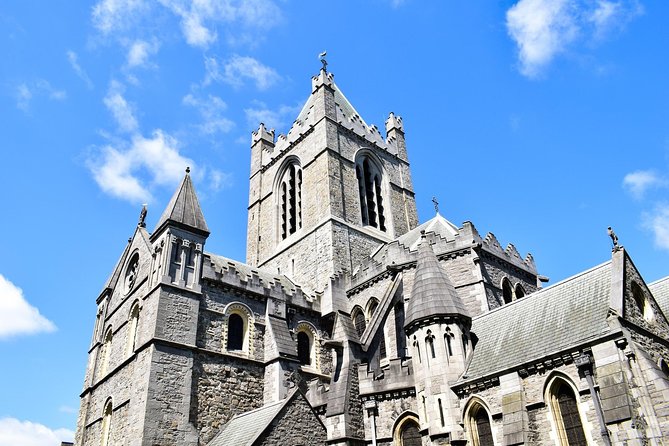
Next comes a stop at one of Dublin’s oldest and most famous medieval cathedrals. Even from the outside, medieval religious buildings in Dublin feel different than Georgian streets. The scale and the texture often do the talking first, and then your guide fills in the context so your eyes know what they’re seeing.
This is where you learn how religious and cultural identity shaped the city’s center. Your guide will point out architectural features that signal age and style, and you’ll get a clear sense of why this cathedral matters beyond being photogenic. It is one of those stops where you start paying attention to the little things, like how older structures sit alongside later development.
Possible consideration: if you are hoping for lots of inside access, this is not framed as a museum stop. The tour is about the architecture you can experience while walking, and entry is not included for museums or monuments.
More Private Tours in Dublin


From British Rule to Irish Governance: The Big Government Complex
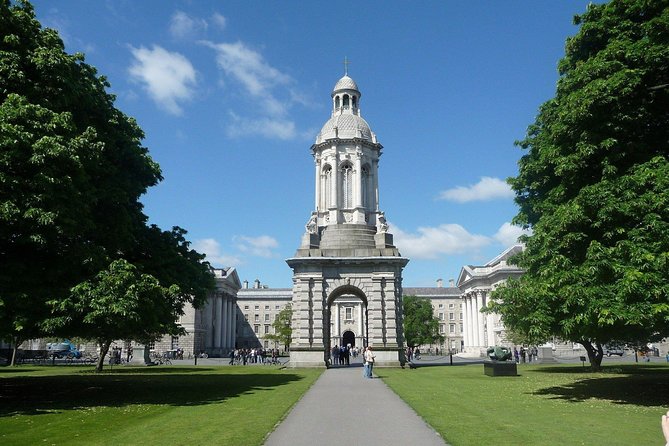
Then you shift into civic architecture with a stop at a major government complex, historically the seat of British rule in Ireland. This is a powerful theme for an architecture walk because the buildings reflect a complicated political timeline. Your guide helps connect what you see to why the site was important.
You’ll also get a feel for why government areas can look layered. The architecture here ranges from medieval to Victorian, so it is not a single-style postcard. Instead, it’s a record of change: older foundations, later expansions, and the way authority left physical marks on the city.
What I like about this segment is how it turns “landmark sightseeing” into pattern recognition. Once your guide shows you the elements that point to different periods, you’ll start noticing that same rhythm elsewhere in Dublin.
If you are sensitive to heavy political context, keep it in mind. The stop is designed to explain the history tied to architecture, so the conversation can get more serious than at a beer-related start.
Georgian Order at the Irish Parliament Seat
After that, you move to the seat of the Irish Parliament, another architecture-focused stop with strong Georgian influence. Georgian Dublin has a certain visual confidence. Symmetry, clean lines, and a sense of order make the buildings look planned, even when the city itself was anything but predictable.
Your guide will help you connect what you see to governance and political evolution. In a walking tour like this, those connections matter because you are not just reading plaques. You are seeing how style becomes signaling: authority expressed in shape, proportion, and facade.
This part also supports one of the tour’s stated learning goals, spotting the Gregorian style used across multiple buildings. Even if you are not an architecture nerd, your guide can break down what that style looks like and where it shows up.
If you like architecture for storytelling, this is one of the best stretches of the walk.
Also keeping time in Dublin
- Dublin to Cliffs of Moher, including Wild Atlantic Way and Galway
★ 5.0 · 23,331 reviews - From Dublin: Cliffs of Moher, Burren & Galway City Day Tour
★ 4.8 · 18,888 reviews - Dublin: Guinness Storehouse Entry Ticket
★ 4.6 · 16,863 reviews - Dublin to Cliffs of Moher, Burren, Wild Atlantic Way, Galway Tour
★ 5.0 · 12,924 reviews
Victorian Science and Engineering in an Ornate Building
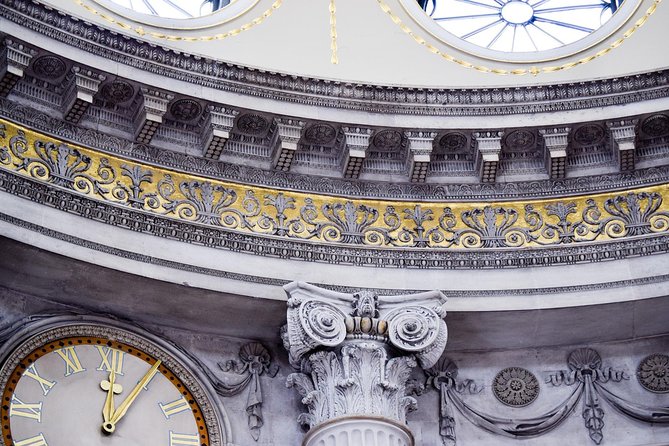
Next is an architectural gem of a different flavor: an ornate Victorian building that houses Geology, Geography, and Civil Engineering departments. The best part of a stop like this is that it shows you Dublin architecture is not only about churches and politics.
Victorian institutional buildings often have a confidence that feels different from both medieval churches and Georgian civic facades. Your guide will point out why the design is a standout example of the era, and why a school or science building can still be designed with real pride.
This stop is especially valuable if your interests run beyond “pretty buildings.” It adds the practical side of cities: learning, research, and the infrastructure that supports modern life.
A small drawback for some people: since the building is tied to departments, you may not have the same kind of open, tourist-friendly flow you’d get at a major attraction. Still, the architecture points you can see and photograph from outside can be enough, depending on the weather and your pace.
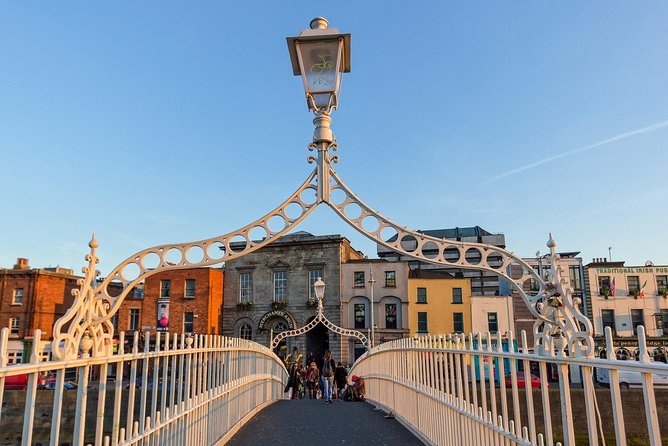
Neoclassical Over the River Liffey, Administrative Dublin’s Calm Power

Overlooking the River Liffey, you’ll visit a neoclassical building tied to Dublin’s administrative history and 18th-century architecture. Neoclassical architecture has a built-in mood. It often looks steady and formal, like the building is designed to project credibility.
Your guide will help you see how that style fits an administrative purpose. When you compare neoclassical facades to Georgian ones, you start noticing the subtle differences your eye usually skips. That is the kind of skill you can take home.
This segment helps you connect river geography to city development. The Liffey is not just a backdrop. It’s part of how Dublin organized movement, industry, and later governance.
Tip: if you want the best light for photos, keep an eye on clouds and angles around the river. Your guide may adjust where you pause based on conditions.
A Modern Tilted Structure at North Wall Quay, Contemporary Dublin
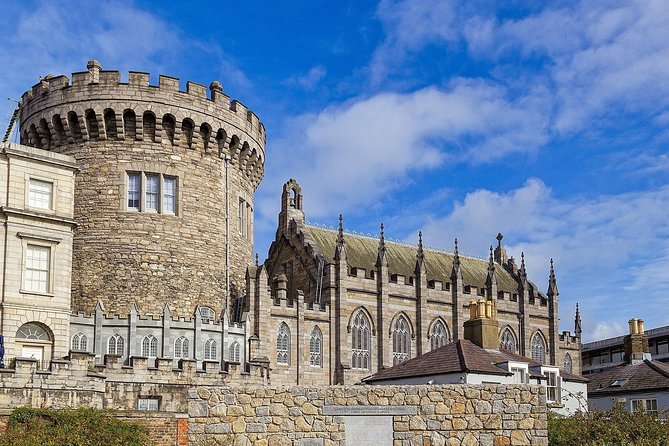
To close, you reach a modern, glass-fronted building with a unique tilted structure on North Wall Quay, ending at 3 Dublin Landings. This is a great way to finish an architecture walk because it stops the story from ending in the past.
Contemporary Dublin is shaped by international events, business, and the newer needs of a growing city. The tilted design signals a different mindset: movement, engineering boldness, and a willingness to look forward.
I like that this final stop prevents the tour from becoming purely nostalgic. You get a quick reminder that architecture is always responding to the present, not only preserving the past.
Also, the ending location is convenient for continuing your day. You can keep exploring nearby areas without needing to retrace steps back toward St James’s Gate.
What Makes This Tour Feel Worth It (Price and Value)
The price is $756.32 per group (up to 2) for a tour of about 2 hours. That sounds steep until you think about what you are buying: not just access to a list of buildings, but a guide who can tailor the route to your interests and walk pace.
For two people, that often lands in a range that can feel reasonable compared with piecing together multiple guided experiences, especially once you remember this is exclusive to your group. You can ask questions without worrying about a big crowd, and your guide can shift the emphasis toward facades, style explanations, or historical context.
The value is also in the learning style. The tour is designed so you understand what you are looking at and why it matters. That makes it more useful than a purely sightseeing walk, because it turns your next self-guided stroll into a smarter experience.
If you are traveling solo, you may find it harder to justify the full group price. If you have a partner or friend you can split with, the private format becomes the selling point.
One more small but real perk: your guide can adjust stops depending on weather. In Dublin, that is not a minor detail. Rain can ruin a rigid route, but a flexible guide helps you keep the tour feeling cohesive.
The Booking Pattern Tells You It’s Popular
This tour is booked on average 108 days in advance. That signals demand for a guided architectural walk, especially in a city where “what to see” can get overwhelming fast. If you have specific dates in mind, I’d plan ahead rather than assuming you can grab a slot last-minute.
Also, you receive confirmation at booking, and you get a mobile ticket. That keeps the day simple.
The Tour Style: Local Expert, Private Attention, and Real Flex
A big part of the experience comes from how it is run. This is hosted by an independent local, and it is an exclusive private tour. That matters because the guide can focus on your questions instead of keeping pace with a fixed schedule for a larger group.
The itinerary is tailored. Your guide adapts to your interests and your walking pace, and stops may vary depending on weather. In practice, that means you can steer the conversation a bit. If you care more about Georgian details, you’ll likely spend more time on the relevant facades. If you prefer political context, you’ll likely linger at civic points.
And yes, you’re expected to bring money for drinks or snacks. That small detail is practical. Even on a short 2-hour walk, you may want a quick break, especially if the afternoon is warmer or the wind off the river feels sharp.
Who This Tour Is Best For
This tour works well if you want a guided architecture experience without the stress of planning a route yourself. It is also a good match for couples or small groups who like asking questions and getting direct answers.
You’ll probably enjoy it most if you:
- like seeing how styles connect, medieval to Georgian to Victorian to neoclassical and modern
- want a guide to help you spot details you would otherwise miss
- prefer walking with flexibility rather than rigid checklists
It might be less suitable if you have limited mobility, because it is not recommended for impaired mobility and you should expect a walking-focused format.
Should You Book This Architectural Dublin Tour?
If you like architecture, this is an easy yes. The private setup gives you real attention, and the route covers multiple Dublin eras in a short, coherent walk. The most praised part of the experience is exactly what you’re paying for: a pleasant guide who explains buildings clearly and keeps the conversation going without making it feel like a lecture.
Book it especially if you are only in Dublin for a short time and want a high-value way to learn what you are looking at as you go. If you are traveling with a friend or partner, the group price also feels more fair since it stays private to just you.
Skip it only if walking is a challenge for you or if you strongly prefer long museum-style visits over street-level architecture.
FAQ
Where does the tour start and end?
The tour starts at Guinness Storehouse, St James’s Gate, The Liberties, Dublin 8. It ends at 3 Dublin Landings, North Wall Quay, Dublin 1.
How long is the architectural tour in Dublin?
It lasts about 2 hours.
Is this tour private?
Yes. It is an exclusive private tour, and only your group participates.
What is included in the price?
Included are the local expert guide, the exclusive private tour, and a tailored itinerary.
Do I need to pay for tickets during the tour?
Entry tickets for transportation, museums, and monuments are not included.
Is there free cancellation?
Yes. You can cancel for a full refund up to 24 hours in advance of the experience start time.
Latest to join the session in Dublin







Private Tours in Dublin, compared.
Private (Nearly!) All of Dublin in 5 hours (Walking Tour)
Read our review →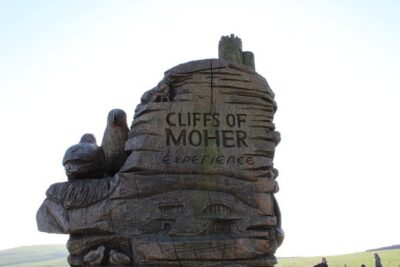
Cliffs of Moher Private Award Winning Luxury Mercedes Car Tour
Read our review →
Dublin Private Custom Tour with a Local, Highlights & Hidden Gems
Read our review →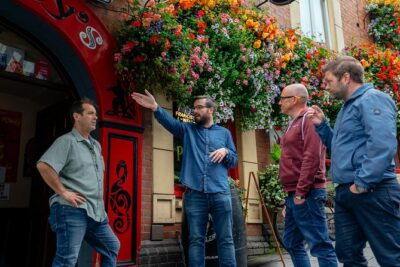
Dublin Private Highlights & History of 1916 Easter Rising Tour
Read our review →
Dublin Historical Centre Private Food Tour with 8 Food Tastings
Read our review →
Dublin Private Walking Food Tour With Locals with 10 Tastings
Read our review →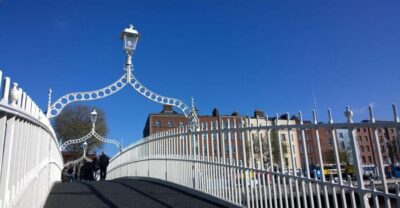
Browse the lists this tour appears in