
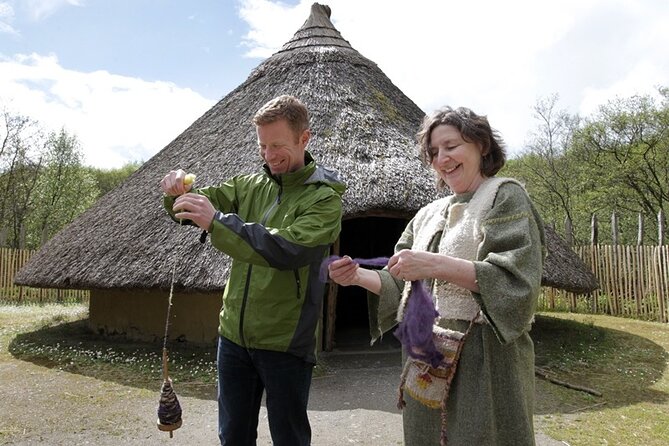
Reviewed · SHANNON TOURS & EXPERIENCES
Craggaunowen Admission Ticket
Prehistory gets a hands-on kind of real. With an admission ticket to Craggaunowen in County Clare, you can wander through reconstructed Bronze Age and early medieval scenes at your own speed. It is self-guided, offered in English, and you use a mobile ticket to get in.
I especially love two things. First, the site is packed with physical, visual experiences, like the crannóg (an artificial island dwelling with defenses) and the ring fort with daily-life activities you can actually see. Second, you get serious variety in a short visit, from cooking pits and querns to the Brendan Boat story tied to St. Brendan and early Christian monks.
One possible drawback: plan for a 1 to 2 hour visit. If you want long, guided storytelling or a slower museum pace, you may wish you had a half day instead.
In This Review
- Key things that make Craggaunowen worth your time
- Getting oriented at Craggaunowen Castle and the Crannóg
- The Bronze Age crannóg: island life and water defenses
- Ring Fort walking: everyday life, cooking pits, and querns
- Hunter-gatherer scenes: hunting support and Celtic food-making
- The Brendan Boat story: leather hulls and a big voyage question
- Craggaunowen Castle: restored medieval views and a 1550 date
- Animal sightings in the grounds: wild boar and soay sheep
- The togher roadway (148 BC): an early road you can walk around
- Souterrain storage and escape: a fun space to play
- Lake walks and the farmhouse tea-room: take a breather
- Price and value: what $15.38 buys you
- Who should book this admission ticket
- Should you book the Craggaunowen Admission Ticket?
- FAQ
- How long does the Craggaunowen admission visit take?
- What is included with the Craggaunowen ticket?
- Is this a guided tour?
- What are the opening hours?
- Where does the visit start and end?
- Is there free cancellation?
- Are children allowed?
Key things that make Craggaunowen worth your time
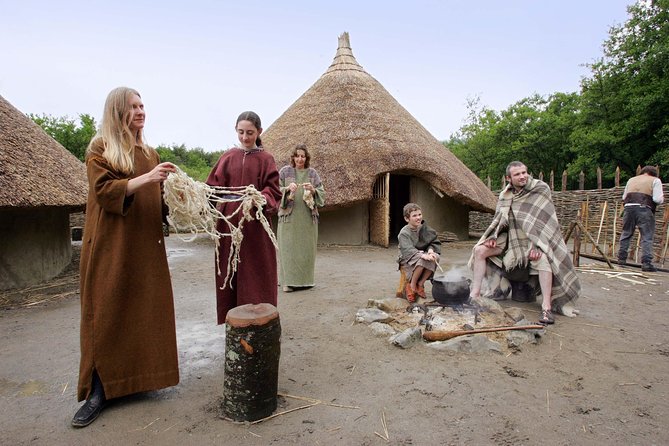
- Crannóg on an artificial island, with the idea of hidden water defenses and island living
- Cooking techniques with a pit and rope, plus the kind of practical food gear you can picture fast
- Ring Fort life, including open-fire cooking, querns for grain, and hands-on crafts like pottery and wooden vessels
- Tim Severin’s Brendan Boat, a leather-hulled reenactment linked to the St. Brendan voyage story
- A togher roadway dated to 148 BC, one of Ireland’s earliest roadways on-site
- Souterrain spaces, used for storage and sometimes as an escape route during conflict
Getting oriented at Craggaunowen Castle and the Crannóg
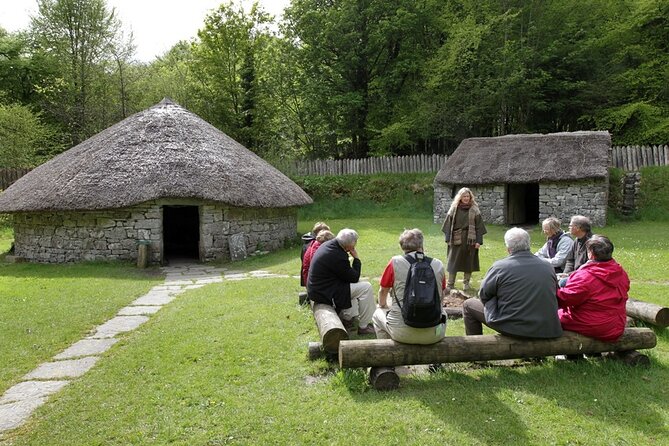
Craggaunowen is the kind of place where you start with views, not paperwork. The main entry area is by Craggaunowen Castle and the crannóg, so you can orient yourself quickly and then follow the walking route at your own pace. The whole setup works well if you like to stop, look, and read on your own terms.
At the front desk, you should expect helpful staff guidance. One thing I like about this site is that the people working there can share practical tips, which makes your first 15 minutes much smoother. After that, the re-enactor-style village feel kicks in, where you can ask questions and get explanations as you walk.
This is also a very “bring-your-own-timeline” experience. The ticket is admission, not a fixed guided route, so you can linger at the things that pull you in, and skim what does not. That flexibility matters when you are trying to make room for time from Shannon or if you want a quick stop without feeling rushed.
The Bronze Age crannóg: island life and water defenses
Your first big payoff is the crannóg. You are looking at the idea of people living on an artificial island, defended in a way that includes a hidden pathway in the water. That detail is a big part of why the crannóg section feels memorable, because it gives you a “how would they manage that” mental picture right away.
Even if you do not read every label, the layout helps you understand the logic: you are not just seeing “a house,” you are seeing a survival strategy. Crannógs are about defense, access, and living off the surrounding environment, and this site keeps that focus with the way the exhibit is presented.
If you like visual storytelling, this is where you get it. The exhibits connect the island dwelling to other Bronze Age activities around it, so the site starts feeling like a working system rather than a collection of random artifacts.
Also keeping time in Shannon


Ring Fort walking: everyday life, cooking pits, and querns
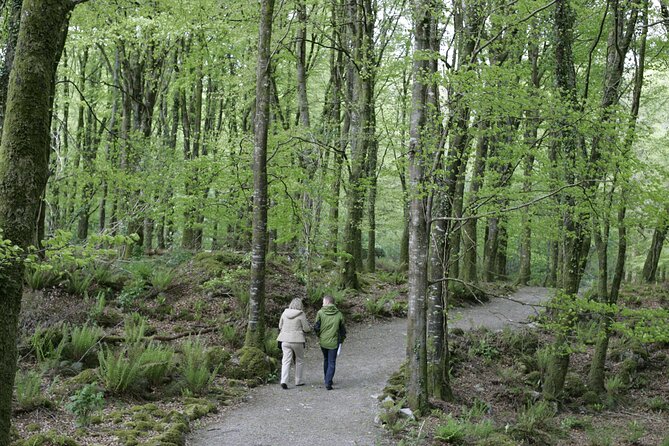
Next comes the Ring Fort and the lived-in feel of daily life. Here, you shift from “defended dwelling” to “what did people do all day?” You can see examples of cooking over open fires or in pits, and you get a clearer sense of how food prep fit into everyday routines.
One detail that stands out is the focus on grain and bread or porridge. You will see references to grinding corn on hand-powered querns, which is the kind of everyday tech that makes prehistory feel real. You can picture someone working the stones, day after day, just to keep meals coming.
The exhibit also includes crafts and tools. You will encounter scenes tied to pottery and wooden bowls, goblets, and platters. This matters because it shows that survival was not only about hunting and fighting, it was also about making and maintaining the basics.
And yes, you should plan to walk, not just read. Even though it is self-guided, most of the value comes from seeing how the spaces relate to each other, and that means your shoes will get a workout.
Hunter-gatherer scenes: hunting support and Celtic food-making
The site also connects Celtic-era life and hunting with practical food production. One of the interesting parts is the way it describes skilled hunters and sophisticated cooking techniques, including a large pit and a length of rope. That rope detail is the kind of specific mechanism that makes the cooking method easier to imagine, because it suggests a system with purpose, not just a dramatic reenactment.
You also get the bigger idea that hunting missions were not the whole story. The food needed processing, cooking needed equipment, and people needed reliable ways to feed numbers of people. The exhibit language pushes you to think in terms of logistics, the unglamorous part of feeding a group.
If you are traveling with kids, this section is often a hit because it is visual and a little cinematic. If you are traveling solo or as a couple, it still works, because the site is built to give you “aha” moments without requiring a guide standing next to you the whole time.
Next tune called in Shannon:
- Shannon Airport to Galway Transfer
★ 5.0 · 6 reviews - Shannon Airport to Killarney , Private Chauffeur Service
★ 5.0 · 5 reviews - Award-Winning Goat Cheese Tasting and Farm Tour in Ennistymon
★ 5.0 · 3 reviews - Shannon Airport to Shandon Hotel Co. Donegal Private Car Service.
★ 5.0 · 3 reviews
The Brendan Boat story: leather hulls and a big voyage question
One of the most memorable stops is the Brendan Boat. You are told about a leather-hulled boat built by Tim Severin, sailing across the mid-Atlantic to reenact the voyage of St. Brendan and early Christian monks reputed to have discovered America before Columbus.
Even if the topic is debated in the real world, the way this exhibit is staged is useful for visitors. It does not require you to be an expert, and it gives you a specific story framework to follow while you stand in the exhibit space. You come away thinking about seafaring technology and how people interpreted long-distance voyages in earlier centuries.
This is also a nice “tempo change.” After Bronze Age land life, the boat shifts you to movement, sea travel, and the questions people asked when the maps were still incomplete.
Craggaunowen Castle: restored medieval views and a 1550 date
After the prehistoric sections, you get to Craggaunowen Castle, described as a 16th-century restored medieval castle built in 1550. It sits on a crag overlooking the lake, so it is both an exhibit stop and a viewpoint stop.
I like this part because it helps you reorient the day back into the real landscape. When you are surrounded by reconstructions and earthworks, it can be hard to hold onto what the place actually looks like. Standing near the castle views gives you context and helps your brain stitch the story to the setting.
This is also a good place to slow down. If you only have one short break in your schedule, this is the spot where the scenery and the storytelling align.
Animal sightings in the grounds: wild boar and soay sheep
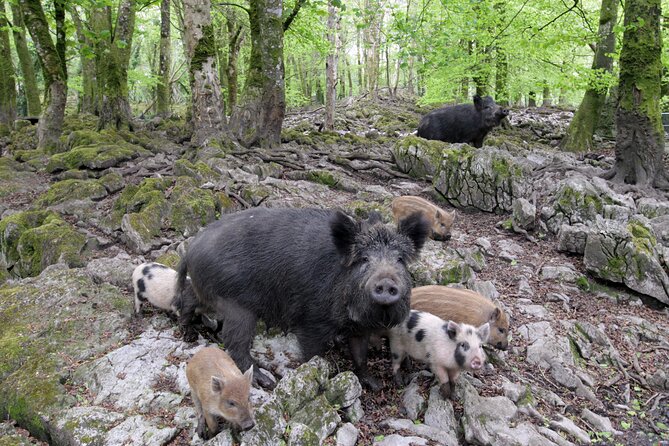
Craggaunowen also includes rare animal breeds in the grounds, including wild boar and soay sheep. That matters because it makes the site feel alive and tied to real ecological conditions, not only historical reenactment.
One tip from the overall experience at the site is to look for the animals near the visitor areas when you first arrive. People have described adorable sheep, donkeys, and ponies in the outdoor areas with seasonal flower color, including yellow iris. You might not catch everything if you arrive late in the day, but it is worth taking a few minutes before you head into the main exhibits.
If you have kids or you just like animals, this is one of those sections that can make the whole visit feel more relaxed. It breaks up the mental load of reading and thinking hard about ancient life.
The togher roadway (148 BC): an early road you can walk around
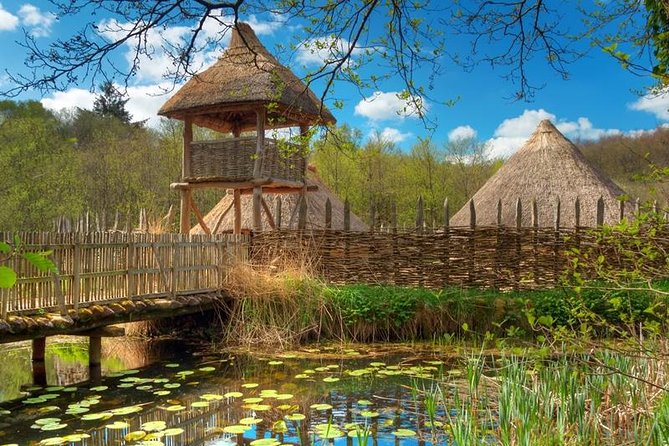
You will also see one of Ireland’s earliest roadways, called a togher, dated to 148 BC. That is a huge number to wrap your head around, and the physical presence of an early roadway helps it feel less abstract.
What I like here is the way it changes your focus. You start the day thinking about homes and hunting, and then you get hit with something totally different: infrastructure. Roads are about movement, trade, access, and control. Seeing an old roadway concept at Craggaunowen gives you a fuller picture of how communities worked.
If you are the type who loves practical history, this is a strong stop. You can stand where people would have crossed, and suddenly the past is about daily travel, not only dramatic moments.
Souterrain storage and escape: a fun space to play
A highlight for families is the souterrain. These underground-like spaces are described as places to store food, but they also served as welcome escape routes when under attack from enemies. The exhibit even suggests it can be a fun place for hide and seek.
That mix is what makes it click. Storage makes sense. Escape makes sense. Together, it helps you understand how a community could survive pressure, not just survive winter.
If you are visiting with kids, this is where they usually burn off energy without realizing they are learning. If you are visiting as an adult, it can still land because it gives you a concrete look at how people used space under threat.
Lake walks and the farmhouse tea-room: take a breather
After the core exhibits, allow time for lake walks in the rural setting. These short outdoor stretches help reset your attention, especially if you spent most of the morning indoors or surrounded by dense exhibit text.
Then there is the farmhouse tea-room. Food and drinks are not included with admission, but the tea-room is an excellent option if you want a simple snack or meal without driving back out. Plan for this as your potential “I am glad I stopped” moment, because a 1 to 2 hour visit can still work up an appetite.
If the weather is good, you will likely enjoy lingering longer outdoors. If it is wet or windy, stick to the indoor castle sections and keep your breaks shorter.
Price and value: what $15.38 buys you
At $15.38 per person, the ticket price is reasonable for the amount of physical space you get to explore. You are paying for admission to Craggaunowen and access to all displays and exhibits, and that matters. Many heritage sites sell “bits and pieces” separately, so it is nice to have a full admission ticket that lets you choose how much of the site you cover.
For planning, the typical visit is about 1 to 2 hours. That is a sweet spot for a stopover. You can fit it into a travel day between nearby places without turning it into your whole itinerary.
Also, because it is self-guided, you are not locked into a group schedule. That usually gives better value for independent travelers, especially if you want to spend extra time on the crannóg and castle and skip faster through the sections that do not interest you as much.
If you love prehistory and early medieval storytelling, you will likely feel like you got your money’s worth quickly. If you only want one short museum room, the price might feel like more than you need. But for most people, the variety and walking route make it a solid use of time.
Who should book this admission ticket
This is a great fit if you want hands-on, walking history without a strict schedule. I think you will especially enjoy it if you like sites where you can see how people lived, cooked, built, and traveled, not just read about it.
It also works well for families. Kids can handle the pace, and there are playful elements like the souterrain layout. Children must be accompanied by an adult, but that is normal for historic sites.
If you want heavy guided interpretation or long lectures, you might feel the lack of a live guide. This is admission plus self-guided exploration. You get the option to go deep in what interests you, but you do not get a full commentary track.
Should you book the Craggaunowen Admission Ticket?
Yes, if you are traveling through County Clare and you want a short stop that feels different from standard museums. The mix of crannóg, ring fort daily life, the Brendan Boat story, and the togher and souterrain combo gives you multiple “ways in” to the past.
Skip it only if you hate walking, you want a guided group experience, or you have only enough time for a quick photo stop. Otherwise, this ticket is a practical, high-value way to spend a couple of hours that you will remember.
FAQ
How long does the Craggaunowen admission visit take?
The visit is approximately 1 to 2 hours.
What is included with the Craggaunowen ticket?
Your ticket includes admission to Craggaunowen, access to all displays and exhibits, and all taxes, fees, and handling charges.
Is this a guided tour?
No. It is a self-guided tour, so you explore at your own pace.
What are the opening hours?
Opening hours are listed as 10:00 AM to 5:00 PM, with the site shown as open from 05/05/2026 to 09/03/2026 (Monday through Sunday).
Where does the visit start and end?
The activity starts at Craggaunowen Castle and the Crannóg, Craggaunowen, Kilmurry, Co. Clare, and it ends back at the same meeting point.
Is there free cancellation?
Yes. You can cancel up to 24 hours in advance for a full refund.
Are children allowed?
Yes, children must be accompanied by an adult.
Latest to join the session in Shannon
Shannon Tours & Experiences, compared.
Shannon Airport to Galway City, Private Chauffeur Service
Read our review →
Shannon Airport to Cork, Private Chauffeur Service
Read our review →
Shannon Airport to Killarney , Private Chauffeur Service
Read our review →Award-Winning Goat Cheese Tasting and Farm Tour in Ennistymon
Read our review →
Shannon Airport to Shandon Hotel Co. Donegal Private Car Service.
Read our review →
Private Transfer between DUBLIN & LAHINCH | Premium Vehicles
Read our review →Browse the lists this tour appears in