
Reviewed · AUDIO TOURS
Turtle Bunbury’s Dublin: A Self-Guided Audio Tour from a Celebrated Author
Dublin hides stories in plain sight. This self-guided audio tour takes you through a tight slice of the city, from St Stephen’s Green toward Trinity College Dublin, with a narrative that connects famous Irish figures and surprising international links. It is a simple format too: press play, follow the map, and let the voices steer you door to door.
What I like most is the voice-led navigation. The VoiceMap app gives you maps and directions that stay clear and logical as you move. I also really appreciate the offline access, so you are not scrambling for signal while you are outside in the city.
One thing to consider is timing at the end of the route. At the time of publishing, Trinity College and the Book of Kells were closed until August 10 due to coronavirus, and reopening might happen sooner or later, with possible closures again. If that is the case when you go, you will still finish the story in the area, but you may need to switch to nearby pubs instead of waiting at the gates.
In This Review
- Key highlights I think you will enjoy
- A self-guided Dublin story-walk that moves at your pace
- Price and value for a 75-minute audio walk
- VoiceMap setup that helps you actually enjoy the walk
- Edward Delaney’s Famine Memorial and St Stephen’s Green: start with meaning
- Huguenot Cemetery, O’Donoghue’s, and the Merrion Hotel area: stories beside everyday Dublin
- Department of the Taoiseach and national institutions: power, policy, and context
- Merrion Square and the playground stop: pause, reset, and look around
- Oscar Wilde Statue and Oscar Wilde House: two stops, one thread
- Kennedy’s Pub and the practical rhythm of a self-guided walk
- Through Trinity College grounds: what to expect when campus access is uncertain
- Book of Kells outside and the finish at Parliament Square
- Who this audio tour is best for
- Small tips that make the difference
- Should you book Turtle Bunbury’s Dublin audio tour?
- FAQ
- How long does Turtle Bunbury’s Dublin take?
- Where does the tour start?
- Where does the tour end?
- Do I need internet to use the tour?
- What app do I need to listen and follow the route?
- Are museum tickets included?
- Does the tour include smartphones or headphones?
- Is the experience refundable?
- Is it a private tour?
Key highlights I think you will enjoy

- Offline audio and maps via VoiceMap so your phone is useful even with spotty coverage
- A focused route (about 1 to 1.25 hours) that fits into almost any Dublin day
- Real landmark sequence, from Edward Delaney’s Famine Memorial to Parliament Square
- Oscar Wilde story stops, including the statue and Oscar Wilde House
- A narrative that links Irish history to global events, including Vikings who became Normans and Irish involvement abroad
- Flexible ending if Trinity College or the Book of Kells are closed
A self-guided Dublin story-walk that moves at your pace

This tour works because Dublin is made for short, walkable chapters. Instead of hopping across the whole city, you focus on one connected corridor, beginning near St Stephen’s Green and winding toward Trinity College Dublin.
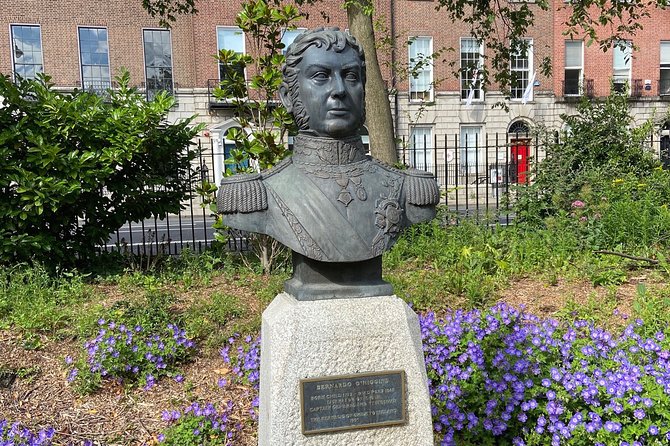
The real appeal is how the audio narration ties the street scenes together. You are not just reading plaques. You are hearing a string of characters and themes, including Bernardo O’Higgins, Maurice Fitzgerald, Wolfe Tone, and Paddy Hitler. The tour also brings in Vikings who became Normans, Frenchmen who fought for Ireland, and Irishmen who fought for Mexico. That mix matters, because it reminds you that Irish history does not stay inside Ireland’s borders.
Price and value for a 75-minute audio walk
At $7.99 per person, this feels like the kind of purchase that makes sense even on a tight budget. You are paying for time, context, and smooth navigation, not for a pile of museum tickets.
Here is what you are getting for the cost:
- Lifetime access to the tour in English
- The VoiceMap app for Android and iOS
- Offline access to audio, maps, and geodata
And here is what is not included:
- Museum or attraction entry fees along the route
- A smartphone and headphones
- Transportation and food or drink
So the value math is pretty clear. If you want a quick, self-paced way to understand what you are seeing, $7.99 can be a good deal. If you are the type who needs lots of indoor time and paid entry sites, you will get less value from this format and might prefer a ticketed guided tour with entrances.
Also keeping time in Dublin


VoiceMap setup that helps you actually enjoy the walk
This is a self-guided experience, which means your phone is your guide. You use the VoiceMap app on your Android or iOS device, and you download for offline use so the audio and maps are available without relying on mobile data.
Two practical benefits stand out:
- The directions are meant to keep you on track, including when you cross from Merrion Square toward campus area
- The audio and maps are available offline, which reduces stress when you are outdoors
Your personal checklist is simple. You will need:
- The VoiceMap app
- A smartphone you already have
- Headphones (not provided)
If you like tours that feel light and flexible, this style is ideal. You can slow down for photos at the Oscar Wilde stops, or speed up if your legs are feeling good.
Edward Delaney’s Famine Memorial and St Stephen’s Green: start with meaning
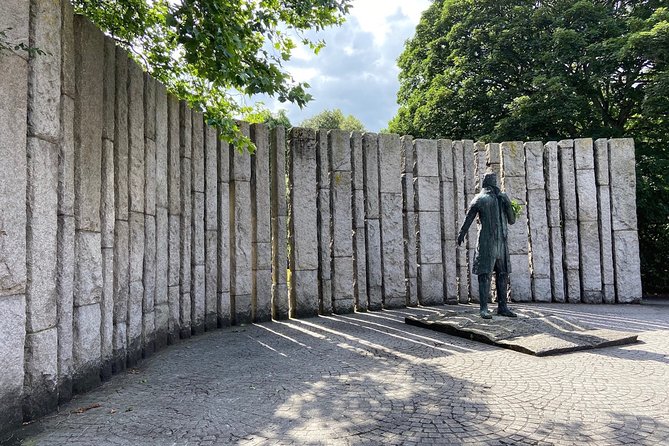
The tour begins at Edward Delaney’s Famine Memorial, on St Stephen’s Green (Dublin 2). That matters, because it sets the tone for how you read the city: Dublin’s streets are not just pretty. They have memory baked into them.
Right away, you move from the start point toward the memorial area. You are essentially learning to look first, then listen. That is one of the reasons this route works well as an introduction to the neighborhood around St Stephen’s Green. You get context before you reach the more political and cultural landmarks.
Next tune called in Dublin:
- Dublin to Cliffs of Moher, including Wild Atlantic Way and Galway
★ 5.0 · 23,331 reviews - From Dublin: Cliffs of Moher, Burren & Galway City Day Tour
★ 4.8 · 18,888 reviews - Dublin: Guinness Storehouse Entry Ticket
★ 4.6 · 16,863 reviews - Dublin to Cliffs of Moher, Burren, Wild Atlantic Way, Galway Tour
★ 5.0 · 12,924 reviews
Huguenot Cemetery, O’Donoghue’s, and the Merrion Hotel area: stories beside everyday Dublin
As the route pushes forward, you pass the Hugenot Cemetery. Cemeteries sound quiet, but they often carry big stories, and this kind of stop is perfect for an audio format because you can slow your pace.
Next you come across O’Donoghue’s and the Merrion Hotel area. These are the kinds of real Dublin touchpoints that make the tour feel grounded. You are not touring a set piece, you are walking past places locals actually use, and the narration helps you connect the street scene to the names you hear.
Then the tour continues into civic and cultural space, which is where the city starts to feel like it is running on institutions.
Department of the Taoiseach and national institutions: power, policy, and context
You pass by the Department of the Taoiseach and the National Museum of Ireland, then continue toward Leinster House.
Even if you do not go inside any building, these stops give you a sense of Dublin’s day-to-day influence. This is a helpful mindset shift. You start to recognize that a city is not only about landmarks and viewpoints. It is also about governance, public identity, and where decisions get made.
The audio narration adds interpretive glue, tying those modern roles to older threads. That connection is what makes a short tour feel longer, even when you are only walking for about an hour.
Merrion Square and the playground stop: pause, reset, and look around

As you head through Merrion Square, the tour includes a brief stop near a playground. This might feel like a random detail, but it is smart. It is a moment to step back and notice the neighborhood rhythm.
Merrion Square is a classic Dublin setting, and when the audio slows down here, you can do the same. That also helps if you are traveling with someone who gets antsy during long audio tours. A quick, human moment like a playground break makes the walk feel less like a mission.
Oscar Wilde Statue and Oscar Wilde House: two stops, one thread
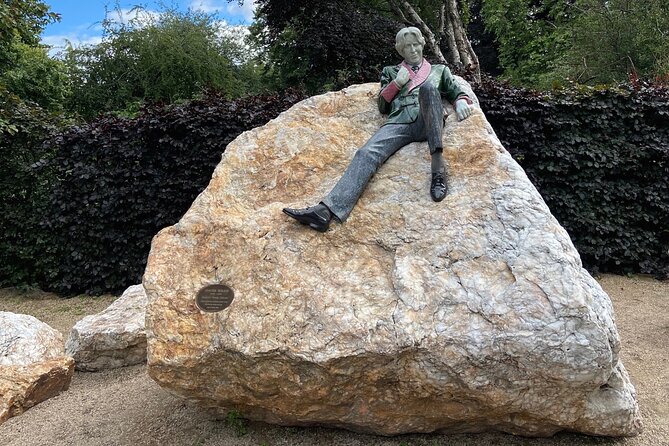
You get two brief but meaningful moments related to Oscar Wilde:
- A stop near an Oscar Wilde Statue
- Then you pass by Oscar Wilde House
This is one of the most satisfying segments because Wilde is instantly recognizable. Even if you only know a handful of facts, the audio narration gives you the way to see why this area matters. The key is that the tour does not just drop a name, it connects it to place.
If you are the type who enjoys literary Dublin, this part is worth paying attention to. Keep your phone handy so you do not miss the cues that come with these stops.
Kennedy’s Pub and the practical rhythm of a self-guided walk
Later, you pass by Kennedy’s Pub. I do not treat pub stops as a break from learning. I treat them as part of the route plan, because with a self-guided tour you can decide when to recharge.
Here is my practical suggestion: if you are walking on a day when the weather is turning or your energy dips, Kennedy’s Pub is exactly the kind of place you would want to stop and reset while the narration continues later.
This also matters for the ending portion near Trinity College. If campus sites are closed, the pub option becomes more than convenient. It becomes part of how you finish the experience comfortably.
Through Trinity College grounds: what to expect when campus access is uncertain
The tour then goes through the college grounds. Here is the issue you must plan for: at the time of publishing, Trinity College was closed to the public until August 10 to prevent the spread of coronavirus, and it might reopen sooner or later, with possible re-closures.
What you can still count on:
- The route is designed to take you through the campus area
- You will reach the Museum Building and Berkeley Library as you continue
- You will also approach the area associated with the Book of Kells
What you cannot assume:
- That you will walk exactly the way you would on a normal day with full public access
- That you will be able to enter any attraction tied to Trinity College
If you find the college closed when you arrive, you are not stuck. The tour is still useful because the audio is built to keep the story moving, and you can use nearby spots for comfort. In other words, the experience is not only about entry tickets. It is about understanding what you are looking at as you move through the area.
Book of Kells outside and the finish at Parliament Square
The tour stops briefly outside the Book of Kells. Again, because of the publishing-time closure, it was noted as closed until August 10, and it might reopen sooner or later, with possible closures again.
If the Book of Kells is open, you get that immediate cultural payoff. If it is not open, you still get something valuable: a guided sense of why this is one of Dublin’s most famous destinations.
From there, you reach Parliament Square, which is where the tour ends. That finish point is a good choice because it leaves you in an area where you can keep exploring without feeling cut off from the rest of the day.
Who this audio tour is best for
This experience fits you well if:
- You like self-paced touring and do not want to wait for a group
- You want practical directions that reduce map stress
- You enjoy Dublin stories tied to names, places, and big historical connections
- You want a short walking plan that can fit between bigger plans
It might not be ideal if:
- You strongly want indoor museum time with tickets included
- You need a guided live person to clarify questions on the spot
- You dislike using your phone as your main navigation tool
Small tips that make the difference
- Bring headphones so you can hear clearly in the city noise. This is listed as not included, so plan ahead.
- Plan for closures near Trinity College and the Book of Kells. Even with offline audio, your day can still depend on what doors are open.
- Move with intention near the Oscar Wilde stops. These are brief, so be ready when the narration prompts you.
- If you stop for a break, time it. With an audio tour, it is best to pause intentionally so you do not lose the flow.
Should you book Turtle Bunbury’s Dublin audio tour?
Yes, I think it is a smart buy if you want a clean, affordable way to understand a concentrated slice of Dublin. The price is low, you get lifetime access, and the combination of VoiceMap offline maps plus audio makes it genuinely usable on foot.
I would book it for first-time visitors who want context without committing to a full-day guide. I would also book it for repeat visitors who like the idea of seeing familiar streets with new connections, especially the Oscar Wilde area and the broader historical threads, from Wolfe Tone to international stories like Irish involvement in Mexico.
Before you go, do one quick check in your own planning: expect the Trinity College end of the route to be subject to closures, since that is specifically called out. If that caveat does not bother you, this tour is an easy win.
FAQ
How long does Turtle Bunbury’s Dublin take?
It’s listed as about 1 hour to 1 hour 15 minutes.
Where does the tour start?
It starts near Edward Delaney’s Famine Memorial, 42 St Stephen’s Green, Dublin 2.
Where does the tour end?
It ends at Parliament Square in Dublin.
Do I need internet to use the tour?
No. The tour includes offline access to audio, maps, and geodata through the VoiceMap app.
What app do I need to listen and follow the route?
You use the VoiceMap app on Android and iOS.
Are museum tickets included?
No. Tickets or entrance fees for museums or other attractions are not included.
Does the tour include smartphones or headphones?
No. A smartphone and headphones are not included.
Is the experience refundable?
No. The tour is non-refundable and cannot be changed.
Is it a private tour?
Yes. It’s described as private, meaning only your group will participate.
Latest to join the session in Dublin







Audio Tours, compared.




The Mystical Hill of Tara: A Self-Guided Audio Tour
Read our review →Browse the lists this tour appears in