
Reviewed · SELF-GUIDED TOURS
A Self-Guided Stroll Along Dún Laoghaire’s East Pier
Sea breezes and stories in under 90 minutes. This self-guided VoiceMap walk starts at St Michael’s Church and strings together landmarks from the 1820s to wartime memorials on the piers. I especially like the offline VoiceMap audio and maps you can use without data, and I like that you set your own pace instead of rushing. The one real drawback is simple, you need your own smartphone and headphones to hear it.
For $8.99 per person, the value comes from lifetime access to the English route, plus offline support for audio, maps, and geodata. It’s also a private experience, so it’s just your group following the same points at your speed. The route is easy enough for most people, but it is a coastal walk, so plan for wind and plan for your phone battery.
In This Review
- Key Points You Should Know Before You Start
- Starting at St Michael’s Church, the 1820s anchor of the walk
- The Pavilion Theatre to the King George IV Monument: seeing old and new on one street
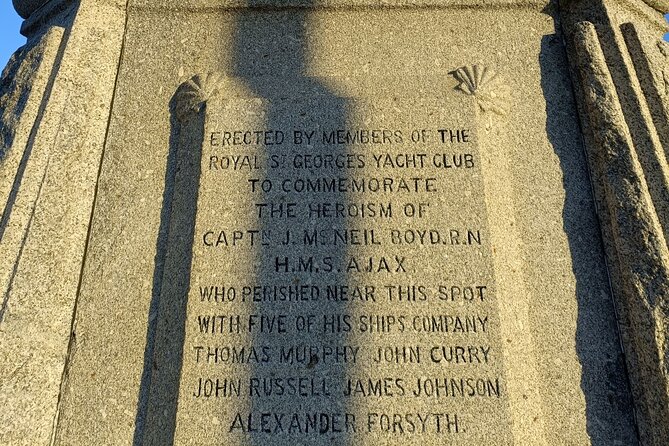
- RMS Leinster Memorial: where maritime tragedy becomes personal
- The Metals promenade: an old railway path you can enjoy walking
- Dún Laoghaire Pier and the East Pier Lighthouse: the view is the reward
- Carlisle Pier, Forgotten Irish Memorial, and the East Pier bandstand shelter
- The Crimean War cannon, the Romanov eagle, and finishing near Roger Casement
- Price and value: is $8.99 worth it for a self-guided walk?
- Getting the most out of the VoiceMap experience on the pier
- Should you book this Dún Laoghaire East Pier stroll?
- FAQ
- What is the price of the Dún Laoghaire East Pier self-guided stroll?
- How long does the walk take?
- What language is the audio in?
- Where do I start and where do I end?
- Do I need to bring headphones and a smartphone?
- Can I use the audio and maps without mobile data?
- Is this experience private?
Key Points You Should Know Before You Start
- Begin at St Michael’s Church, established in the 1820s, then walk into the town’s story from the center of Dún Laoghaire
- Modern culture at the Pavilion Theatre helps you see how old and new sit side by side
- A tight trio of memory stops, the King George IV Monument, the RMS Leinster Memorial, and the Forgotten Irish Memorial
- Follow The Metals, the old railway track turned into a promenade you can actually enjoy
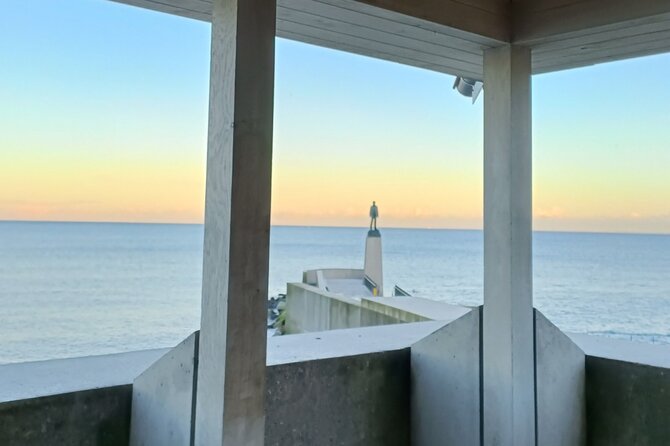
- East Pier Lighthouse for big Dublin Bay views, plus details about how the harbor shaped the area
- Spot the Romanov eagle on a Crimean War cannon, then finish near the Roger Casement Statue
Starting at St Michael’s Church, the 1820s anchor of the walk
I like the way this route begins in the most grounded place, St Michael’s Church on Marine Road. Established in the 1820s, it gives you an instant sense of how long Dún Laoghaire has been a lived-in community, not just a pretty seaside stop.
As you leave the church, the audio helps you connect the dots quickly. You’re not just passing buildings, you’re building a timeline in your head: a town that grows, a waterfront that matters, and monuments that mark what people wanted remembered. If you arrive and feel a little turned around, this start point is a gift, it’s central and recognizable.
Practical tip: because you are starting on Marine Road, you’ll likely hear more traffic than you expect at first. Wait a few minutes, get your bearings, and the soundscape shifts as you get closer to the pier and open water.
The Pavilion Theatre to the King George IV Monument: seeing old and new on one street
Next you pass the Pavilion Theatre, a modern cultural hub that adds a contemporary rhythm to the walk. That matters, because Dún Laoghaire is not frozen in time, it keeps functioning, creating, and welcoming people.
From there, the route pivots toward the King George IV Monument. This is where the audio shifts from everyday town life to the way authority and power used to be displayed in stone. You’ll also notice how Dún Laoghaire uses monuments as a kind of public memory system, not just decoration.
What I like here is the pacing. You get a quick “yes, I’m in Ireland” moment with the cultural stop, then you’re gently guided into why certain names and symbols were placed where they are. It keeps you from feeling like you’re doing a checklist, even though you are following stops.
Also keeping time in Dublin


RMS Leinster Memorial: where maritime tragedy becomes personal
One of the most serious stops on the route is the RMS Leinster Memorial. The audio frames it around the tragic sinking of the ship during World War I, and it emphasizes that this disaster hit the local community hard.
Even if you know nothing about the story, you can feel the tone change as you approach. It’s not a loud or dramatic scene, it’s more like a quiet moment of respect, the kind where you slow down without being told.
This is also a strong reason to book this as a self-guided walk rather than a rushed bus tour. You control the timing, so you can take an extra minute if you need it. If you’re the type who likes connecting facts to real places, this memorial stop is where the route earns its emotional weight.
The Metals promenade: an old railway path you can enjoy walking
Now you shift from memorials to movement. The audio leads you along The Metals, remnants of an old railway track that have been transformed into a promenade.
I love when a city repurposes old infrastructure into something people can use today. Here, the “why” is simple: you get a ready-made walking line, with enough straightness to keep your pace comfortable, and enough character to make the route feel like it has layers.
This is also where the coastal vibe starts to grow stronger. You’re still in town, but the path nudges you toward the shoreline. If you want an easy walking stretch, this is the part of the route that feels most like a relaxed stroll.
One small caution: because it follows the old track line, some sections may feel more exposed. Keep an eye on wind coming off Dublin Bay, and consider a light layer even on decent days.
Next tune called in Dublin:
- Dublin to Cliffs of Moher, including Wild Atlantic Way and Galway
★ 5.0 · 23,331 reviews - From Dublin: Cliffs of Moher, Burren & Galway City Day Tour
★ 4.8 · 18,888 reviews - Dublin: Guinness Storehouse Entry Ticket
★ 4.6 · 16,863 reviews - Dublin to Cliffs of Moher, Burren, Wild Atlantic Way, Galway Tour
★ 5.0 · 12,924 reviews
Dún Laoghaire Pier and the East Pier Lighthouse: the view is the reward
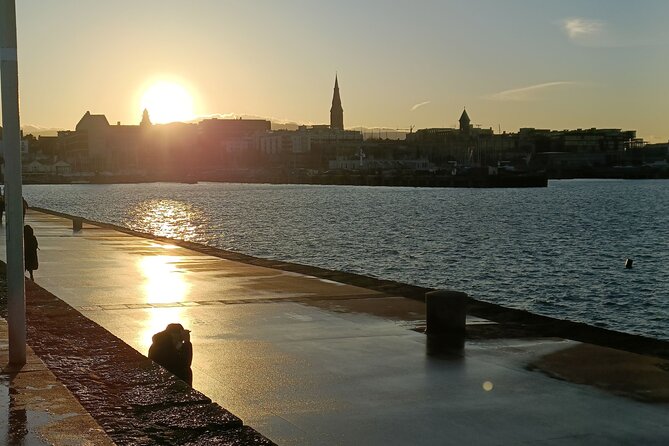
Eventually the route reaches the Dún Laoghaire Pier and heads toward the East Pier Lighthouse. This is the payoff section, where you get wide perspectives across Dublin Bay and toward the city.
The audio adds context so the lighthouse is more than a photo spot. You’ll hear about the harbor’s construction and why it mattered for the area’s development. That turns what could be a quick “look and go” stop into something that feels purposeful.
If you’re thinking about timing, this is a smart section to slow down. Stand where you can look along the water, not just at the lighthouse itself. Even a short pause makes the whole walk feel more satisfying, because you’re finishing a lot of story stops with an actual visual scene.
Practical tip: bring your camera, but also look away from it. The bay views are wide, and the lighthouse gives you a clear focal point.
Carlisle Pier, Forgotten Irish Memorial, and the East Pier bandstand shelter
From the lighthouse, the route continues along Carlisle Pier. It dates back to the 1820s, and the audio frames it as a maritime witness to how Dún Laoghaire evolved over the centuries.
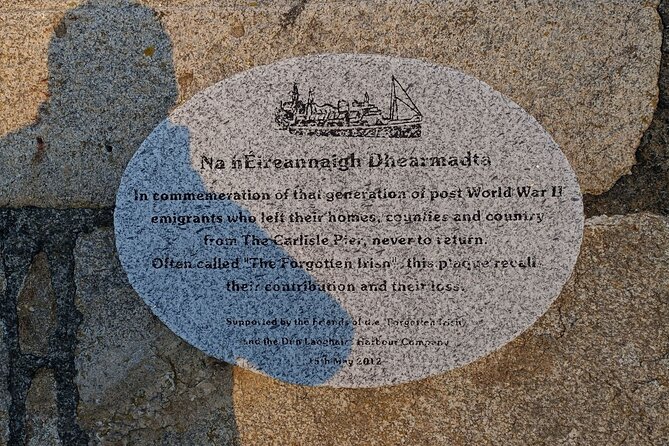
Then comes the Forgotten Irish Memorial, focused on Irish emigrants and the resilience of people who left home for new opportunities far away. This is another memory stop with a reflective tone, and it pairs well with the earlier maritime tragedy at the RMS Leinster Memorial.
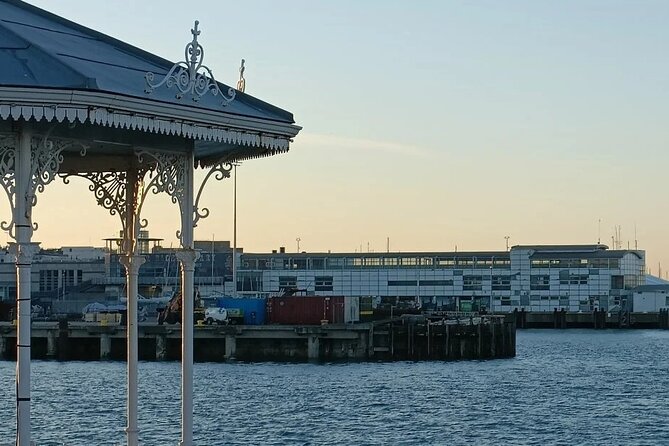
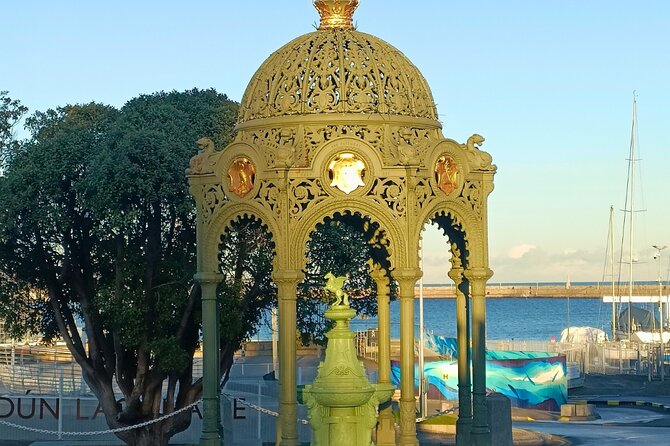
In between, you’ll also get a look at the East Pier Bandstand Sun Shelter. The architecture here is a good reminder that public spaces were built for everyday use, not just ceremonies. It’s the kind of detail that you might miss on a quick stroll, but the audio helps you notice it.
What I like about clustering these stops together is emotional variety. You move from local WWI loss, to the broader emigrant experience, to the simple fact of people gathering in a sheltered public space by the water. That mix makes the walk feel human, not just educational.
The Crimean War cannon, the Romanov eagle, and finishing near Roger Casement
As you near the end, the route adds one of the most intriguing visual clues on the entire walk. You’ll spot an eagle motif associated with the Romanov family on a Crimean War cannon.
The audio ties this to a specific story: a Russian cannon ended up in Dublin, and the presence of that symbol is your hint at how far objects and politics traveled. Even if you only catch the key detail, it’s enough to make the cannon feel like a plot point, not a random piece of metal.
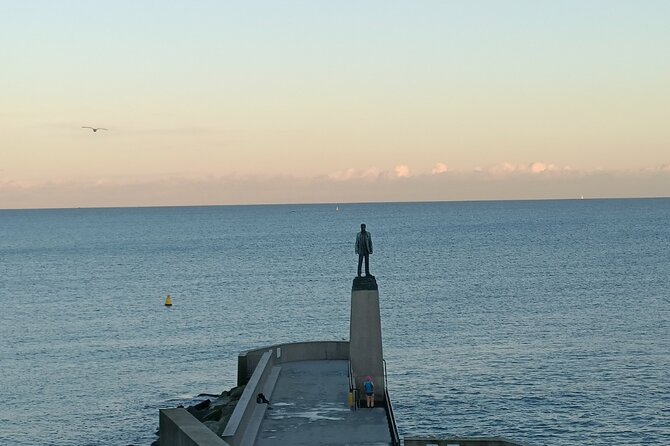
The final stop is near the Roger Casement Statue, honoring the Irish revolutionary. This is a strong way to close, because it brings the walk back from maritime edges and foreign connections into a distinctly Irish political story.
Then you finish the walk back at your meeting point area. You don’t feel stranded far from where you started, and you can easily transition to food nearby if you want. The route ending with Casement also gives you a clean sense of closure, like the stories have direction.
Price and value: is $8.99 worth it for a self-guided walk?
At $8.99 per person, this is priced for people who want a structured walk without paying for a live guide. For me, the value is in the combination: lifetime access, plus the VoiceMap app with offline audio, maps, and geodata.
That offline feature is not a minor detail. It means you can plan around weather, train delays, or spotty mobile service and still have the full experience. If you already carry your phone for navigation, this is a low-stress add-on.
Timing is also realistic: plan on about 1 hour to 1 hour 15 minutes. That length is perfect for a “do one thing while the light is good” outing. It also makes the walk easy to pair with other Dún Laoghaire stops if you’re spending more than a few hours in the area.
The other value angle is control. Since it’s self-guided and private, you can pause for photos, linger near memorials, or speed up if the day is moving fast. Just remember the one practical cost that is on you: smartphone and headphones are not included.
Getting the most out of the VoiceMap experience on the pier
Here’s how I’d set yourself up so the walk feels smooth from start to finish.
First, download everything before you begin. The tour includes offline access to audio, maps, and geodata, so you should take advantage of it. If you wait until you are outdoors with weak signal, you risk that annoying moment where the app can’t load.
Second, test your audio. Headphones make the route better, and they also help you focus when the sea wind is doing its own thing.
Third, dress for coastal conditions. Even short stretches to and from the piers can feel chilly or gusty. Wear comfortable shoes you trust on uneven edges near the water.
Finally, treat the route like a narrative. The stops jump between community life, theatre and modern culture, royal monuments, maritime tragedy, emigrant memory, and political commemoration. If you listen with that in mind, you’ll end with a sense of place that’s stronger than just “I walked the pier.”
Should you book this Dún Laoghaire East Pier stroll?
I think this is a smart pick if you want a low-cost, structured walk that mixes views with meaningful stops. It’s especially good for people who like reading the landscape, not just looking at it, and who enjoy audio pacing more than a group schedule.
Book it if you’re coming to Dublin and you want one focused seaside outing that won’t eat an entire day. Skip it only if you hate walking outdoors, or if you don’t want to rely on your own phone and headphones.
If you want a solid way to learn Dún Laoghaire from St Michael’s Church all the way to Roger Casement and the East Pier Lighthouse, this route hits that sweet spot.
FAQ
What is the price of the Dún Laoghaire East Pier self-guided stroll?
It costs $8.99 per person.
How long does the walk take?
Plan for about 1 hour to 1 hour 15 minutes.
What language is the audio in?
The tour is offered in English.
Where do I start and where do I end?
You start at St Michael’s Church on Marine Road in Dún Laoghaire, and the activity ends back at the meeting point.
Do I need to bring headphones and a smartphone?
Yes. The tour does not include a smartphone or headphones, so you’ll need your own.
Can I use the audio and maps without mobile data?
Yes. The experience includes offline access to audio, maps, and geodata through the VoiceMap app.
Is this experience private?
Yes, it is private. Only your group will participate, and it’s allowed to bring service animals.
Latest to join the session in Dublin





Self-Guided Tours, compared.

St Patrick’s Cathedral: Self-Guided Cathedral Admission
Read our review →
Christ Church Cathedral Entrance Ticket & Self-Guided Tour
Read our review →
Self-Guided Bike Tour of Killarney National Park, Muckross Gardens & Waterfall
Read our review →

Browse the lists this tour appears in