

Reviewed · PHOTOGRAPHY SESSIONS
Discover Dublin’s most Photogenic Spots with a Local
Photographs start with good angles.
This small-group photo walk is built for turning Dublin’s classic sights into repeatable shots, guided by a local host. I especially like the small group size (up to 8) and the focus on photography tips while you’re strolling past landmarks like Ha’Penny Bridge and Trinity College. One thing to consider: it’s still a city walk, so comfy shoes matter, and stops may shift with weather.
The route mixes postcard views with real practice, so you’re not just sightseeing. You’ll work through a sequence of “look here, shoot this” moments, from the Spire viewpoint to Jameson’s historic distillery buildings and on to cathedral interiors from the outside edges. For me, the best part is how the tour turns Dublin’s geometry into a learning tool, not a checklist.
If you’re hoping for lots of museum time, this isn’t that kind of experience. Entry tickets for museums, monuments, and public transport are not included, and you’ll be moving for about 90 minutes.
In This Review
- Key things that make this photo tour worth your time
- The vibe: a friendly photo lesson on Dublin streets
- First stop: the Spire viewpoint for quick, dramatic framing
- Old Jameson Distillery: why photographing the buildings beats chasing only whiskey branding
- Christ Church Cathedral: history you can shoot without paying admission
- Love Lane: the kind of street that rewards slow looking
- Ha’Penny Bridge and the Liffey: your best shots come from timing the river
- Trinity College’s Campanile: the iconic moment you’ll want two angles of
- Grafton Street: shopping streets, but make them photographic
- The tour ends at Stephen’s Green Shopping Centre
- Value check: is $100.87 per person fair for this kind of photo walk?
- The best time to go, based on real feedback
- Who this photo tour is best for
- A few practical tips to get better photos fast
- Should you book this Dublin photo walk?
- FAQ
- How long is the Dublin photo walk?
- How large is the group?
- Where does the tour start and end?
- Is entry to museums, monuments, or public transport included?
- Do I get a mobile ticket?
- Can I get a refund if plans change?
Key things that make this photo tour worth your time
- Up to 8 people: you get room to ask questions and adjust your stance before you shoot
- A photo-first route: major landmarks, plus smaller spots that photograph well
- Stops that flex with you: the pace and itinerary adapt to interests and walking speed
- A very “evening-friendly” tip: one reviewer specifically suggested trying it at night for lighting
- Local recommendations: you leave with ideas on what to photograph next, not just what you saw today
The vibe: a friendly photo lesson on Dublin streets
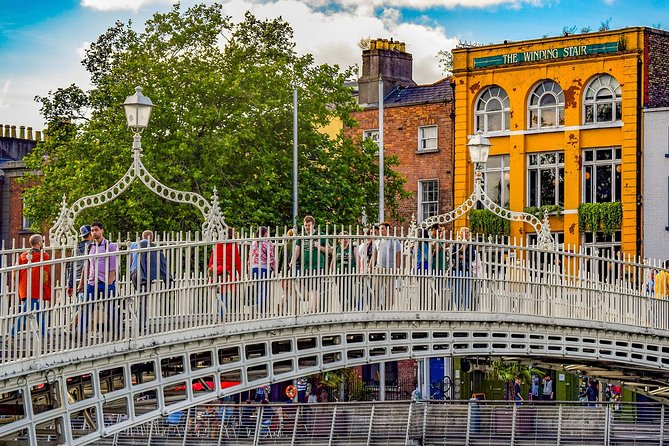
This is a guided stroll that treats Dublin like your classroom. Instead of “stand here for a photo, next!” the focus stays on how to frame, compose, and time your shots as you move from one sight to the next.
Because it’s a small group, you’re less likely to feel rushed. You can take your time with a composition, then get feedback on what’s working and what to try next. And since the itinerary adapts to your pace, you’re not locked into a rigid march.
First stop: the Spire viewpoint for quick, dramatic framing
You begin at Novara House on North Earl Street, then head to what’s described as the best view on the Spire. This is a smart opening because it gives you an immediate “anchor” subject. The Spire is tall, clean, and easy to study for lines and symmetry, which makes it ideal for learning basic composition fast.
Practical tip: when a subject is vertical, your job is usually to control the surrounding clutter. Look for angles where the background stays simple, and then try a second shot that uses a different foreground element (like a nearby building edge) to add depth.
Drawback to keep in mind: if weather is gray or windy, you may have less patience for adjusting camera settings or re-shooting. Go in with a simple plan, take one solid shot, then use the guide’s prompts for your second try.
Also keeping time in Dublin

Old Jameson Distillery: why photographing the buildings beats chasing only whiskey branding
Next up is the Old Jameson Distillery, and the tour makes a point of seeing the building itself. That’s a good call for photographers. Historic industrial architecture gives you textures, repeating windows, and strong surfaces that hold detail even when Dublin light is flat.
This stop is also useful for practice because it’s less about one iconic angle and more about finding a few good ones. Try different distances, then switch between wide context shots (building plus street) and tighter frames (materials, signage, window patterns).
One more thing: even if you’re not a whiskey person, the architecture is still the story. You get Dublin’s craft and heritage vibe without needing museum entry.
Christ Church Cathedral: history you can shoot without paying admission
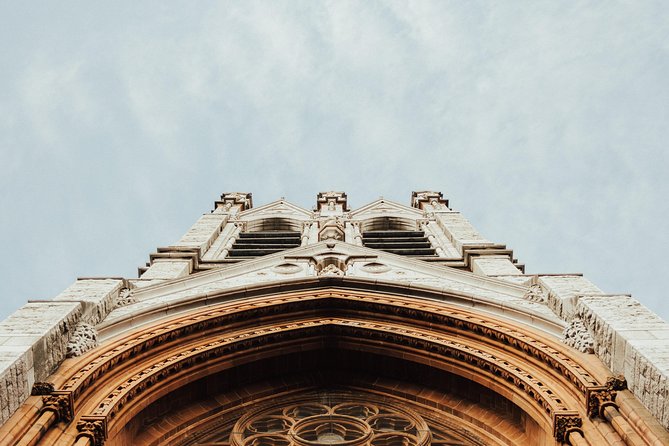
Christ Church Cathedral is included for its beauty and history, and you’ll experience it from the street-side perspectives the route allows. For many photographers, cathedrals are a two-part challenge: the exterior scale is huge, and the best angles often depend on getting the right distance.
This is where a local guide helps. They can point out where the lines lead, where the façade looks most balanced, and how to avoid turning your photo into a messy mix of stone and sky. If you try to photograph it from too close, you often end up fighting distortion. If you go too far, you lose the drama.
Consideration: if it’s busy near the cathedral, you may need patience for a clean frame. A small group means you can regroup quickly and try again without losing the whole flow.
Next tune called in Dublin:
- Dublin to Cliffs of Moher, including Wild Atlantic Way and Galway
★ 5.0 · 23,331 reviews - From Dublin: Cliffs of Moher, Burren & Galway City Day Tour
★ 4.8 · 18,888 reviews - Dublin: Guinness Storehouse Entry Ticket
★ 4.6 · 16,863 reviews - Dublin to Cliffs of Moher, Burren, Wild Atlantic Way, Galway Tour
★ 5.0 · 12,924 reviews
Love Lane: the kind of street that rewards slow looking
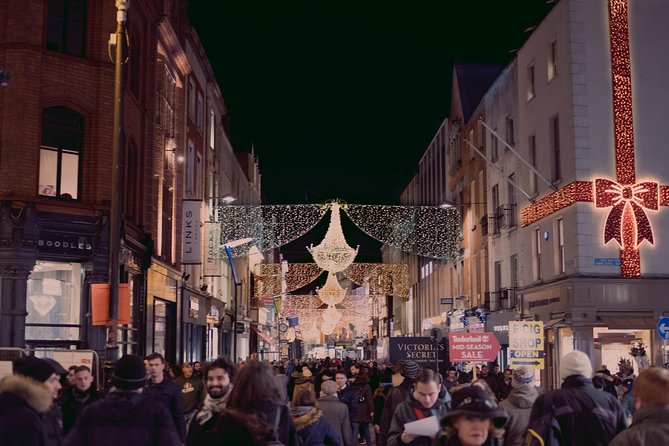
The Love Lane stop is pitched as a must-see for every art-lover, and it makes sense for photo walking. Narrow lanes and expressive details tend to produce photos that feel “found,” not staged. Even without grand architecture, you can build a strong image using composition tricks like leading lines, repeating storefront shapes, or small contrasts in light and shadow.
Practical approach: aim for a sequence. Get one wider “you are here” shot, then follow up with 2 to 4 tighter frames. Streets like Love Lane are rarely the best in just one photo because the magic comes from details that reveal themselves after your eyes adjust.
If it’s raining, narrow lanes can be especially photogenic because reflections start appearing. Just watch your footing and keep your camera protected.
Ha’Penny Bridge and the Liffey: your best shots come from timing the river
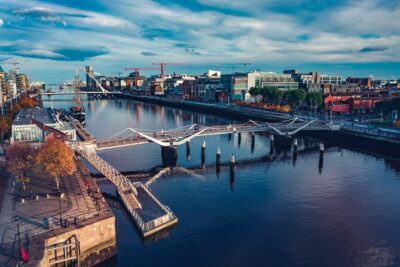
You’ll then focus on capturing the true beauty of the Liffey from a bridge. Even if you’ve photographed bridges before, the river introduces motion and changing light, which is perfect for learning timing. Bridges also force decisions about verticals and horizontals, plus whether you include people as scale.
What to do here: shoot one version that shows the bridge structure clearly, then another that emphasizes the water surface. If you’re using a phone or camera with limited manual controls, you can still play with “moment” by adjusting when you press the shutter as boats and pedestrian movement shift.
A quick realism note: water photos can disappoint if you only take one shot. The river keeps changing, so take at least a couple and compare.
Trinity College’s Campanile: the iconic moment you’ll want two angles of
The Campanile of Trinity College is described as iconic, and it earns that label. Big campuses often photograph best when you can capture both the subject and the surrounding context that makes it feel like a place, not just a postcard.
This stop is also a great learning opportunity. You can practice framing with architectural repetition, shoot from slightly different heights or distances, and check how the background shapes the mood. The goal is to avoid making the image flat. Even a small shift in your position can change the “story” your photo tells.
If you want the most value from this moment, keep an eye on what’s behind the Campanile. Background elements can either support the subject or steal attention.
Grafton Street: shopping streets, but make them photographic
Next comes Grafton Street, described as a traditional street with small shops and big brands. That mix is actually helpful for photography because you get contrast: local character side by side with modern retail signage.
For your shots, you can go in two directions. One is “street scene” photos that show movement and the human scale of the street. The other is “details” photos where you frame signs, window displays, and textures along the façades.
If you’re photographing crowds, be realistic about timing. A small group helps because the guide can help you decide when to move to a new spot rather than waiting forever in one place.
The tour ends at Stephen’s Green Shopping Centre
You wrap up at Stephen’s Green Shopping Centre. Ending here is practical because it gives you an easy transition point for whatever you want next, whether that’s grabbing a snack, recharging your phone, or continuing the day on your own.
From a photo perspective, shopping areas can be good for one last reset shot: clean lines, storefront lighting, and easy background separation. Keep it simple. After 90 minutes, you’ll get more satisfaction from a clean final image than chasing one more perfect “masterpiece.”
Value check: is $100.87 per person fair for this kind of photo walk?
At $100.87 per person for about 1 hour 30 minutes, the value comes from the blend of three things: a small group, a local guide, and practical photography coaching tied to real landmarks.
If you tried to do this route yourself, you could absolutely see many of the same sights for less money. The difference is the “how” being built into the walk. Instead of randomly photographing, you’re learning when to shoot, how to frame, and what to look for at each stop.
You also get personalized recommendations, which is the kind of bonus that pays off later. That matters in Dublin because the city is photo-worthy everywhere, but it’s not always obvious what angles will work best until you’ve learned the local visual patterns.
Group discounts are mentioned, which can make this even more attractive if you’re booking with friends who want similar photo goals.
The best time to go, based on real feedback
One review recommendation was clear: take it in the evening or at night. That makes sense for Dublin. Night lighting can turn bridges, stone façades, and street scenes into more dramatic photos with stronger contrast and reflections.
If your schedule gives you options, consider evening. If you only can do daytime, you can still get great results, just expect softer contrast. Either way, show up ready to take multiple shots at each stop, because that’s where your framing choices become obvious.
Who this photo tour is best for
This tour fits you if you want:
- a guided way to photograph Dublin’s major icons without overthinking it
- a small-group pace where questions are welcome
- a quick skill refresh that you can apply to future trips
It may not be your best match if you want long indoor time, museum tickets included, or a fully vehicle-based itinerary. It’s a walking photo route, and the stops are designed to be seen efficiently.
Camera note: you do not need to be a pro. A phone camera is fine if you pay attention to composition and timing. The guide’s coaching is most helpful when you’re willing to try again instead of treating the first shot as your final.
A few practical tips to get better photos fast
You’ll get more out of the tour if you go in prepared for quick adjustments.
- Wear shoes you can walk in for about 90 minutes, since the route is a city stroll.
- Bring a small cloth or wipe for damp streets and lens smudges.
- If you can, keep your settings consistent and focus on framing changes rather than constantly tweaking everything.
- At each landmark, aim for one wide shot and one closer composition. It keeps your photo story varied.
The guide can adapt to your pace and interests, which means you should ask for help rather than guessing. If you want a specific style, bring that mindset with you.
Should you book this Dublin photo walk?
Yes, book it if you want a tight, high-impact way to see Dublin and learn how to photograph what you’re seeing. The small group size, the instructor-like coaching, and the practical sequence of stops make this feel less like a generic sightseeing walk and more like a real skill-building outing.
Skip it or rethink if you’re only interested in indoor sights, require paid entry experiences, or prefer a fully self-guided plan with no coaching. And if rain or cold weather is likely, plan to bring layers and accept that stops may shift slightly.
FAQ
How long is the Dublin photo walk?
It runs for about 1 hour 30 minutes.
How large is the group?
You’ll be in a small group of up to 8 travellers.
Where does the tour start and end?
It starts at Novara House, 2 N Earl St, North City, Dublin, D01 K5W5, Ireland, and ends at Stephen’s Green Shopping Centre, St Stephen’s Green, Dublin, D02 HX65, Ireland.
Is entry to museums, monuments, or public transport included?
No. Entry tickets for public transportation, museums, and monuments are not included.
Do I get a mobile ticket?
Yes, the tour includes a mobile ticket.
Can I get a refund if plans change?
Yes, you can cancel for free. Cancel up to 24 hours in advance for a full refund. If you cancel less than 24 hours before the start time, the amount paid is not refunded.
Latest to join the session in Dublin




Photography Sessions, compared.

Personal Photographer – Travel Photography Experience
Read our review →
Luxury Photography Day Tour on Ring of Kerry and Skellig Ring – Fully Guided and Chauffeured
Read our review →
Dublin Family Adventure: Cherished Memories in Every Photo
Read our review →Personal Photographer- Travel Photography Experience
Read our review →Browse the lists this tour appears in