
Reviewed · MUSEUMS
Waterford: The Irish Wake Museum Guided Tour
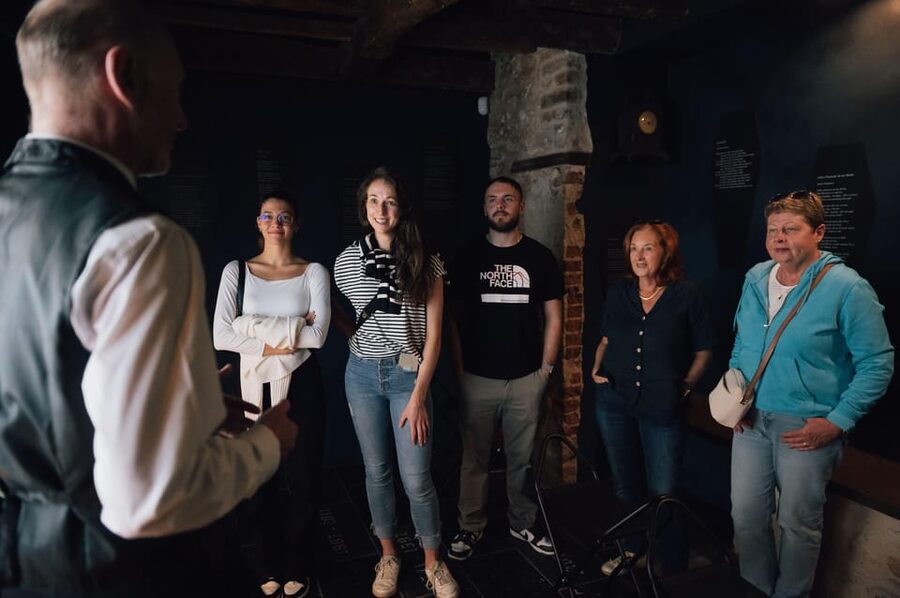
Death stories meet Irish tradition in Waterford. This guided stop at Ireland’s first Wake Museum walks you through how Irish wake customs grew, from early Christian times to the 20th century. I especially love seeing the C15th almshouse setting and learning about Ireland’s oldest death mask. One heads-up, the tour covers death, injury, illness, and realistic depictions of the recently deceased, so it is not a light-hearted hour.
The museum is housed in an atmospheric building tied to life and death in Waterford for centuries, so the topic lands in a grounded way, not just as folklore on a screen. You get an expert guide to explain what people believed, what they feared, and how communities handled loss.
Before you go, do a quick self-check on comfort level. If you or your group find death-related storytelling hard to handle, you may want to skip this one. (I’ll help you judge that later.)
In This Review
- Key things that make this tour worth your time
- Entering the Irish Wake Museum: why the building matters
- C15th almshouse rooms and Ireland’s oldest death mask
- Understanding the Irish wake: from belief to routine
- What you’ll see on the guided tour (and what to watch for)
- Getting the most from your time in Waterford’s Viking Triangle
- Price and value: is $15 a good deal?
- Who this tour suits, and who should skip it
- Practical tips for a smoother visit
- Should you book the Waterford Irish Wake Museum guided tour?
- FAQ
- How long is the Waterford Irish Wake Museum guided tour?
- What is the price per person?
- Where does the tour start and end?
- Is the tour guided?
- What language is the tour in?
- Is admission included in the ticket price?
- Does the tour include food or drinks?
- Is the tour suitable for children?
- Is it accessible for people with mobility impairments?
- Is the content suitable if I am sensitive to death-related topics?
Key things that make this tour worth your time
- C15th almshouse conservation: You walk through a building that already carries the mood.
- Ireland’s oldest death mask: A standout artifact that turns the topic from theory to something real.
- Six centuries of Waterford customs: You see how attitudes changed over time, not just one snapshot.
- Expert, reenactor-led guidance: The guide style helps you connect the traditions to daily life.
- Irish wake culture explained clearly: You learn what a wake is trying to do, socially and spiritually.
- €1 donation per admission ticket: Your ticket supports the Waterford Hospice Movement.
Entering the Irish Wake Museum: why the building matters
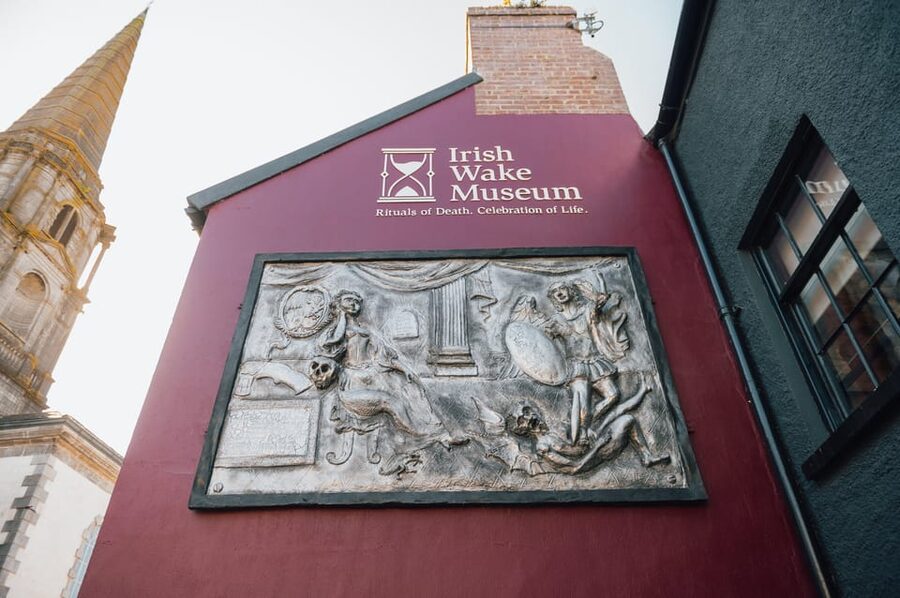
I like tours where the setting does half the work. Here, the Irish Wake Museum sits in what was once a 15th-century almshouse, and the tone of the place fits the subject. Even before any explanation starts, you feel like you’re stepping into a small, serious world where care and hardship were part of daily life.
This matters because Irish wake customs are not only about death rituals. They’re also about community presence. When you experience the museum in a preserved historical structure, the ideas feel less like a museum script and more like living practice from long ago.
The tour is guided and short, typically 40 minutes to 1 hour, so you get a focused experience without turning it into a long sit-and-listen session. That time window is ideal if you want something meaningful inside Waterford but still want energy left for a pub meal after.
C15th almshouse rooms and Ireland’s oldest death mask
The museum’s top attraction is the C15th almshouse itself. It’s not just a backdrop. The building helps you picture how people once lived around charity, care, and mortality. In a place like this, you can understand why a community might develop detailed traditions around illness and the moment someone dies.
Then there’s the artifact that grabs attention fast: Ireland’s oldest death mask. It’s the kind of object that changes your mental picture from general “funeral customs” to the specific choices people made. You start to see the wake as a set of rituals shaped by belief, grief, and a desire to make the unseen feel a little more manageable.
If you’re the type who likes concrete details, this museum delivers. A death mask is visual and direct. It gives your guide something firm to connect stories to, and it makes the explanations stick.
More collections out of the drizzle:


Understanding the Irish wake: from belief to routine
The Irish wake is one of Ireland’s most iconic customs, and the museum frames it in a practical way. You’ll learn how wake traditions link to funeral practices and the wider set of ideas people held about death.
What I find useful is the way the tour connects time periods. The museum covers traditions from early Christian times up to the 20th century, so you’re not stuck in a single era. You get a sense of how customs formed, how they were carried on, and how they evolved as society changed.
A good wake is more than a vigil. It’s a social rhythm. It helps a community show up, keep watch, and follow rules about respect. In the museum, you’ll be guided toward the meaning behind things people did, including the superstitions and traditions that shaped behavior when families were under extreme stress.
You’ll also learn about the emotional logic of the practice. When death arrives suddenly or after illness, people want structure. Even strange or unsettling traditions often served a purpose: giving people a script for a moment that otherwise leaves everyone lost.
What you’ll see on the guided tour (and what to watch for)
Your visit starts at Waterford Treasures: Irish Wake Museum, in the heart of Waterford’s Viking Triangle. From there, you stay inside the museum for a guided experience that runs 40 minutes to 1 hour.
Inside, the guide leads you through several themes tied to the almshouse setting. You should expect a clear, guided narrative rather than a free-for-all where you wander and guess. That’s part of the value here, because wake customs can sound confusing or overly theatrical if you just read them out of context.
You’ll explore:
- The role of the almshouse in connecting charity, community care, and the realities of illness and death
- Death-related traditions and superstitions, explained in a way that connects belief to behavior
- Funeral and wake customs, presented as living social practice rather than only as folklore
- Key artifacts, including the death mask, which gives you something tangible to anchor the stories
One additional note: the museum does not keep the subject abstract. The tour includes mention of death, injury, and illness, and it includes realistic depictions of the recently deceased. If you’re sensitive to that kind of content, plan accordingly and consider sitting this out with very young children or with anyone in your group who is likely to be overwhelmed.
On the bright side, a good guided explanation can make the material easier to process. The tour’s structure helps you move step by step. And it helps that the museum’s guide can bring the topic down to something understandable.
Also keeping time in Waterford
- House of Waterford Crystal Guided Factory Tour
★ 4.5 · 2,303 reviews - Skip the Line: Hook Lighthouse Entrance Ticket and Guided Tour
★ 5.0 · 470 reviews - Waterford: House of Waterford Factory Tour
★ 4.8 · 256 reviews - Waterford Treasures: Epic Walking Tour
★ 4.5 · 152 reviews
Getting the most from your time in Waterford’s Viking Triangle
The Irish Wake Museum is located in a compact area, which is helpful. Being in the Viking Triangle means you can fit this tour into a day without complicated travel logistics inside Waterford.
I’d treat the museum as a “start smart” stop. The topic is heavy, but the tour is short. So you can do it earlier in the day, then switch gears afterward to lighter activities and meals. If you do it late at night, the subject matter might feel more intense than it needs to.
You’ll also want to bring the right mindset. Think of this as cultural storytelling with historical artifacts, not a horror show. The museum is designed to explain origins of customs, not to shock you for fun.
As for the guide experience, I’ve seen the impact a strong guide can have on something this specific. A guide named Clare has been praised for making the experience work, which tells me the explanations can be both respectful and clear.
Price and value: is $15 a good deal?
At $15 per person, this is priced like an affordable museum tour, not a big ticket attraction. The value comes from three things.
First, you’re paying for entry plus a reenactor-led guided tour. A guided narrative is often what turns “interesting artifact” into “I understand the meaning.” Second, you’re getting access to a building with rare historical weight, not a generic exhibition space. Third, the museum includes a very specific highlight, the death mask, plus explanations of wake traditions across a wide time span.
Add the built-in community impact: the museum donates €1 from each admission ticket to the Waterford Hospice Movement. That doesn’t lower your personal cost, but it does help you feel good about where your money goes.
If your time in Waterford is tight, the duration is also a value point. 40 minutes to 1 hour is just enough time to absorb the core story without consuming your whole day.
Who this tour suits, and who should skip it
This is a very specific kind of museum experience. I’d recommend it most to people who enjoy Irish culture, history-linked traditions, and guided storytelling that explains beliefs and social customs.
You’ll likely be a good fit if you:
- Like museums where artifacts and context connect
- Want a deeper look at Irish funeral culture beyond general stereotypes
- Can handle discussions of death and illness in an educational setting
- Prefer a short guided tour over a longer self-paced museum
You should skip or reconsider if any of these apply:
- You need mobility-friendly access, because the tour is not suitable for visitors with limited mobility and not suitable for wheelchair users
- You’re traveling with children under 8 years, because it is not advised
- You or your group are uncomfortable with realistic depictions of the recently deceased or detailed mention of death, injury, and illness
That’s not meant to scare you off. It’s meant to protect your trip quality. When the subject matches your comfort level, the tour can feel thoughtful and meaningful.
Practical tips for a smoother visit
A few small choices can make a big difference with a museum tour like this.
- Wear comfortable shoes. You’ll be moving through rooms inside an older building.
- If you’re sensitive to illness or death imagery, tell yourself you’re prepared, then decide before you go in if you can handle it. The museum itself warns the topic may be upsetting for some people.
- Plan a calmer follow-up activity. After this kind of guided content, a quiet walk or a relaxed meal feels better than another intense stop back-to-back.
- If you want to coordinate with your Waterford day plan, remember that starting times vary, so check availability before you lock in the rest of your itinerary.
If you like flexibility, you can often reserve and pay later, which helps if your plans in Waterford might shift.
Should you book the Waterford Irish Wake Museum guided tour?
Book it if you want an Irish culture experience that’s guided, artifact-based, and short. This tour gives you a clear explanation of the Irish wake through traditions and superstitions across centuries, and it does it inside a preserved 15th-century almshouse with the oldest death mask in Ireland as a key anchor.
Skip it if you know the topic will be hard for you or your group. Between the mention of death, injury, illness, and realistic depictions of the recently deceased, it’s better to choose based on comfort rather than curiosity.
If you can handle serious subject matter and you’re looking for something genuinely specific to Waterford, this is one of the most focused and memorable ways to spend an hour in town.
FAQ
How long is the Waterford Irish Wake Museum guided tour?
The guided tour usually lasts between 40 minutes and 1 hour. Starting times depend on availability.
What is the price per person?
The price is listed as $15 per person.
Where does the tour start and end?
It starts and ends at Waterford Treasures: Irish Wake Museum, located in the heart of the Viking Triangle.
Is the tour guided?
Yes. Your ticket includes a reenactor-led guided tour.
What language is the tour in?
The tour is available in English.
Is admission included in the ticket price?
Yes. The ticket includes entry to the Irish Wake Museum.
Does the tour include food or drinks?
No. Food and drink are not included.
Is the tour suitable for children?
The museum advises that it is not suitable for children under the age of 8.
Is it accessible for people with mobility impairments?
No. The tour is not suitable for visitors with limited mobility, and it is not suitable for wheelchair users.
Is the content suitable if I am sensitive to death-related topics?
The tour includes mention of death, injury, and illness, and it includes realistic depictions of the recently deceased. It may be upsetting for some, so consider that before booking.
Latest to join the session in Waterford





Museums, compared.

The Little Museum of Dublin Famous Guided Tour
Read our review →



Irish Whiskey Museum: Whiskey Blending Experience
Read our review →
Irish Whiskey Museum Blending Tour with Tastings
Read our review →
Browse the lists this tour appears in