
Reviewed · HISTORICAL TOURS
Galway History Walking tour with Local expert – Private Group
Galway history lives in sidewalk stories. On this private Galway History Walking tour, I love the local stories that explain why buildings and street names matter, and I love the included stop at St Nicholas Collegiate Church with a voucher for set entry times. One catch: it runs outdoors for about two hours, so you’ll want decent weather.
This is built for small groups, with your guide meeting you at the Hardiman Hotel front entrance in Eyre Square, then keeping things calm and on-foot through central Galway. The tour is also meant to be adaptable, so you can steer the conversation toward architecture, street legends, or Irish culture details.
If you want an easy way to learn the city’s layout fast and understand what you are seeing later on your own, this tour format makes sense. Just keep in mind that some stops are in lively pedestrian areas, so plan to stand close to your guide, especially if it gets breezy.
In This Review
- Key highlights I’d plan around
- Starting at the Hardiman Hotel, then getting your bearings in Eyre Square
- Eyre Square to Browne Doorway: Tribes of Galway, JFK, and the John F Kennedy connection
- Williamsgate Street: Claddagh rings, Browne Thomas, and an Estonia-made Wilde statue
- Down Eglinton Street and toward the Courthouse Square: friary church and civic power
- River Corrib pause to Galway Cathedral, then toward Lynch’s Castle
- Lynch’s Castle to the Latin Quarter edges: Dead Man’s Lane, a famous window, and Nora Barnacle
- Inside St Nicholas Collegiate Church: medieval scale, Catholic roots, and Columbus
- High Street Latin Quarter to Spanish Parade: pubs, Cromwell lore, and Galway’s port days
- Hall of the Red Earl to theatre streets: Norman ruins and the Irish language stage
- Abbeygate Street Lower and the former cathedral building: why Dr Michael Browne changed the plan
- Price and value: $150.60 per private group up to 13
- Who this tour fits best, and who should skip it
- Should you book this Galway History Walking tour?
- FAQ
- How long is the Galway History Walking tour?
- Where does the tour meet and where does it end?
- Is this a private tour?
- What group size is it for?
- Is the tour offered in English?
- Is St Nicholas Church included, and what timing is supported?
- What happens if the weather is bad?
- Can the tour be adapted for mobility issues?
- Is there free cancellation?
Key highlights I’d plan around
- St Nicholas Collegiate Church voucher included, with timed entry options (10am or 1pm)
- A private group up to 13, so you get questions answered and your pace respected
- Multiple Galway landmarks plus lesser-known lanes, including Dead Man’s Lane and the Latin Quarter
- Big stories tied to small details, from the Tribes of Galway banners to Lynch’s Castle crests
- Flexible city-walking route, with a shortened option available for mobility needs
Starting at the Hardiman Hotel, then getting your bearings in Eyre Square
The tour meets at the front entrance of the Hardiman Hotel on Eyre Square. That matters more than it sounds, because it gives you a clear starting point in the city center, and you begin with an overview that helps everything click later as you wander on your own.
You’ll hear a first pass at Galway’s history right in the square, with your guide pointing out details you might otherwise miss. Expect a mix of iconic structures and named features, then quick transitions as you head off through smaller streets.
This is the kind of walking tour where the best benefit is mental mapping. By the time you reach the river and the Cathedral area, you’ll have an easier time understanding how the city grew and where key sites relate to each other.
Eyre Square to Browne Doorway: Tribes of Galway, JFK, and the John F Kennedy connection
Eyre Square is the hub, and your first stops concentrate on landmarks around it. You’ll cover major sights tied to Galway’s medieval and early modern periods, including the old Browne Doorway and references to the Tribes of Galway banners.
One detail to look forward to is the John F Kennedy memorial. The guide also connects Galway and the broader Kennedy story, including a Boston link, which gives the stop more than just a photo moment. If you like historical “threads” that connect Ireland to other places, this part hits that sweet spot.
There are also recognizable civic landmarks like the Quin-centenary Fountain and the O’Connaire Statue in the area. You do not need to study maps to follow along, because your guide builds the “why this is here” context before you move on to narrower streets.
More Guided Walking Tours in Galway



Williamsgate Street: Claddagh rings, Browne Thomas, and an Estonia-made Wilde statue
Next you head toward Williamsgate Street, a storefront stretch that feels very current, but your guide keeps pulling history into view. You’ll pass the elegant Browne Thomas building and stop along the way for smaller visual cues that explain local identity.
This is also where the tour quietly turns practical, because you’ll pass jewelry shops specializing in Galway Claddagh rings. Even if you do not buy, it helps you understand what that symbol means in local tradition, so you spot it later around town with better context.
If you have time, you may catch the Oscar Wilde statue. The detail here is its origin, described as a gift to Ireland from Estonia in 2004. It’s the kind of small fact that makes a city feel alive, not just old.
Down Eglinton Street and toward the Courthouse Square: friary church and civic power
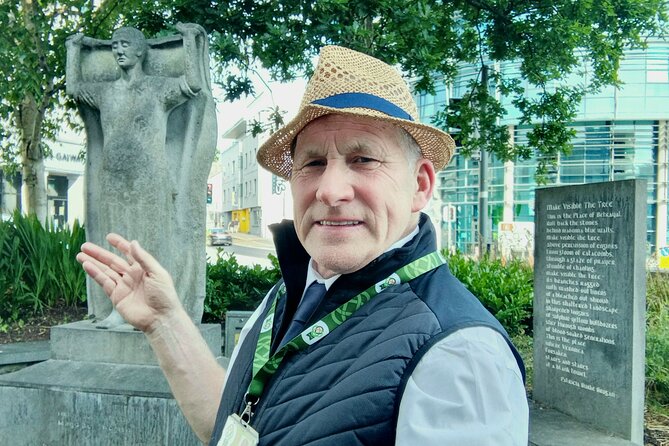
As the route shifts, you’ll divert down Eglinton Street and pass the Franciscan Friary church. The story here is burial-focused, with a little graveyard at the rear described as a prominent burial place in the mid-17th and early 18th centuries.
Then you continue toward Courthouse Square, where you learn that the area once had two iconic courthouses, one for the county and one for the city, with one still remaining today. Your guide also points out the Town Hall Theatre across the way, so you get a sense of how civic spaces evolved.
This section is short, but it’s useful if you like “how power worked” stories. Galway’s court and town institutions helped shape daily life, and it’s easier to understand the city when you see where decisions were made.
More Private Tours in Galway
- Private Cliffs of Moher Day Tour
★ 5.0 · 217 reviews - Galway Private Walking Tour
★ 5.0 · 62 reviews - Full Day Private Tour to Ireland
★ 5.0 · 32 reviews - Deserted Island Private Landing Tour
★ 5.0 · 28 reviews
River Corrib pause to Galway Cathedral, then toward Lynch’s Castle
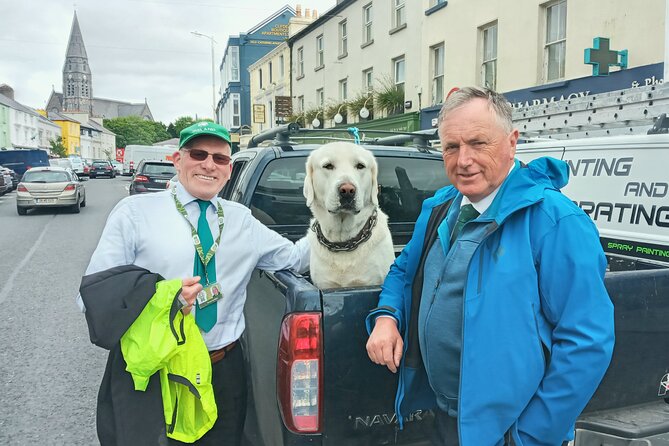
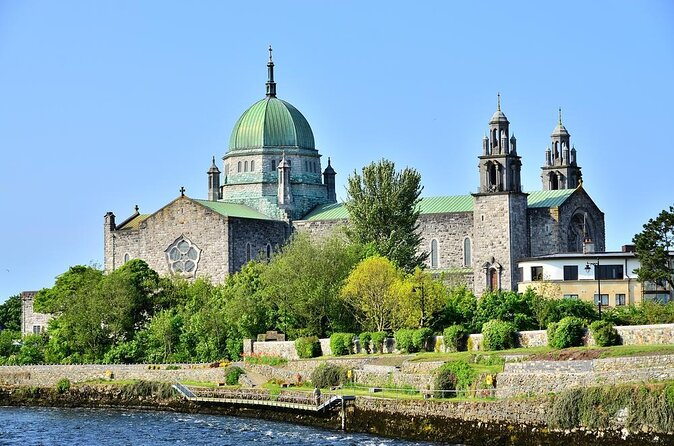
From the pedestrian bridge over the River Corrib, your group pauses to look at Europe’s newest stone cathedral, Galway Cathedral, plus the Franciscan Chapel nearby. Even if you are not religious, this is a strong visual break in the walk, and the bridge view helps you orient yourself with the river system.
Then you head toward Lynch’s Castle on the way back via the popular River Walk. Lynch’s Castle is described as the finest surviving town-castle in Ireland, and your guide connects it to the powerful Lynch clan.
If you like architectural “tells,” this stop is a good one. You’ll hear about the building’s history and also about its crests and roundels. It’s the sort of detail you can stare at once you know what you are looking for, and it turns a fortress façade into a story.
Lynch’s Castle to the Latin Quarter edges: Dead Man’s Lane, a famous window, and Nora Barnacle
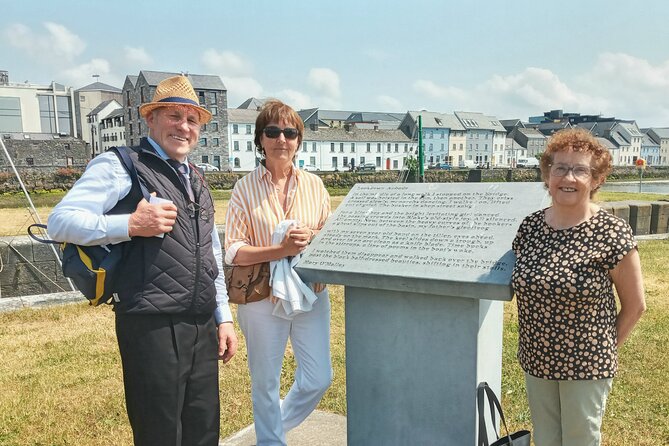
After Lynch’s Castle, the tour threads into Market Street and Church Lane, once called Dead Man’s Lane. The guide explains the idea that funerals passed along that route on the way into the old graveyard, which gives the lane a weight you will not get from a casual stroll.
You then hear a story tied to the Lynch Memorial window, erected in 1854. The legend shared here is intense, involving a mayor of Galway, Mayor Lynch, and the claim that he hanged his own son at this location. It’s dark, but these stories help explain why certain places earned fear, respect, or myth over time.
As the route passes close to the Bowling Green, you shift into literary Ireland. You’ll learn that Nora Barnacle, closely associated with Galway, had a family home there, and that she famously dated Irish writer James Joyce on 16 June 1904. That date is why Bloomsday exists, and it’s a fun way to connect Galway to a global cultural moment.
This stretch is a strong example of how the tour balances architecture with human stories. One moment you’re at a historic burial route, and the next you’re in the orbit of Joyce and modern literature.
Inside St Nicholas Collegiate Church: medieval scale, Catholic roots, and Columbus
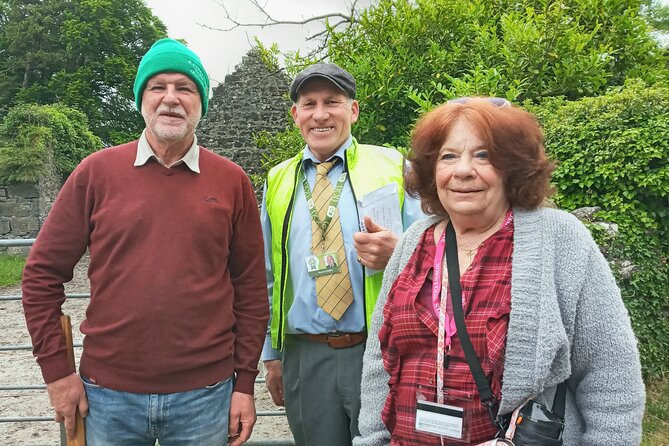
This is the tour’s big “yes, that’s worth it” stop. You arrive at St Nicholas Collegiate Church with your guide, and the focus is on what makes it unusual: it is described as the largest Medieval church in continuous use in Ireland.
Your guide also explains the shift from Catholic origins to today’s Protestant function. Then you get a very specific legend tied to Christopher Columbus, with the claim that he worshipped there in 1477 before his voyage.
The practical bonus is the voucher toward a visit. The information provided says the voucher applies for 10am and 1pm tours only. In addition, you’re offered discounted tickets to join the church’s guided tours, which operate Mon-Fri at 11am and 2pm, and on Wednesdays at 12pm and 3pm.
If you are trying to plan around opening times, this matters. When a tour includes timed access or discount options, you can build your day around the building instead of waiting until you feel lucky.
Even in less-than-perfect weather, this stop offers a reliable indoor anchor. Just be ready to move in and out with the changing conditions, since the overall tour depends on weather for the walking parts.
High Street Latin Quarter to Spanish Parade: pubs, Cromwell lore, and Galway’s port days
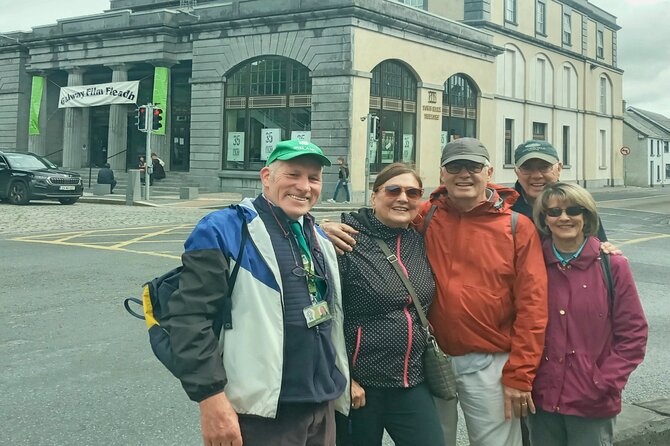
After the church, the route reaches Galway’s Latin Quarter via High Street. You’ll pass the iconic King’s Head Pub, where the site is tied to a legend about Oliver Cromwell gifting it as payment to the executioner of King Charles I.
You also move along to the Naughton House, described as once owned by an Irish MP in the British Parliament known as Humanity Dick Martyn. These names and nicknames can sound like trivia, but they help you understand how personalities and politics got remembered in street-level ways.
Then the tour heads to Spanish Parade, an open-space area that formerly contained the old Galway port until 1840. The guide connects Spanish arrivals to local merchant families, with ships coming from Spain carrying wines and spices, and you’ll hear about the Spanish Arch adjacent to the area.
This segment is great if you want the city to feel like a trading hub, not just a stop on the route to somewhere else. It also gives you an easy “where am I?” moment, because port sites tend to shape the street grid around them.
Hall of the Red Earl to theatre streets: Norman ruins and the Irish language stage
The tour loops back toward the medieval site of Hall of the Red Earl. The building’s story here is that it once served as a castle residence of Richard de Burgo, a powerful Norman. You’ll also hear that the ruins were lost for centuries and only rediscovered in the late 1990s.
That archaeological detail matters because it explains why some “old” things feel like they appear suddenly. You get a reason for the ruins’ current visibility, which is more satisfying than simply being told that something is historic.
Next you move to Druid Theatre, where you learn that the Druid Theatre Company was founded in 1975 by university graduates. Your guide also ties the theatre to major Irish writers, including Tom Murphy and Martin McDonagh, plus the broader scene of actors and directors who worked with Druid over the years.
Then the route reaches An Taibhdhearc, described as Ireland’s only Irish-language theatre. You’ll hear it was created as a large-scale cultural project in the early 1920s when Ireland became a Free State, and that Micheal MacLiamor served as the first director or manager from 1928.
If you like Galway for modern culture as much as old stone, these stops give you a second lens. It’s not just medieval and myth, it’s also how language and theatre continue shaping the city.
Abbeygate Street Lower and the former cathedral building: why Dr Michael Browne changed the plan
Your final approach includes the former cathedral building at Middle Street and Abbeygate Street Lower. The description given is that it was in use for many centuries, but it was deemed inadequate by Galway bishop Dr Michael Browne in 1957.
You also get an Abbeygate thread tied to the Augustinian Order. The guide explains the Augustinians arrived in Galway in 1500 and set up an Abbey in Forthil. Oliver Cromwell’s English army banished them for a period, and then the order returned in 1760 to establish this building.
This stop ties multiple layers together, older religious power, political disruption, and later redesign. Even if you are not a church architecture person, it’s a coherent way to understand why buildings change roles across time.
The tour ends back at the meeting point, so you are not stuck figuring out how to retrace your steps at the end of the walk.
Price and value: $150.60 per private group up to 13
At $150.60 per group (up to 13 people), the value depends on how many people are sharing the cost. If you fill the whole group size, that’s about $11.60 per person. If you are a party of four, it lands closer to $37.50 per person. If you are traveling solo, it effectively becomes a higher per-person cost, since private group pricing stays the same.
For families and small friend groups, this is a strong way to get a private guide without paying a “one person only” premium. You also get something you cannot easily copy with a phone app, the back-and-forth of questions and route tweaks.
One more value point is timing. The tour includes St Nicholas Collegiate Church help with vouchers and discounted guided tour tickets, so you are not taking extra steps to make that happen on your own. For anyone who wants church access without juggling tickets mid-trip, that included support is part of what you are paying for.
Finally, the tour is frequently booked well in advance (on average about 61 days). If your trip dates line up with high demand, booking earlier helps you secure your preferred time slot.
Who this tour fits best, and who should skip it
This is a good fit if you want an organized way to learn Galway’s center on foot, and you like stories tied to real places. It’s also a strong pick for groups who want to go at their own pace, because the tour is set up as private, with your group doing the walking while your guide handles the context.
It is also a good option if you care about both old-world sights and living culture. The route intentionally moves from medieval church sites to theatre streets and Irish language stage culture.
A consideration: since it’s an outdoor walk, you should plan for weather. The experience is described as requiring good weather, and if it gets canceled by the supplier due to poor weather, you’ll be offered a different date or a full refund. If you are traveling only on rainy days with no flexibility, keep that in mind.
For mobility needs, a shortened version can be offered. The details are not described, but the key point is that the small team has plans in place for emergencies and can adjust the route.
Should you book this Galway History Walking tour?
Book it if you want a guided orientation in central Galway, plus a St Nicholas Collegiate Church stop with practical voucher or discount support. It’s especially worthwhile when you’re traveling with family or friends and can share the group price, because you get a private guide without the cost exploding per person.
Skip it if you hate walking in city streets for almost two hours outdoors, or if you have no flexibility for weather changes. Also, if you prefer a very fast, “see it and move on” style, know this is history and culture focused, not a sprint.
If you like your city tour with details you can actually use while exploring later, this one gives you plenty to remember and plenty to point out when you are out on your own.
FAQ
How long is the Galway History Walking tour?
It lasts about 1 hour 55 minutes.
Where does the tour meet and where does it end?
Meet at the front entrance of the Hardiman Hotel on Eyre Square in Galway. The tour ends back at the meeting point.
Is this a private tour?
Yes. It is private, and only your group participates.
What group size is it for?
It is priced per group of up to 13 people.
Is the tour offered in English?
Yes, it is offered in English.
Is St Nicholas Church included, and what timing is supported?
A voucher toward a visit to St Nicholas Church is included for 10am and 1pm tours only. You can also get discount tickets to join guided tours at St Nicholas Collegiate Church (Mon-Fri at 11am and 2pm, and Wednesdays at 12pm and 3pm).
What happens if the weather is bad?
The experience requires good weather. If it is canceled due to poor weather, you will be offered a different date or a full refund.
Can the tour be adapted for mobility issues?
A shortened version of the city tour can be offered for guests with mobility issues.
Is there free cancellation?
Yes. You can cancel up to 24 hours in advance for a full refund.
Rebellions Retold
- The Dark History Tour of Galway City
★ 5.0 · 146 reviews - Galway City on Foot with Seán: Stories, History, Local Tips, Chat and More..
★ 5.0 · 64 reviews - Aran Knitting, History and Heritage in the Burren
★ 5.0 · 11 reviews - Lough Corrib History and Scenic Lake Cruise from Lisloughrey Pier Tour
★ 4.5 · 4 reviews
Streets Taken Slow
- Galway: Dark History Guided City Walking Tour
★ 4.8 · 236 reviews - The Legendary Walking Tour of Galway
★ 5.0 · 230 reviews - Galway: Food and Culture Walking Tour with Tastings
★ 4.7 · 127 reviews - Galway City: Guided 1.5-Hour Walking Tour
★ 4.9 · 115 reviews
Latest to join the session in Galway


Historical Tours, compared.
Dublin Historical Centre Food Tour with 8 Food Tastings & Drinks
Read our review →
Historical 2-Hour Guided Walking Tour of Dublin
Read our review →
Dublin to Cork, Blarney Castle & Cóbh Heritage Centre by train
Read our review →
Jeanie Johnston Tall Ship Irish Famine History Tour
Read our review →

Deliciously Dublin: The Artisan Donut Walking & History Tour
Read our review →Browse the lists this tour appears in