
Reviewed · HISTORICAL TOURS
Private Ennis Essential History Tour with Dr Jane O’Brien
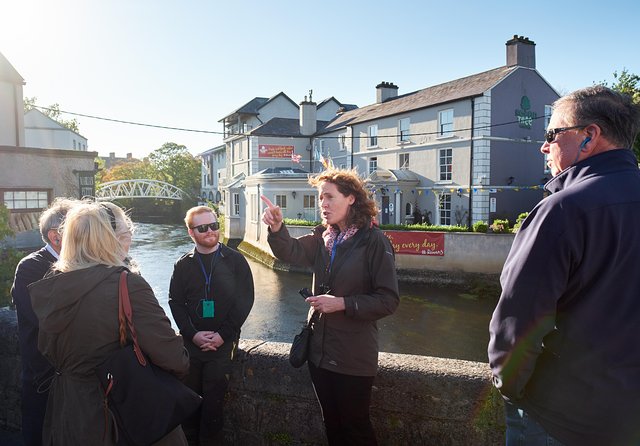
Ennis turns into a living story in 70 minutes. With Dr Jane O’Brien, this private walking tour uses historical sources to recreate what daily life felt like, not just dates. I love the people-first storytelling and the option for the guide to use an amplification device so you catch every detail.
One thing to consider: the route is busy, with short stops at each landmark, so if you want long loitering time at a single site, this is more of a fast, focused walk than a slow sightseeing day.
In This Review
- Key things I’d plan for
- Ennis Essential History in 1 hour 10 minutes
- Meeting at Ennis Tourist Information Centre and starting on foot
- Clare Museum: the Convent roots and why Ennis began as a market town
- Daniel O’Connell Monument: Catholic Emancipation in the centre of town
- Abbey Street bow-ways: where poorer tenements shaped the town
- Ennis Friary and Old Ennis Abbey: Franciscan roots plus River Fergus views
- Francis Street and the Friary: stained glass and the O’Brien story
- Arthur’s Row convent building: orphanage and industrial school memories
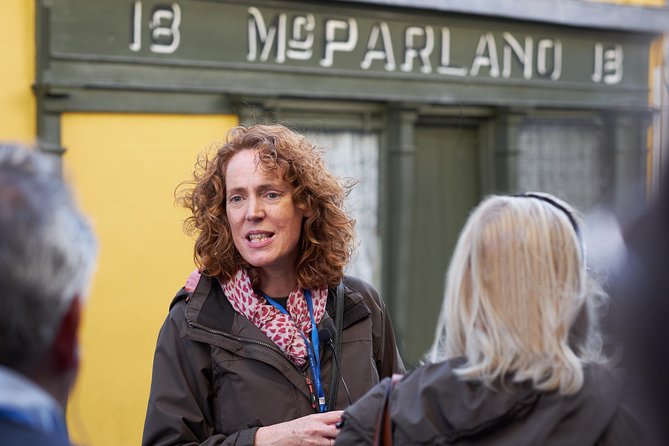
- Parnell Street and McParland House: a timber-framed survivor
- Chapel Lane and penal times: a church built in 1735 and the Great Famine
- Market Place: markets as social life, matchmaking, and faction fights
- Barrack Street and Gallows Green: crimes and punishments from 1660 records
- Cathedral of Saints Peter and Paul: 1830 to 1870, plus a haunted towerhouse
- Value and price: when 270.32 makes sense
- Who should book this Ennis essential history walk
- Practical tips to make the most of the 70-minute route
- Should you book it?
- FAQ
- How long is the Private Ennis Essential History Tour with Dr Jane O’Brien?
- What does the tour cost?
- Is this tour private?
- Is the tour offered in English?
- Can the guide use an amplification device?
- Where is the meeting point?
- Does it end where it starts?
- Do I get a mobile ticket?
- Are service animals allowed?
- Is there free cancellation?
Key things I’d plan for
- Private group up to 6: plenty of room for questions and pacing that actually fits your group.
- Dr Jane O’Brien as your guide: historical sources are used to bring Ennis to life with real characters and context.
- Amplification device option: helpful in busy streets, when there are echoes, or if hearing is an issue.
- A tight, central walking route: you get a lot of Ennis in about 1 hour 10 minutes.
- Stops listed as free entry: most sites on the route are marked free to visit during the tour.
- History with real weight: from famine-era overcrowding to Gallows Green records, it is honest and sometimes intense.
Ennis Essential History in 1 hour 10 minutes
This is a private Ennis walk that moves at a brisk, clear pace. Think of it as a guided sprint through the town’s main historical chapters, with just enough time at each spot to understand what you are seeing and why it mattered.
The duration (about 1 hour 10 minutes) is ideal when you want context without losing half your day to transit or museum lines. It also means the guide can keep the story moving, linking the sites like they are chapters rather than disconnected photos on a map.
If you prefer a relaxed pace, you can still enjoy it, but be honest with yourself about your style. This tour is built around short, frequent stops. That is a feature for many people, because it gives you strong orientation fast, but it can feel tight if you want long pauses, extra viewing, or a deep dive into one specific site.
Meeting at Ennis Tourist Information Centre and starting on foot
The tour starts at the Ennis Tourist Information Centre on Arthur’s Row, O’Connell Street, in the Clonroad Beg area of Ennis. That matters more than it sounds. You begin in the heart of the pedestrian-friendly centre, which keeps the walk simple.
Ending back at the same meeting point is also convenient. You can use the final stretch to pop into nearby shops on O’Connell Street, or head back for lunch without reorganizing your day. If you like keeping your plans flexible, this setup is a smart one.
And because this is a private experience for only your group, you are not stuck matching the pace of strangers. Your guide can pause a bit longer where you are most interested, within the tour’s overall timing.
More rebellions retold in place:



Clare Museum: the Convent roots and why Ennis began as a market town
Your first stop is by Clare Museum, at the site of an old Convent building connected with the Sisters of Mercy. This is a good opener because it frames Ennis as a place that has kept reusing important buildings across centuries.
From there, the story widens to the medieval market town origins of Ennis in the 13th century. You do not just hear that Ennis existed early, you learn how a market town functions. Markets bring people together. People bring news, jobs, gossip, money, and conflict. Once you understand that, the rest of the tour makes more sense, because the later streets and squares are tied to where and how people gathered.
This stop is also a nice reminder that history is not only castles and monuments. It can be faith institutions, education, and everyday town life, layered one era on top of another.
Daniel O’Connell Monument: Catholic Emancipation in the centre of town
In the middle of Ennis, you stop at the Daniel O’Connell Monument. This is where you get a public-history moment that connects Ireland’s politics to what people likely felt on the ground.
O’Connell is tied to Catholic Emancipation, a milestone moment that shifted legal and social realities. The key value here is the way the guide makes it personal. Instead of treating emancipation as a headline, you learn how major political change tends to ripple through communities: who could do what, who felt safer, and what it meant for daily life.
If you like history that explains cause and effect, this stop usually clicks fast. It also sets up the tour’s later themes about religion, institutions, and the consequences of national events showing up in local streets.
Also keeping time in County Clare
- Dublin: Cliffs of Moher, Doolin, Burren, and Galway Day Trip
★ 4.5 · 2,851 reviews - From Doolin: Cliffs of Moher Boat Tour
★ 4.4 · 279 reviews - Public Ennis Walking Tour with Local Expert Dr Jane O’Brien
★ 5.0 · 262 reviews - From Doolin: Day Trip to Inisheer with Bike or Bus Tour
★ 4.9 · 35 reviews
Abbey Street bow-ways: where poorer tenements shaped the town
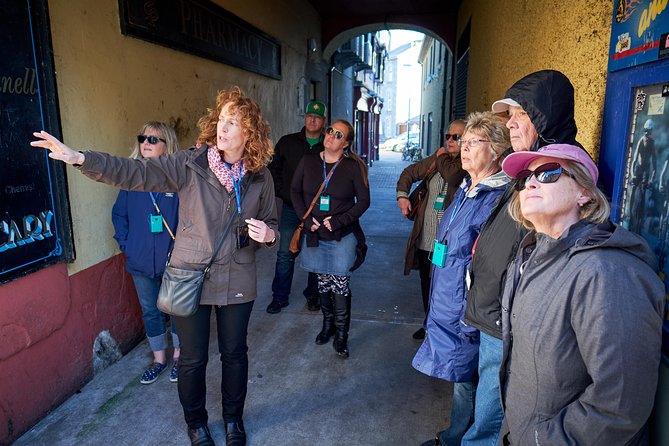
Next comes a quieter, more intimate Ennis moment: Abbey Street. It’s one of those atmospheric bow-ways, small laneways connecting main streets to areas that were once poorer tenement zones.
This is where you start seeing how a town can be “divided” without fences. The lanes show the geometry of everyday life, where people lived close together, walked short distances, and shared crowded conditions. Even in a brief stop, the point lands quickly: Ennis was not one single uniform story. It had social layers, and the streets reflect that.
It is also a good photo setup, but I’d treat photos as a second priority. Listen first. These lanes are small, and the guide’s explanation helps you notice details you’d otherwise ignore.
Ennis Friary and Old Ennis Abbey: Franciscan roots plus River Fergus views
You head toward the Old Ennis Abbey area (circa 1280s) and explore the role of the Franciscan Friars in shaping Ennis. This stop ties together religion, community development, and how towns grow around institutions.
You also get views of the River Fergus, which flows through Ennis. It’s a practical reminder that towns are not random. Water routes influence trade, movement, and where communities settle.
Then there are memorials connected with the 1916 uprising against British rule. This part matters because the tour does not stop at medieval life. It carries the story forward into modern Irish memory. You see how a town keeps commemorating, even when the events happened generations earlier.
Francis Street and the Friary: stained glass and the O’Brien story
On Francis Street, you reach one of the town’s oldest streets leading toward what was once the palace of the O’Brien Kings, the founders associated with the town’s origins.
This stop is more peaceful in tone. You also visit the friary, originally built in the 1850s, and you get to experience the stained glass windows. Even if you are not a stained-glass superfan, this is one of those moments where you can feel the atmosphere slow down. It gives your brain a break between heavier stops.
The guide also uses this point to connect power and place. The O’Briens shaped early Ennis, but the story is not frozen. It keeps evolving, and you watch that evolution through buildings and street names.
Arthur’s Row convent building: orphanage and industrial school memories
At Arthur’s Row, you explore the archived experiences connected with children from the orphanage and industrial school that once stood on the site.
This is a harder stop, and it deserves a careful read from you. Don’t treat it like another photo stop. The value is in what it adds to your understanding of how communities functioned and how vulnerable people were treated.
Tours that skip these parts can leave you with a polished, safe version of the past. This one does not. It shows that history is not only celebrations and monuments. It includes suffering, systems, and the long tail of decisions made in the name of order or care.
Parnell Street and McParland House: a timber-framed survivor
On Parnell Street, you visit the McParland House (circa 1620), described as the only known surviving timber-framed house in Ireland and also the oldest house of the town in continuous use without major structural alterations.
This stop is fascinating if you like physical evidence. Timber framing carries details that brick and modern facades often hide. The guide points out the quaint shopfront and the half-door, little design choices that tell you how the house served everyday needs, not just prestige.
And because it is in continuous use, it makes history feel current. You are standing in something that has lived through wars, economic shifts, and changing street life.
Chapel Lane and penal times: a church built in 1735 and the Great Famine
At Chapel Lane, you stand beside the building housing the chapel lane market, linked to a church built in 1735 during penal times.
This is one of the tour’s best “connect-the-dots” sections. Penal times means religious restrictions shaped what people could access and where they could gather. Then the guide connects that to the later catastrophe of the Great Famine in Ireland, including how overcrowding in lane-ways worsened conditions.
If you want the tour to feel meaningful rather than just scenic, this is where it typically happens. The setting is close and human-scale, so the story lands in a more immediate way.
Market Place: markets as social life, matchmaking, and faction fights
You then reach the Market Place, the main centre for Co Clare markets for hundreds of years. This is not just about commerce. The guide explains how markets were also social occasions, places for meeting up, matchmaking, and trading that could get heated.
One particularly memorable detail here is the mention of faction fighting. It sounds wild in a casual way, but it makes a bigger point: when lots of groups share a space, tension can erupt, especially in a society shaped by local loyalties.
There is also a market day sculpture on the site. The guide helps explain what it means today, linking modern art to older routines of town life.
Barrack Street and Gallows Green: crimes and punishments from 1660 records
On Barrack Street, the tour reaches the old Gallows Green area of town. Here you learn about crimes and punishments documented in a corporation manuscript of Ennis from 1660.
This stop can be shocking, but that is part of its value. It forces you to confront how law worked in practice, not only in theory. Reading or hearing about punishment is one thing, seeing the location where it happened is another.
If you do not usually like grim details, you can still get something out of it by focusing on the big idea: how societies enforced order, and how quickly that order could turn harsh.
Cathedral of Saints Peter and Paul: 1830 to 1870, plus a haunted towerhouse
The final stop is the Cathedral of Saints Peter and Paul, the main Catholic church of the region built between 1830 and 1870. It stands opposite the Old Ground Hotel, which was once the site of the old town jail.
One of the most intriguing details here is that the cathedral today incorporates a haunted towerhouse dating to the 1500s. Even if you treat ghost stories as folklore, the point is real: older structures and older power centres get folded into later buildings.
The tour usually ends here so you can choose. If you want to visit the cathedral further, you can. If not, you can head back to the starting area via the main shopping street.
Value and price: when 270.32 makes sense
The price is $270.32 per group, with room for up to 6 people. That is a big swing depending on your group size.
- If you fill the group with 6 people, it’s about $45 per person for a private, guided 1 hour 10 minutes walk.
- If it’s just 2 people, it becomes about $135 per person.
So when does it feel like a win? It tends to pay off when you want:
- Private pacing and discussion (so you are not fighting a crowd).
- A specialist guide like Dr Jane O’Brien who connects places to stories.
- An efficient way to get orientation in Ennis without planning a self-guided route and then guessing what you are looking at.
It’s also smart value because the tour’s listed stops are marked free entry, so you are not stacking extra ticket costs on top.
Who should book this Ennis essential history walk
This tour fits best if you:
- Want a clear, guided introduction to Ennis that you can build on for the rest of your stay.
- Like stories that explain why streets and buildings exist, not only what they look like.
- Appreciate the ability to ask questions in a small group, especially with a guide who can tailor the flow.
It also works well if you are traveling with someone who loves history but does not want a long, museum-heavy day. The walking format keeps it active.
One note for sensitive topics: the walk includes themes like famine devastation, orphanage and industrial school experiences, and punishment records. If that kind of content would ruin your mood, you should factor that into your decision.
Practical tips to make the most of the 70-minute route
- Wear comfortable walking shoes. The route is short in time but still multiple stops.
- If offered, use the amplification device. Even if you hear fine, it often improves clarity around corners and in busy pockets.
- Arrive ready with one or two questions. This kind of private tour gets better when you steer it slightly toward what you care about.
- If you have family connections or local interests, mention them early. The guide’s style is built around real people and place connections.
Should you book it?
If you want an efficient, story-driven tour that makes Ennis feel understandable fast, book it. You get a tight route, a specialist guide in Dr Jane O’Brien, and practical clarity through a potential amplification device. The free-feeling nature of the stops helps you keep the day simple.
I would not book it if your ideal day is slow and open-ended, because the structure is designed for quick, meaningful stops rather than long lingering at one location. But if you want the best version of Ennis in just over an hour, this is an easy yes.
FAQ
How long is the Private Ennis Essential History Tour with Dr Jane O’Brien?
The tour lasts about 1 hour 10 minutes.
What does the tour cost?
It costs $270.32 per group, up to 6 people.
Is this tour private?
Yes. It is a private tour, so only your group participates.
Is the tour offered in English?
Yes, the tour is offered in English.
Can the guide use an amplification device?
The tour includes the option for the guide to use an amplification device to make listening easier.
Where is the meeting point?
The meeting point is the Ennis Tourist Information Centre on Arthur’s Row, O’Connell Street, Clonroad Beg, Ennis, Co. Clare.
Does it end where it starts?
Yes. The activity ends back at the meeting point.
Do I get a mobile ticket?
Yes, the tour includes a mobile ticket.
Are service animals allowed?
Yes, service animals are allowed.
Is there free cancellation?
Yes. You can cancel for a full refund if you cancel up to 24 hours in advance of the experience start time.
Latest to join the session in County Clare


Historical Tours, compared.
Dublin Historical Centre Food Tour with 8 Food Tastings & Drinks
Read our review →
Historical 2-Hour Guided Walking Tour of Dublin
Read our review →
Dublin to Cork, Blarney Castle & Cóbh Heritage Centre by train
Read our review →
Jeanie Johnston Tall Ship Irish Famine History Tour
Read our review →

Deliciously Dublin: The Artisan Donut Walking & History Tour
Read our review →Browse the lists this tour appears in