
Reviewed · CITY TOURS
2 Hour Walking Tour of Dublin’s City Centre
Two hours, and Dublin makes sense. I like how this small-group walk strings together the city’s big landmarks in a tight route, starting at Gaiety Theatre and ending at St Stephen’s Green, so you get oriented fast. It’s an easy, no-map way to learn the who and why behind Dublin’s center without turning your day into homework.
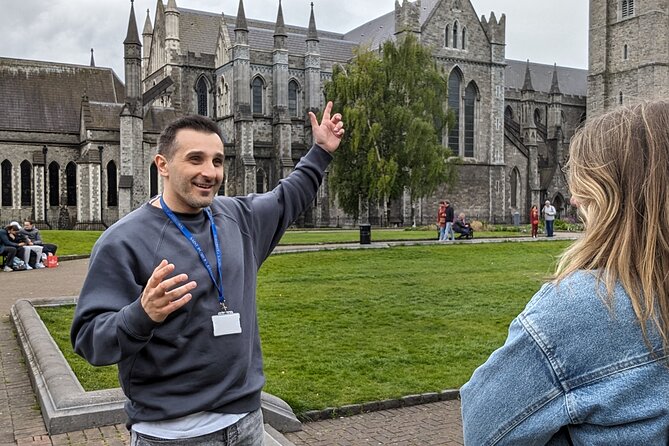
Second, I love the guide style. In particular, guides like Alin keep the mood upbeat with questions, light quizzes, and games, and some even pull out an old-photo notebook to make the stories stick. You’ll also hit major culture stops like Trinity College and the Book of Kells area, all in a schedule that fits a first or second day in town.
One thing to keep in mind: several of the star buildings you’ll see, like St Patrick’s Cathedral, Dublin Castle, and Christ Church Cathedral, have admission not included, so you may mostly enjoy the exteriors unless you decide to pay entrance separately.
In This Review
- Key points to know before you go
- 2 Hours Through Dublin’s Main Sights, Without the Map Stress
- Price and value, based on what you actually get
- Gaiety Theatre Start, St Stephen’s Green Finish, and Easy Transit Links
- Your 8-Stop Mini Course on Dublin, Explained Simply
- Stop 1: Gaiety Theatre, the curtain-raiser
- Stop 2: St Patrick’s Cathedral, from St Patrick to near ruin
- Stop 3: Dublin Castle, power, prison, and a jewel heist
- Stop 4: Christ Church Cathedral, Viking roots to whiskey-funded restoration
- Stop 5: Temple Bar, from a maze-like neighborhood to a tourist hub
- Stop 6: Trinity College Dublin, learning with famous legends
- Stop 7: Bank of Ireland, old parliament energy
- Stop 8: St Stephen’s Green, from elite green to public park
- What Makes the Tour Feel Personal: Alin-Style Storytelling and Interaction
- How to Build a Perfect Day Around This 2-Hour Walk
- Who This Tour Suits Best, and Who Should Rethink It
- Should You Book This 2-Hour Dublin City Centre Walk?
- FAQ
- How long is the Dublin city centre walking tour?
- Where does the tour start and end?
- Is the tour in English?
- Is it a small group tour?
- What does the tour include?
- Are admission tickets included for all stops?
- How do I get the ticket?
- Is it near public transportation?
- Are service animals allowed?
- What is the cancellation policy?
Key points to know before you go
- Small-group size (max 10) keeps the pace friendly and the Q and A actually happens.
- Quick orientation for your whole trip covers Dublin’s power sites, cathedrals, and the Temple Bar zone.
- Guide-led storytelling with interaction includes games, quizzes, and photo-based anecdotes.
- Short stop times (about 15 minutes each) make it ideal for a highlights walk, not a museum marathon.
- Some entrances are not included, so plan for outside views and choose interiors later.
2 Hours Through Dublin’s Main Sights, Without the Map Stress
If you only have a sliver of time, a tight walking tour like this is a smart move. Dublin’s center can feel like a patchwork of centuries, and this route helps you connect the dots quickly, so the city stops looking random.
I also like the rhythm. The tour runs about 2 hours, and each major stop gets a brief moment so you see a lot without standing around forever. That makes it a great fit for arrival day, or for when you want a clear plan before you go exploring on your own.
Price and value, based on what you actually get
At $28.96 per person for about 2 hours, you’re paying for structure and a guide, not for entrances. The value is strongest if you want the “why” behind what you’re looking at, plus practical next-step ideas while you’re in the neighborhood.
Also, the tour has a proven track record, with a 4.9 average rating and a 98% recommendation rate. It’s small-group too, with a maximum of 10 people, which matters because you get more back-and-forth instead of a one-way lecture.
One more practical note: it’s typically booked about 33 days in advance. That’s your hint to reserve early, especially if you have a narrow window in Dublin.
More Guided Walking Tours in Dublin



Gaiety Theatre Start, St Stephen’s Green Finish, and Easy Transit Links
Starting at Gaiety Theatre on King Street South is convenient and easy to spot. You don’t need a treasure hunt, and the meeting point is in the heart of the action, which helps if you’re jet-lagged or trying to squeeze the tour into a busy day.
The walk ends at 3 St Stephen’s Green, right by the Fusiliers Arch, which marks the main entrance to the park on Grafton Street. It’s also next to the Luas tram stop, so you can roll straight into the rest of your day without backtracking.
I like this “start here, end here” setup because Dublin’s center is best explored in loops. When the tour finishes by a major transit point and a big public space, it’s easier to pivot to lunch, shopping streets, or a late-afternoon stroll through the park.
Your 8-Stop Mini Course on Dublin, Explained Simply
The route is built around major landmarks you’ll recognize fast, even if you haven’t studied Dublin’s history. The best part is that each stop comes with a story you can remember, not just a sign you can read.
Each stop is about 15 minutes, which means you’ll see plenty but won’t linger. If you want to go inside cathedrals or castles, treat the tour as your guide to what’s worth paying for later.
More Irish streets taken slow:
- 90 Minute Dublin Walking tour and Sightseeing tips
★ 5.0 · 916 reviews - 2-Hour Historical Walking Tour from Dublin
★ 5.0 · 875 reviews - Historical 2-Hour Guided Walking Tour of Dublin
★ 4.7 · 865 reviews - Dublin Traditional Irish 3 Course Meal Walking Tour with Local
★ 5.0 · 755 reviews
Stop 1: Gaiety Theatre, the curtain-raiser
You begin at Gaiety Theatre, a good first anchor because it signals you’re in Dublin’s cultural lane right away. You get the tour’s context here, setting up what you’ll understand by the time you reach the cathedrals and civic buildings later.
What to watch for: stay alert for the way the guide connects theater and storytelling to the city’s identity. Even if you only see the outside, it helps your brain file the rest of the walk.
Possible drawback: because the tour is short, you won’t get a deep look into the theater itself.
Stop 2: St Patrick’s Cathedral, from St Patrick to near ruin
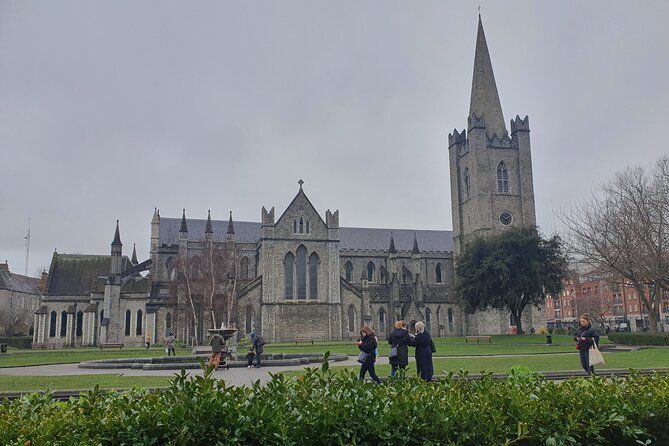
St Patrick’s Cathedral is tied to St Patrick himself, and the story you’ll hear covers big architectural shifts over time. You’ll also learn about a darker chapter, when the cathedral fell near ruin and was rescued by the Guinness family.
Why it’s worth your attention: this is where Dublin’s “layers” feel real. The building isn’t just old, it reflects changing eras and changing fortunes.
What you should plan for: admission for the cathedral is not included, so you’ll likely be making choices on the spot if you want interior time.
Stop 3: Dublin Castle, power, prison, and a jewel heist
Dublin Castle began under the Anglo-Normans as a simple tower and grew into a complex seat of power. The guide’s version of events also includes darker uses, including times it served as a prison, plus a dramatic story about a daring jewel heist.
Why you’ll enjoy this stop: it gives you a sense of Dublin as a political center, not just a party destination or a pub-lined street.
Possible drawback: since admission isn’t included here either, you may mainly get the exterior and the timeline in your head. If you want interior details, plan to go back later on your own.
Stop 4: Christ Church Cathedral, Viking roots to whiskey-funded restoration
Christ Church Cathedral starts with Viking-era origins, founded in 1030. From there, it changes hands, with Anglo-Normans adding Gothic flair, and later a 19th-century restoration funded by whiskey.
This is one of the stops where the guide’s tone matters. The Viking-to-Gothic-to-whiskey story is the kind of thing that could sound random if it were just facts. In this format, it lands as a clear timeline you can follow.
Again, admissions are not included, so you’ll likely decide whether to pay to go inside based on how much time you want to spend.
Stop 5: Temple Bar, from a maze-like neighborhood to a tourist hub
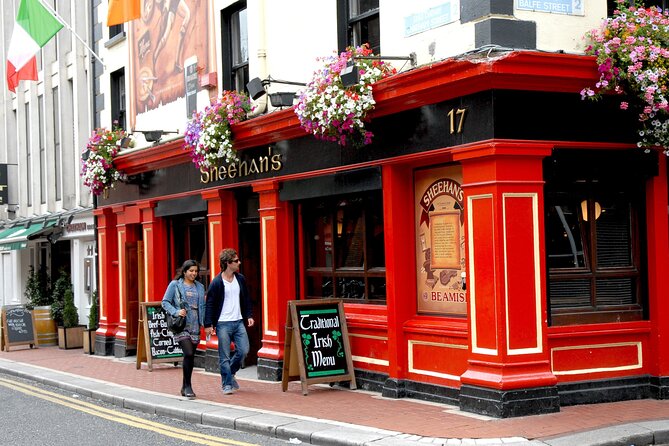
Temple Bar’s past is a big part of its identity. You’ll hear how it once was described as maze-like and notorious, and how it transformed into today’s mix of pubs and art galleries, plus a lively nightlife scene.
How to use this stop on your trip: after the tour, Temple Bar is an easy zone to browse at night or for an early pint. If you prefer quieter evenings, you can also use the tour to locate it, then explore nearby streets based on your own style.
Quick drawback: this area can be busy at peak times, so it’s better to treat the tour’s quick stop as a starting point.
Stop 6: Trinity College Dublin, learning with famous legends
Trinity College Dublin is presented as a major center of learning, with the added draw of the Book of Kells. You’ll also hear that the college’s story includes turbulent periods, which makes it feel more like a living institution than a postcard campus.
Why this stop works: even without entering everything, you get Dublin’s intellectual side. It’s a nice counterweight to the medieval and political stops earlier.
Admissions here are free as part of the tour’s approach, so you can spend your brief time focusing on what you want to remember.
Stop 7: Bank of Ireland, old parliament energy
The Bank of Ireland stop comes with a political twist. It points back to when this space was tied to Irish politics through the Old Parliament House era, and it connects to the Act of Union. The guide also explains how architectural ideas from this area helped inspire grand buildings.
Why it’s a standout for history-brains: it’s not just “look at a building.” It’s “this mattered, and here’s how.”
A practical note: this stop is free in the tour format, so you should be able to focus on photos and storytelling without worrying about entrances.
Stop 8: St Stephen’s Green, from elite green to public park
The finale is St Stephen’s Green, a park with an interesting past. It used to be an exclusive green space for Dublin’s elite, and it became a public park thanks to the Guinness family.
What you’ll feel by the end: after cathedrals and castles, stepping into a park is like switching from history class to a breather. Even if you don’t go in for long, you’re dropped at a pleasant place to continue your walk.
The finishing point near Luas is a bonus. You’re not trapped back where you started.
What Makes the Tour Feel Personal: Alin-Style Storytelling and Interaction

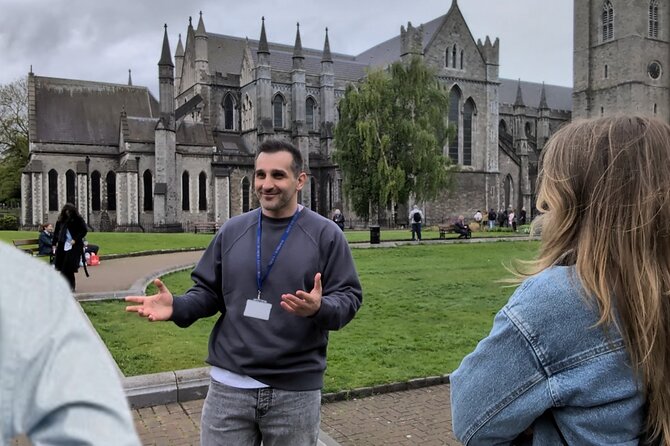
The most consistently praised part of the experience is the guide. You can expect more than facts. The guide keeps people involved with questions and quick interactive moments, and some guides use games along the way to hold attention.
There’s also a “show, don’t tell” element. A notebook of old photos has shown up as a memorable tool in past tours, and it makes the medieval timelines and civic transformations feel concrete instead of abstract.
I also like the practical side. Many guides take time to offer ideas for what to do next, including local restaurants and pubs that are a bit off the standard tourist trail. Even if you don’t follow every suggestion, you’ll leave with a better sense of which neighborhoods match your mood.
One more detail that can upgrade your experience: small groups can turn into near-private walks on some dates. With a maximum of 10, and sometimes fewer people, the pace becomes more flexible and the tour can feel customized.
How to Build a Perfect Day Around This 2-Hour Walk
Think of this tour as your Dublin “operating system.” Once you’ve walked the core route, everything else you do gets easier.
Here’s a simple way to use it:
- If you do it in the morning, you’ll have a clear mental map for museums, self-guided wandering, and lunch choices.
- If you do it in the afternoon, you can set your priorities, then decide what to revisit later with paid entrances.
Temple Bar is a big temptation after the tour because it’s close to nightlife energy. But I recommend using the route to locate it, then stepping away briefly to find the vibe you like. If you want quieter corners, ask the guide where to go for a calmer drink.
Also, since some entrances are not included, use your tour stop as a decision tool. When you see St Patrick’s Cathedral or Dublin Castle from outside, you’ll quickly learn whether you want to spend money and time getting inside later.
Who This Tour Suits Best, and Who Should Rethink It
This is a strong choice if you want:
- a first introduction to Dublin’s center
- a small group experience
- a guide who uses stories and interaction, not just a script
It also works well for mixed ages. You can see why from the way guides handle families, including teens, plus older visitors who still want to participate without rushing.
It may not be ideal if you’re the type who wants long interior time at multiple major attractions. With stops at about 15 minutes each and several admission areas not included, this tour is about seeing a lot and learning the context, not doing full cathedral or castle visits.
Finally, plan for walking and moderate physical fitness. The tour is a city-center walk, and Dublin streets can be uneven. Comfortable shoes matter.
Should You Book This 2-Hour Dublin City Centre Walk?
I think this is an easy yes for many visitors. If your goal is to get your bearings fast, learn Dublin’s main landmarks in a single loop, and leave with a clearer plan for the rest of your trip, the structure is right.
Book it if you want the highlights in a short time and you like guided storytelling with interaction. The small group cap at 10 also supports a better experience than big-bus style tours.
I’d pause only if you’re set on spending lots of time inside the major buildings right away. Since admissions for some key sites are not included, you’ll likely want to plan a second visit later. If that sounds fine, this tour becomes the perfect first step.
FAQ
How long is the Dublin city centre walking tour?
It runs for about 2 hours.
Where does the tour start and end?
The tour starts at Gaiety Theatre on King Street South, Dublin 2. It ends at 3 St Stephen’s Green, at the Fusiliers Arch entrance on Grafton Street.
Is the tour in English?
Yes, it is offered in English.
Is it a small group tour?
Yes. It has a maximum of 10 travelers.
What does the tour include?
It includes a fun introduction to Dublin’s history and culture with an engaging guide.
Are admission tickets included for all stops?
No. Some stops are free as part of the tour, but places like St Patrick’s Cathedral, Dublin Castle, and Christ Church Cathedral have admission tickets not included.
How do I get the ticket?
You receive a mobile ticket.
Is it near public transportation?
Yes, it’s near public transportation, and the tour ends right by the Luas tram stop.
Are service animals allowed?
Yes, service animals are allowed.
What is the cancellation policy?
Free cancellation is available up to 24 hours in advance of the experience start time for a full refund.
Latest to join the session in Dublin






City Tours, compared.

Cliffs of Moher, Burren & Galway City Day Tour
Read our review →

Dublin to Rock of Cashel, Cork City & Blarney Castle Guided Tour
Read our review →
City Sightseeing Dublin Hop-On Hop-Off Bus Tour
Read our review →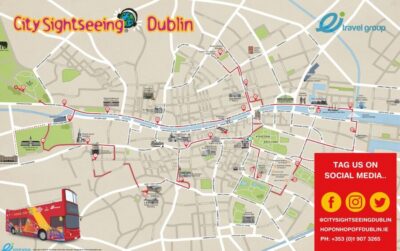

Go City: Dublin Pass | Save up to 50% – Includes 35+ Things To Do
Read our review →

Aran Islands and Cliffs of Moher Day Cruise sailing from Galway City Docks
Read our review →Browse the lists this tour appears in