
Reviewed · WALKING TOURS
A Self Guided Walking Tour of Dublin’s Docklands
Docklands might sound like an industrial afterthought, but this route turns it into a story you can walk. You get offline audio and maps, so you can roam at your own rhythm while the narration points out what matters along the riverfront. I also like the manageable pacing for a self-guided walk, with clear landmarks and stops that keep you moving.
The main thing to consider is simple: this is not included with headphones or a smartphone. So you’ll want a charged phone, your own earbuds, and a quick check that your audio starts where it should.
In This Review
- Key Things to Know Before You Start
- The Docklands Walk That Makes Sense Without a Guide
- Start at the Custom House, Then Follow the Riverfront Mood
- Custom House to the Quayside Warehouses: Old Trade, Modern Edges
- James Connolly and Liberty Hall Theatre: A Labor History Marker
- Transit Zone Reality Check: Busáras and Connolly Station
- IFSC to the Triumphal Arch: From Money to Maritime Pride
- Famine Memorials and Seafarers: The Heaviest Stops in the Route
- Crossing the Liffey: Bridges with Views and Big-City Names
- Admiral William Brown, BrewDog, and a Quick Break Option
- Port Mechanics You Can Actually See: Diving Bell and Sea Lock
- Grand Canal Docks to Grand Canal Square: The Finish Line That’s Easy
- Price and Value: What $11.99 Buys You
- Who This Tour Fits Best, and Who Should Skip It
- Should You Book This Dublin Docklands Audio Walk?
- FAQ
- Where does the tour start and end?
- How long is the walking tour?
- What language is the audio tour in?
- Do I need an internet connection during the walk?
- What do I need to bring?
- Is this a private tour or shared with others?
Key Things to Know Before You Start
- Offline audio and maps help you keep going without worrying about mobile data
- A GPS self-guided route means you control the pace, pauses, and photo stops
- Docklands landmarks in sequence keep the walk logical, from trade buildings to bridges
- Engineering and memorials side by side make the area more than just a pretty walk
- End at Grand Canal Square so you can wrap up near food and easy transit
The Docklands Walk That Makes Sense Without a Guide
This tour works best if you like travel that feels “on your feet,” not “on rails.” It’s an audio route you follow through Dublin Docklands, with narration that helps you read the city like a map of ideas: maritime trade, labor history, famine memory, and modern bridges all in one line.
Because it’s self-guided, you’re not stuck at the speed of a group. If you want to slow down at the water, you can. If you want to power-walk between stations, you can do that too. The offline setup is a big part of the comfort. You’re not hunting for signal when you’re mid-quay and trying to keep your place.
Start at the Custom House, Then Follow the Riverfront Mood
The walk begins at the Custom House on North Wall (Dublin 1). This is a strong starting point because the building signals what Docklands used to be: Dublin’s trade and commerce hub. When the audio kicks in here, the area clicks from “random waterfront streets” into something purposeful.
From the start, you’re oriented toward the quays. You’ll be walking through a part of Dublin where old port structures meet new city plans. That contrast is the point. You’ll see historic warehouses alongside newer development, and the audio gives you the thread that connects the two.
Practical tip: wear shoes you can trust on pavements that can get busy near transport stops. Even though the walk is short, you will be sharing sidewalks with commuters.
More Guided Walking Tours in Dublin



Custom House to the Quayside Warehouses: Old Trade, Modern Edges
After the Custom House, you pass along the quayside where historic warehouses and modern development sit next to each other. This stretch is worth taking slowly. The port story here is not abstract. You can literally see how the built environment supported shipping and storage, then how those same spaces evolved as Dublin’s Docklands changed roles.
If you like city texture, this part delivers. Warehouses are not just backdrops. They explain why the route feels the way it does: wide edges for movement, long sightlines toward the water, and clusters of landmarks spaced for walking.
Potential drawback: if you’re expecting only dramatic scenery like cliffs or countryside views, you’ll need to appreciate architecture and urban scale. This is a “city reader” walk, not a nature walk.
James Connolly and Liberty Hall Theatre: A Labor History Marker
Next you’ll come to the memorial for James Connolly, a key figure in Ireland’s fight for independence and workers’ rights. Right after, the route brings you past Liberty Hall Theatre, an important landmark connected to Dublin’s labor movement history.
This is where the tour becomes more than Docklands logistics. It turns the waterfront into a social history page. You start realizing that workers, unions, and political movements are tied to maritime labor and the working life around the docks. The audio narration is what makes this feel connected, rather than like you’re just passing plaques.
If you like history that’s tied to specific people and sites, this is a high-value stop area.
More Irish streets taken slow:
- 90 Minute Dublin Walking tour and Sightseeing tips
★ 5.0 · 916 reviews - 2-Hour Historical Walking Tour from Dublin
★ 5.0 · 875 reviews - Historical 2-Hour Guided Walking Tour of Dublin
★ 4.7 · 865 reviews - Dublin Traditional Irish 3 Course Meal Walking Tour with Local
★ 5.0 · 755 reviews
Transit Zone Reality Check: Busáras and Connolly Station
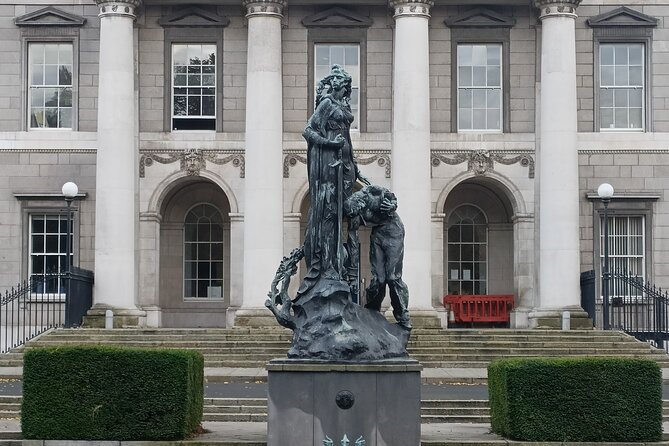
Then the walk shifts into a very Dublin rhythm: transport and connections. You’ll pass Busáras, Dublin’s central bus station, and then Connolly Train Station, one of the city’s main rail hubs for domestic and international routes.
This section is practical for planning. It also reminds you that Docklands is not isolated. It feeds into the rest of Dublin quickly. If you want to save time, it’s handy to know these are nearby as you’re walking.
Consideration: around major stations, sidewalks can feel crowded, and crossings can take attention. Keep your eyes up, especially if you’re listening with both ears in.
IFSC to the Triumphal Arch: From Money to Maritime Pride
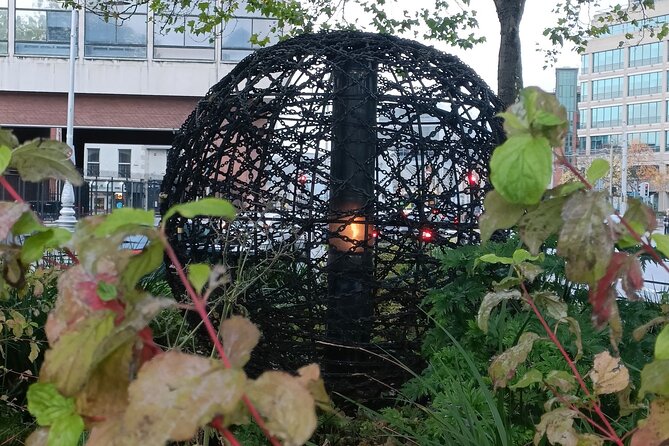
As you continue, you pass IFSC, Dublin’s financial hub, home to multinational corporations and financial institutions. The contrast with earlier maritime context can feel sharp, but that’s why it’s interesting. Docklands is a story of economic shifts.
Then you reach the Triumphal Arch, a historic monument commemorating Dublin’s maritime heritage and economic prosperity. The narration helps you read why a monument like this would be placed here, not just later as a tourist photo spot.
You’ll also see the Scherzer Rolling Lift Bridges, engineering marvels once used to keep maritime traffic moving. This stop is great if you like how cities solve problems. A lift bridge is not just a quirky object. It’s part of how a working port keeps ships and land traffic working at the same time.
Famine Memorials and Seafarers: The Heaviest Stops in the Route
The route includes two major memorial moments. You’ll pass the Famine Memorial, a poignant tribute tied to Ireland’s Great Famine in the 19th century. After that comes a memorial honoring Irish seafarers who lost their lives at sea.
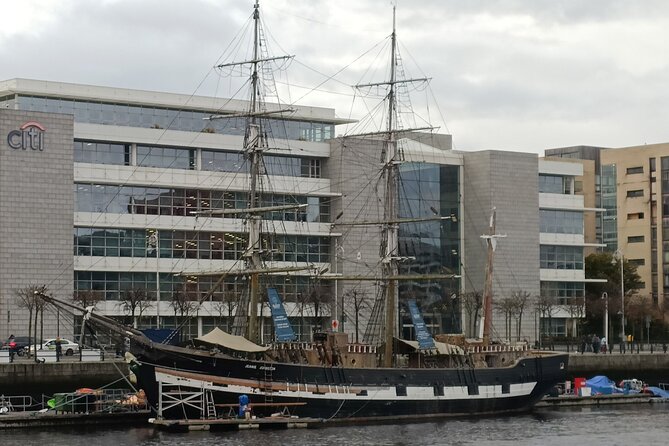
Then you’ll see a replica of The Jeanie Johnston, a historic ship that carried Irish emigrants to North America during the famine period.
This portion can hit hard, even if you’re not a “memorial person.” The value is that it keeps the Docklands story honest. Maritime history here is not only about shipping goods. It’s also about displacement, loss, and long-term impact.
Tip for your pace: if you want a moment of quiet, this is where you’ll naturally slow down. Don’t rush it just to stay on schedule.
Crossing the Liffey: Bridges with Views and Big-City Names
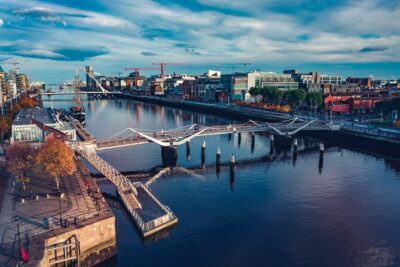
After the memorial area, the tour crosses the River Liffey via the Seán O’Casey Bridge. The audio and the route alignment make this a prime viewpoint moment. You get views toward the city skyline and waterfront.
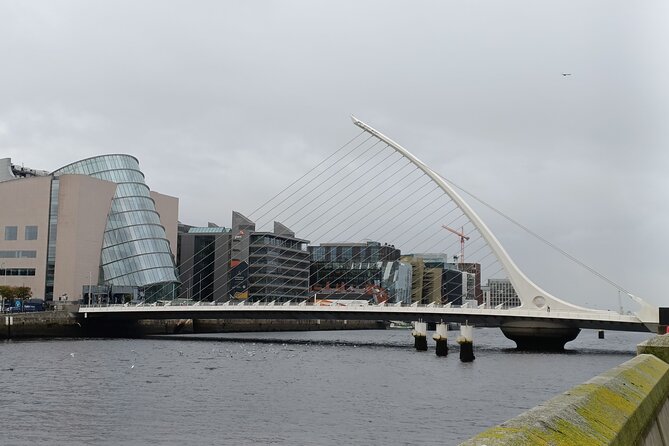
Then you’ll pass by the Samuel Beckett Bridge, an iconic modern bridge named after the writer. It’s one of those landmarks that makes it feel like Dublin is constantly renewing itself.
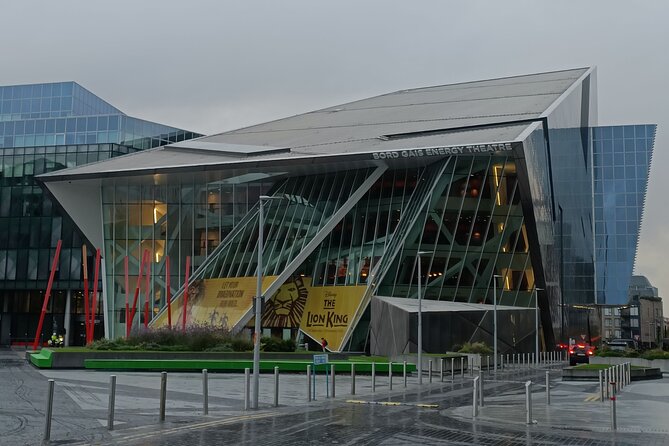
You’ll also walk past the Convention Centre Dublin, described as a state-of-the-art venue for conferences, events, and exhibitions. This stop is useful even if you do not plan to attend anything. It gives context for why modern Docklands development looks the way it does: large public spaces for gatherings.
Admiral William Brown, BrewDog, and a Quick Break Option
Along the route you’ll pass a statue of Admiral William Brown, an Irish-born naval officer who founded the Argentine Navy. It’s a reminder that Dublin’s maritime links traveled far beyond the Irish coast.
Soon after, there’s an easy break option: BrewDog Outpost Dublin. If you want a short rest with a craft beer and a lively atmosphere, this is where you’ll naturally think about it. If you prefer to keep moving, you can just treat it as a marker of where you are on the back half of the walk.
Port Mechanics You Can Actually See: Diving Bell and Sea Lock
This tour doesn’t stop at monuments. It also points out the working parts of the port past. You’ll pass the historic Diving Bell, which was once used for dock maintenance in Dublin’s busy port. It’s the kind of object that makes you think about how difficult dock work really was, and how engineering mattered day to day.
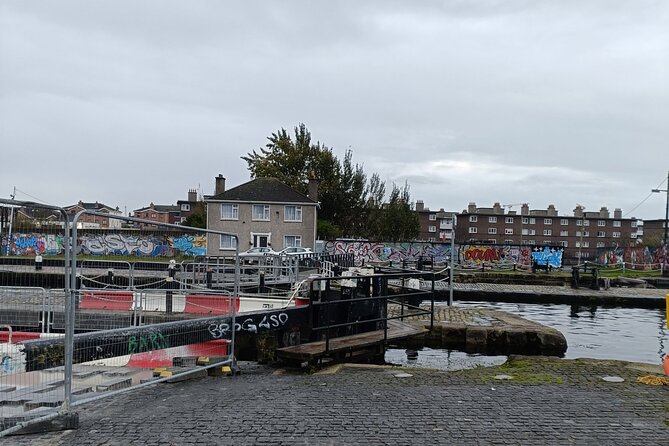
Then you’ll walk by the sea lock, a crucial piece of maritime infrastructure that helps regulate water levels in the docks. This is a good learning stop because it explains why ports need control systems, not just ships and cranes.
If you like practical history, these two stops make the whole route feel more grounded.
Grand Canal Docks to Grand Canal Square: The Finish Line That’s Easy
The last phase begins around the canal basin area. You’ll see the Grand Canal Docks sign, then pass Hanover Quay, a waterfront stretch mixing residential and commercial development.
Next, the walk goes by Hanover Quay Studios, a recording studio complex associated with musicians and artists. Even if you don’t know the names, it adds flavor. It tells you that Docklands is now a creative and working district, not only a transport and trade district.
You’ll also pass Red Sticks Dublin, where the tour ends at Grand Canal Square. Finishing here works well because it’s a public space with modern architecture and cultural attractions. It’s a natural place to pause, grab a snack, and then connect to the rest of your day.
Price and Value: What $11.99 Buys You
At $11.99 per person, this feels priced for what you actually use: about 50 minutes to 1 hour 10 minutes of an audio walk, plus the fact you get unlimited, lifetime use before and after your booking date. That matters because you’re not just paying for one experience. You’re paying for a route you can repeat if you want a second pass when the area looks different.
You also get offline access to audio, maps, and geodata, plus directions that help you start at the right spot. In a city where data can be unreliable, offline tools are more than a perk. They reduce friction. Less friction means more walking time and fewer moments where you stop and fiddle.
Who This Tour Fits Best, and Who Should Skip It
This self-guided Docklands walk is ideal if you:
- Want a short, focused route that still covers big topics
- Like history that’s tied to specific sites, not just general narration
- Prefer to move on your terms, stopping for photos or a coffee without asking anyone
It may not be perfect if you:
- Want a traditional live guided tour with Q and A
- Need a lot of seating or long rest breaks
- Expect only scenic views, not architecture, memorials, and bridges
Should You Book This Dublin Docklands Audio Walk?
I think you should book if you want a smart way to see Docklands without spending time deciding where to go. The route hits the key anchors in a logical walking line, from Custom House to Grand Canal Square, and the audio format keeps you oriented.
Go for it if you like learning while walking, especially when the narration points you to details you’d otherwise miss, like the engineering story behind the Scherzer Rolling Lift Bridges and the port mechanics like the Diving Bell and sea lock. If you’re traveling with a charged smartphone and your own headphones, you’ll get a smooth experience.
FAQ
Where does the tour start and end?
The tour starts at the Custom House, North Wall, Dublin 1, and ends at Red Sticks Dublin on the Grand Canal in the Dublin Docklands area.
How long is the walking tour?
It takes about 50 minutes to 1 hour and 10 minutes.
What language is the audio tour in?
The narration is offered in English.
Do I need an internet connection during the walk?
You can use offline access for audio, maps, and geodata, which helps you save on data usage.
What do I need to bring?
Bring your own smartphone and headphones.
Is this a private tour or shared with others?
This is a private tour/activity, so only your group participates.
More Self-Guided Tours in Dublin
- Christ Church Cathedral Entrance Ticket & Self-Guided Tour
★ 4.6 · 773 reviews - Dublin Ghost Hunt Exploration Game and Tour
★ 4.0 · 34 reviews - Private Dublin Treasure Hunt Self Guided Tour
★ 4.5 · 14 reviews - Dublin Self-Guided Murder Mystery Tour by Temple Bar
★ 3.5 · 12 reviews
Latest to join the session in Dublin



Walking Tours, compared.
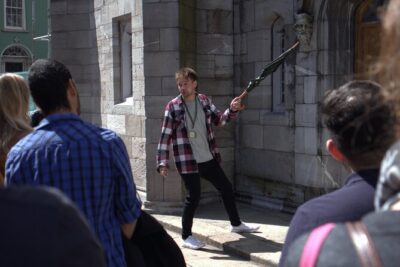
Dublin Highlights and Hidden Gems Guided Walking Tour
Read our review →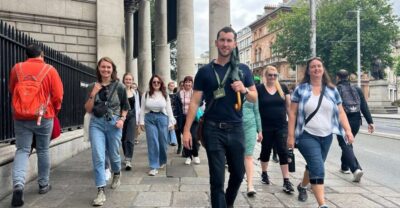
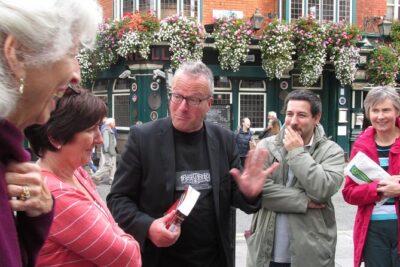
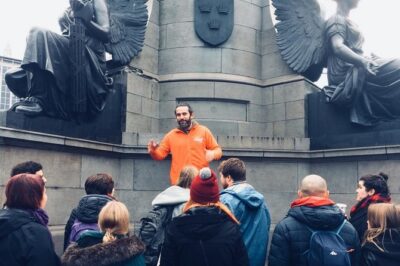
90 Minute Dublin Walking tour and Sightseeing tips
Read our review →

Historical 2-Hour Guided Walking Tour of Dublin
Read our review →
Dublin Traditional Irish 3 Course Meal Walking Tour with Local
Read our review →
Browse the lists this tour appears in