
Reviewed · WALKING TOURS
A Walk Through Time in Fort Dunree
History feels personal at Fort Dunree. This is a scenic, one-hour guided walk that links the Fort Dunree Military Museum to big moments in Irish and European history, with views over Lough Swilly and the Wild Atlantic Way. I especially like the personal storytelling from Sharon, who brings family connection to the fort, plus the included museum admission you can use at your own pace.
One thing to plan for: this is an outdoors walk in a coastal, windy area, and it requires good weather.
In This Review
- Key highlights before you go
- Entering Fort Dunree: a time walk with ocean views
- Meet at Dunree Head and get ready for a 1-hour plan
- Stop 1 at the Fort Dunree Military Museum: where the guide starts your timeline
- How the history unfolds: from Ice Age to early inhabitants to clan power
- Napoleonic and world-war strategy, explained in a place you can see
- Don’t skip the nature part: local flora, fauna, and a wild setting
- Fort Museum time after the walk: use the admission included
- Price and logistics: is $23.66 worth it?
- Who should book this Fort Dunree time walk
- Should you book A Walk Through Time in Fort Dunree?
- FAQ
- How long is the Fort Dunree walk?
- How far is the walking route?
- Is admission to the Fort Dunree Military Museum included?
- Where is the meeting point?
- What language is the tour offered in, and how many people are in a group?
- What if weather is bad, or I need to cancel?
Key highlights before you go
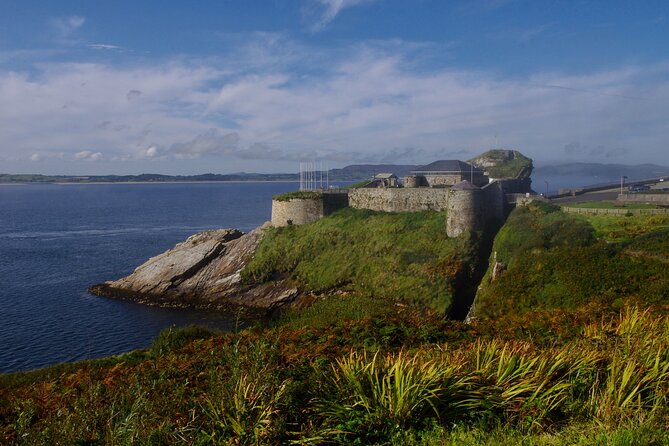
- A tight 1-hour format with a 2 km route, so you get real context without a half-day commitment
- Local guide Sharon adds family-connected storytelling about Fort Dunree
- Fort Dunree Military Museum admission included, then you can linger after the walk
- Wild Atlantic Way views all along the route, including Dunree Head as a Discovery Point
- Nature as part of the story, with pointers to local flora and fauna
Entering Fort Dunree: a time walk with ocean views
Fort Dunree is one of those places where the setting and the subject match. You are walking at the edge of Donegal’s coast, looking out toward Lough Swilly, and it makes the military and clan history feel less like a lecture and more like an explanation of why people built, defended, and lived here.
The tour is built for focus. It moves through time, starting from far back in prehistory, then stepping forward through major waves of settlement and conflict. The payoff is that the history doesn’t stay trapped in dates. It connects to geography, because the fort’s defensive value is tied directly to what you can see from the site.
I like that it stays practical. You are not signing up for a long hike or a complicated schedule. It’s about an hour on a route around 2 km, guided by a qualified local person, with a museum visit included at the end.
Meet at Dunree Head and get ready for a 1-hour plan
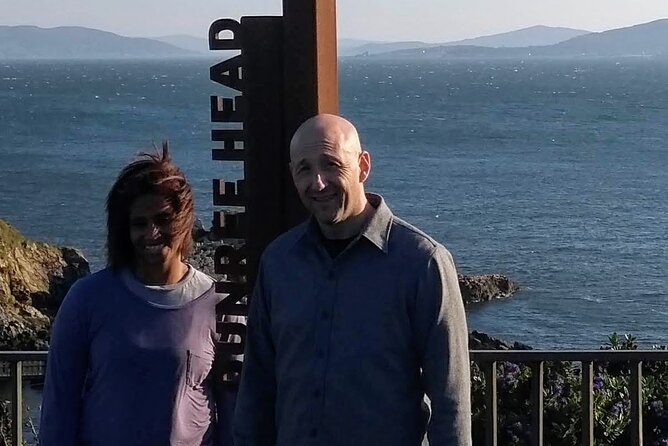
The walk starts at Dunree Head, near the meeting point listed as 5CWW+PV Dunree Head, Donegal. The activity ends back at the meeting point, so you can plan the rest of your day without worrying about transport to a second location.
Start time is 11:00 am, and the tour runs about 1 hour. That timing matters in this part of Donegal, where weather and daylight can change fast. If you’re building a day around the Wild Atlantic Way, this is an easy slot that still leaves time to explore on your own afterward.
This experience is offered in English, and the group size is capped at 20. A small-ish group helps the guide keep the pace human, and it also makes questions easier if something catches your attention, like a particular defensive feature or a story about local families.
You get a mobile ticket, which is convenient if you’re already juggling phone maps and bus times. The site is also described as near public transportation, so you are not locked into only renting a car.
More Irish streets taken slow:



Stop 1 at the Fort Dunree Military Museum: where the guide starts your timeline
The entire experience centers on one main stop: Fort Dunree Military Museum. Even though it feels like a walking tour, the fort is the anchor, and the guide uses it as the starting point for your “walk through time.”
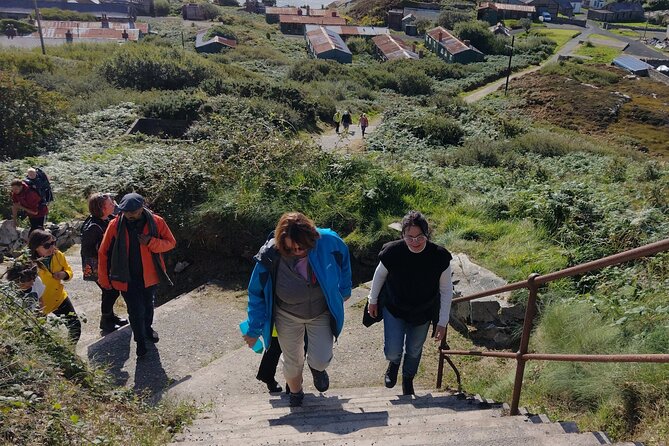
You’ll be on a guided, scenic route of about 2 km. Along that short stretch, the guide connects what you’re seeing in the natural surroundings with what happened there historically. It’s not just “look at this view.” It’s “here is why this place mattered.”
A big reason the tour works is how the guide frames the fort. Sharon has a strong personal connection to the fort, and that comes through in the way she explains the place. It makes the story more grounded, especially when the timeline shifts from early inhabitants to clan power and then into military strategy.
After the walk, admission to the Fort Museum is included. That’s important. A guided story gives you context, but the museum gives you the objects, artifacts, and details you can return to when your brain wants to slow down. You can enjoy it at your own pace.
How the history unfolds: from Ice Age to early inhabitants to clan power
This tour is structured as a timeline you can feel in your legs. You start with the distant past, including the end of the last Ice Age, and you move forward toward the arrival of the first inhabitants. It’s a clever choice, because it helps you understand that this coastline was never static. Conditions changed, people adapted, and later the fort rose on top of all those layers.
Then the focus shifts toward Dunree becoming a reputed royal seat of the McLaughlin Clan. That part is especially useful when you’re traveling in Ireland and want history to connect to local identity. Instead of treating the fort like an isolated structure, the guide places it in a broader human story.
A good guided timeline also explains why the fort’s defensive importance mattered later on. The tour reaches the Napoleonic period, and then moves into the First and Second World Wars. Even within a short walk, you get a sense of how the meaning of “defense” changes across centuries, from planning and threat assessments to actual militarized readiness.
If you like history that connects to geography, this is one of the easiest ways to get there without cramming. You can picture how someone would interpret the coastline, watch routes of ships, and decide where protection was needed.
Also keeping time in Donegal
- Oakfield Park Day Pass and Train Ride
★ 4.5 · 104 reviews - Donegal Coast One Day Self-Guided E-Bike Tour
★ 5.0 · 66 reviews - Slieve League cliffs cruise. Donegal. Guided. 1 ¾ hours.
★ 4.5 · 61 reviews - Full-Day Shore Excursion for cruise ships to Killybegs, Donegal
★ 5.0 · 54 reviews
Napoleonic and world-war strategy, explained in a place you can see
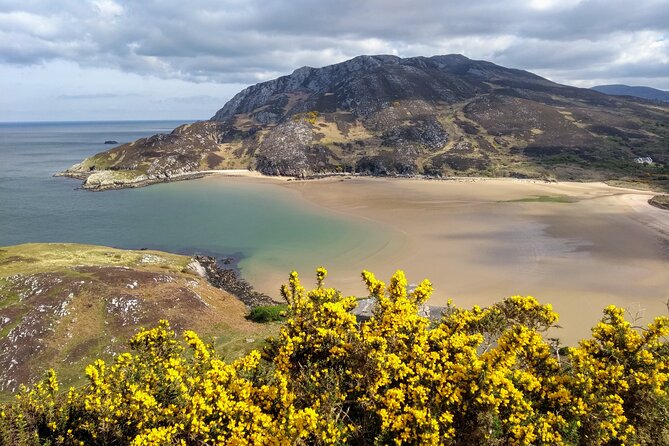
It’s one thing to read about military strategy. It’s another to stand at a site with wide sightlines and understand why it was valuable. The tour includes multiple references to the fort’s strategic and defensive importance, including during the Napoleonic Wars and in both world conflicts.
What I like here is that the guide uses the surroundings to make the strategy make sense. You’re not just hearing names of wars. You’re learning how the location itself shaped decisions. Coastal forts tend to be about early warning, control of movement, and deterrence, and you can often sense those ideas just by looking out over the water.
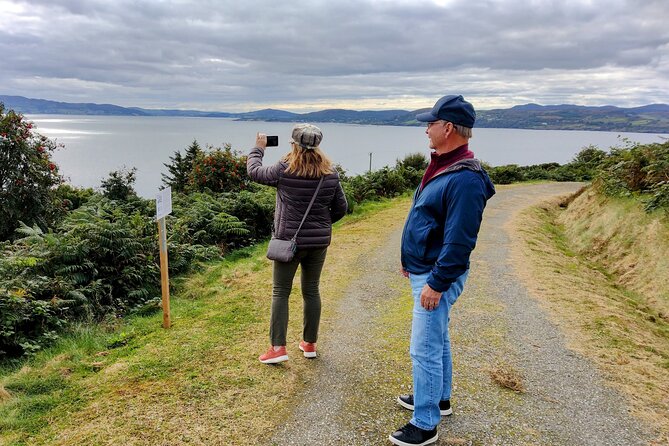
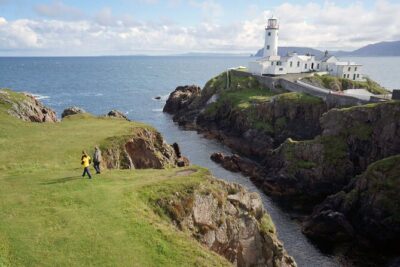
Meanwhile, the views are not a distraction. They’re part of the teaching tool. You’ll get stunning views of Lough Swilly and the Wild Atlantic Way throughout the route. Dunree Head is also identified as a Wild Atlantic Way Discovery Point, so you’re seeing the kind of dramatic coastline the route is famous for.
If your travel style is “teach me why” rather than “tell me what,” this format fits well. The guide helps you look at the fort and the coast as one combined story.
Don’t skip the nature part: local flora, fauna, and a wild setting
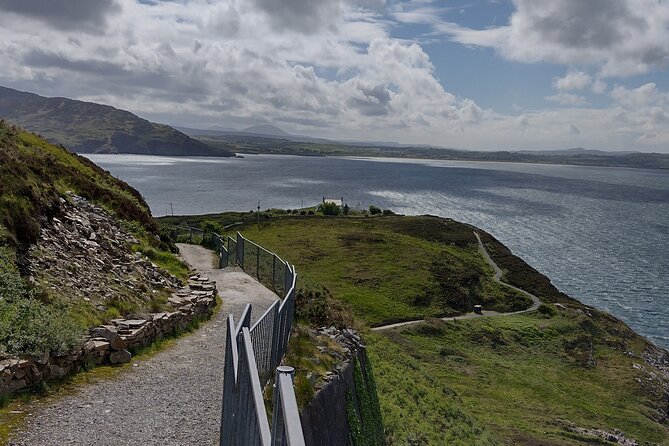
The tour isn’t only about buildings and battles. It also includes insight into local flora and fauna. In a place like this, that matters. Coastal sites are living environments, and knowing a few basics makes the walk more satisfying than just standing still for photos.
Because the route is about 2 km, the nature segment stays practical. It’s the kind of information that helps you notice what’s around you without turning the tour into a long science lesson. If you enjoy travel where the guide points out “look for this, you’ll spot it faster,” you’ll probably appreciate the pacing.
And the setting is inherently wild and unforgettable by design. The fort sits where weather can be dramatic and where the shoreline feels exposed. That’s part of the appeal, and it’s part of why the history has weight here.
Fort Museum time after the walk: use the admission included
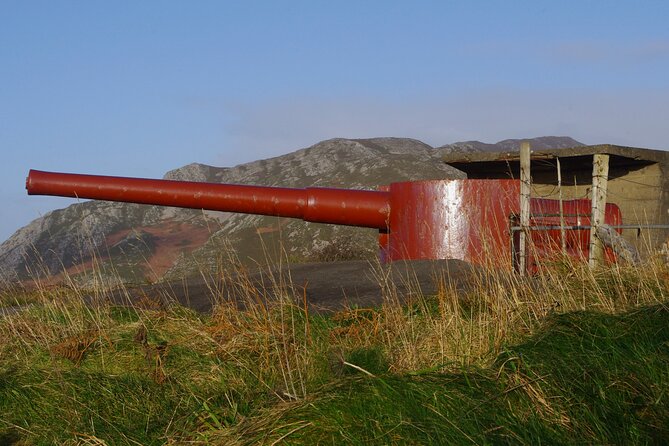
One of the best values in this experience is that you get admission to the Fort Museum included in the price, and you can enjoy it at your leisure after the guided walk.
That matters because the guide’s timeline gives you a narrative, but museums give you control. You can linger near exhibits that match your interest level. Some people want more about local defense systems. Others care more about clan history. Having museum time built in means you can follow your curiosity instead of racing back to the group.
This “guided story plus self-paced museum” setup is often what makes short tours feel complete. You get the benefit of a live guide, then you get to slow down for artifacts and details.
Price and logistics: is $23.66 worth it?
At $23.66 per person for about one hour, the price looks reasonable, especially because it includes museum admission. Many short guided tours charge for the guide but separate out site entry. Here, you get both: guided context and access to explore on your own.
The value also comes from the combination of three things that are hard to fake:
- A local guide with personal connection to the fort
- A clear, time-based story (not random stops)
- Museum admission included so you can go deeper afterward
Group size is capped at 20, which helps keep the experience from feeling rushed. And since confirmation is received at booking and the tour is offered in English, you’re not gambling on language or uncertainty about what you’re signing up for.
The main “logistics” consideration is weather. The experience requires good weather, and if it’s canceled due to poor weather, you are offered a different date or a full refund. In coastal Donegal, that’s normal and it’s worth taking seriously.
Who should book this Fort Dunree time walk
This tour is a good fit if you want:
- A short history-focused walk with a strong sense of place
- Clear context for why the fort mattered across multiple time periods
- Scenic Wild Atlantic Way views without committing to a long hike
- A museum visit you can enjoy independently after the guide finishes
I’d also suggest it if you’re pairing Donegal highlights in a day and want one activity that does multiple jobs: education, views, and an optional deeper dive inside the museum.
It may not be your best choice if you need a completely weather-proof plan, since this requires good weather and you’ll be outside as you walk the route. Still, it’s described as suitable for most travelers, and the route is only about 2 km.
Should you book A Walk Through Time in Fort Dunree?
Yes, if your idea of a great Donegal stop is history that makes sense in real space. Fort Dunree works because the coast and the fort are inseparable, and the tour is built to help you understand that relationship fast.
I’d book it especially for the human factor. Sharon’s family connection to the fort comes through in the storytelling, and that personal angle is what turns facts into something you remember. Add the included Fort Museum admission, and you’re not just taking a stroll and leaving. You’re getting guided context, then time to explore at your own pace.
If you’re flexible with weather and you like a tight one-hour plan, this is a solid value for your time in Donegal.
FAQ
How long is the Fort Dunree walk?
The tour is about 1 hour.
How far is the walking route?
The route is about 2 km.
Is admission to the Fort Dunree Military Museum included?
Yes. Admission to the Fort Museum is included in the tour price, and you can visit it at your leisure.
Where is the meeting point?
The meeting point is listed at Dunree Head (5CWW+PV Dunree Head), Donegal, Ireland, and the tour ends back at the same location.
What language is the tour offered in, and how many people are in a group?
The tour is offered in English, and it has a maximum group size of 20.
What if weather is bad, or I need to cancel?
The experience requires good weather. If it is canceled due to poor weather, you’ll be offered a different date or a full refund. You can cancel up to 24 hours in advance for a full refund.
Latest to join the session in Donegal


Walking Tours, compared.
Dublin Highlights and Hidden Gems Guided Walking Tour
Read our review →

90 Minute Dublin Walking tour and Sightseeing tips
Read our review →

Historical 2-Hour Guided Walking Tour of Dublin
Read our review →
Dublin Traditional Irish 3 Course Meal Walking Tour with Local
Read our review →
Browse the lists this tour appears in