
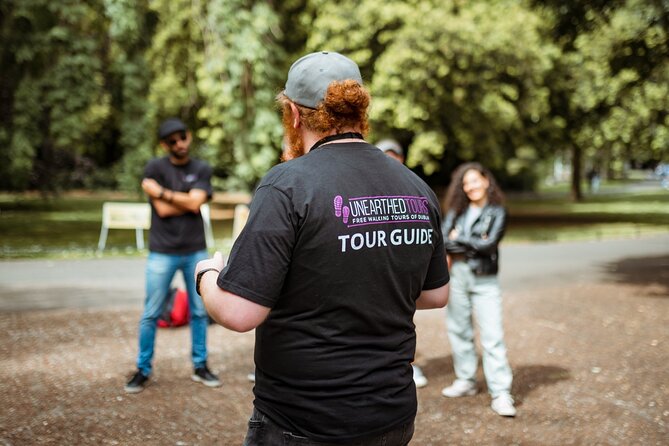
Reviewed · CITY TOURS
DayTripper Dublin: A Guided City Walking Tour
Dublin comes into focus in 2.5 hours. I love the central meeting point near St Stephen’s Green, and I love the guided format that turns a busy city into a clear story you can follow on foot. The tradeoff is that you do not enter several big attractions, like St Patrick’s Cathedral, Dublin Castle, or Christ Church, so if you came for indoor touring, you will need a second plan.
This walk is set up for easy, practical orientation. You start at the Wolfe Tone Sculpture by St Stephen’s Green and end at College Green, a short stroll from major transport and close to Grafton Street. The group stays small, up to 25 people, and you get a chance to ask questions while you go, with the guide also offering recommendations on where to go, where to eat, and what to look for next.
In This Review
- Key highlights you will feel right away
- Stepping into Dublin with a map made of stories
- Start at St Stephen’s Green, end at College Green, and keep moving
- The guide experience, from Kyron to Ciarán and beyond
- Stop by stop: what you learn on each Dublin landmark
- The Wolfe Tone Sculpture area, and the big-picture wrap-up
- St Stephen’s Green, Irish history inside the park
- A quick stop for Irish dance and music
- Grafton Street, Dublin’s main high-street energy
- The Molly Malone Statue, class and character in one icon
- Gardens near St Patrick’s Cathedral, origins without the entry fee
- Dubh Linn Gardens, Vikings and a long timeline
- Dublin Castle courtyards, political struggle without the inside visit
- Christ Church Cathedral courtyard, Viking ties and founding stories
- Temple Bar, walking the neighborhood vibe
- O’Connell Street, politics on display
- Trinity College Dublin area and the Great Irish Hunger context
- How the tour balances big themes and street-level fun
- Price and value: why about $27.82 can make sense
- Practical tips so the walk feels easy, not exhausting
- Should you book DayTripper Dublin with Unearthed Tours?
- FAQ
- How long is the DayTripper Dublin walking tour?
- Where does the tour start and end?
- Is the tour offered in English?
- What is included in the price?
- Do you enter St Patrick’s Cathedral or Dublin Castle?
- Are there any admission tickets included?
- How big is the group?
- What are the cancellation rules?
Key highlights you will feel right away
A first-time Dublin orientation in a tight 2.5-hour loop
Small group size (max 25) plus lots of Q&A time
Major landmarks covered mostly outside, with context you can’t spot on your own
Irish culture, dance, music, Vikings, and modern politics in one walk
A helpful ending at College Green, near transit and shopping streets
Stepping into Dublin with a map made of stories

The best part of this kind of walking tour is how it saves you time. Dublin is compact, but it can still feel like a blur when you first arrive. In about 2.5 hours, you get a structured path through the city’s key public spaces, and the guide ties them together with the themes you’ll keep hearing about later: nationhood, conflict, identity, and everyday Irish culture.
I like that the pacing is designed for “see and understand.” You are not just collecting photos. You are learning why these places matter, and that changes how you read the streets after the tour.
There is also value in the format. Even for a first visit, you do not have to figure out which landmarks connect to which historical periods. The guide does that thinking for you, then points out what to notice as you walk.
Start at St Stephen’s Green, end at College Green, and keep moving
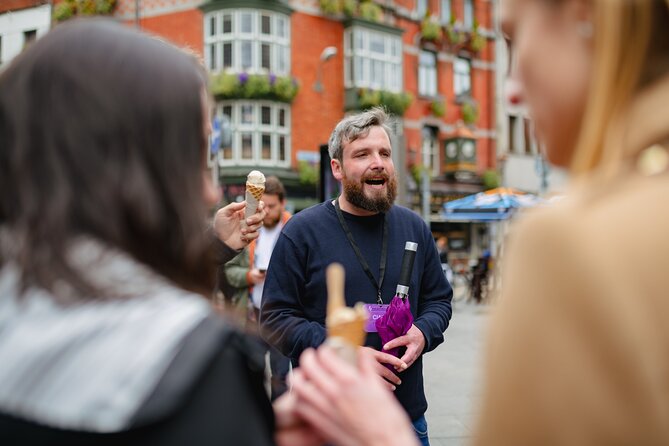
Your day begins near the St Stephen’s Green area at the Wolfe Tone Sculpture. That matters because it puts you in a central pocket right away, not out by some far-off bus stop. And since the tour is close to public transportation, you can fit it into many arrival schedules.
You finish at College Green. The route is set up so you can naturally continue the rest of your day without a long commute. College Green is also close to Grafton Street, so it is an easy jump into cafés, shops, and more sightseeing. In plain terms, the tour ends where other plans usually start.
More Guided Walking Tours in Dublin



The guide experience, from Kyron to Ciarán and beyond
The guides are a big reason this tour earns a 5-star track record. Different guide names show up in the experiences people shared, including Kyron, Ciarán, and Keiron/Cieran. While names differ, the theme is consistent: you get a local perspective and an active back-and-forth as you walk.
You should expect more than a lecture. The best guides here answer questions on the spot, and they help you connect what you just saw with what you might want to do next. One guide even asked what a guest wanted to focus on, then adjusted the conversation toward women’s history. That kind of flexibility is rare on short tours, and it’s one of the reasons this works well even if you have specific interests.
Also, because the group can be small, you might get a more personal feel than you would on a huge tour. Just remember that the tour caps at 25 travelers, so you are not going to be trapped in a crowded herd.
Stop by stop: what you learn on each Dublin landmark
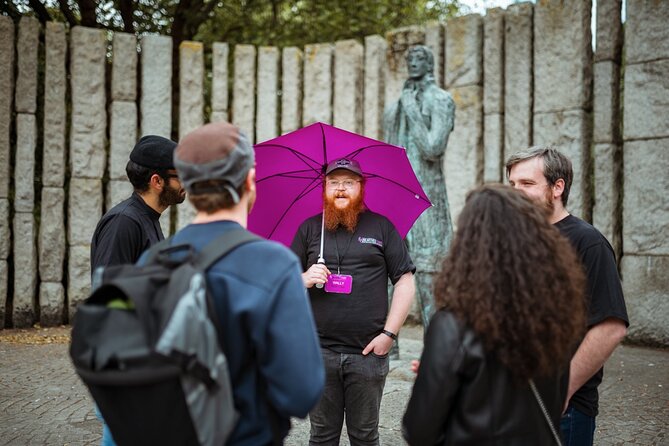
This is a walk built around the main threads of Dublin life. You move from public monuments and parks into streets tied to music, working-class legend, church origins, Viking-era landmarks, and modern political history. It is all guided, mostly outside, so you are learning through context and observation.
Here is what each stop is doing for you.
More Irish streets taken slow:
- 90 Minute Dublin Walking tour and Sightseeing tips
★ 5.0 · 916 reviews - 2-Hour Historical Walking Tour from Dublin
★ 5.0 · 875 reviews - Historical 2-Hour Guided Walking Tour of Dublin
★ 4.7 · 865 reviews - Dublin Traditional Irish 3 Course Meal Walking Tour with Local
★ 5.0 · 755 reviews
The Wolfe Tone Sculpture area, and the big-picture wrap-up
The tour is tied to the Wolfe Tone area near St Stephen’s Green. Wolfe Tone is a key name in Irish political history, so even the early stage signals that this is not only a “pretty streets” walk.
At this stop, the guide wraps up the larger historical arc. You also get practical recommendations for the rest of your city time: where to go next, where to eat, and what hidden details to look for as you continue.
St Stephen’s Green, Irish history inside the park
St Stephen’s Green is a great place to start understanding Irish culture because it is public and everyday. Instead of jumping straight into monumental buildings, you begin with a park that acts like a social living room.
Your guide uses this space to introduce Irish history and culture. You also get a calmer moment mid-walk, which is useful if you want to keep your energy up for the busier streets later.
A quick stop for Irish dance and music
There is a dedicated segment in the route that focuses on Irish dance and music. It sounds simple, but it helps you. When you later hear a song or see a dance reference, you are more likely to understand the cultural context, not just recognize the performance.
If you care about arts as part of history, this is a smart inclusion. If you do not, it still works because it adds human color to the political monuments.
Grafton Street, Dublin’s main high-street energy
Grafton Street is one of Dublin’s busiest walking zones. It gives you a real sense of city rhythm, and the guide uses the time there to talk through what makes this kind of street important in daily life.
You also get a street-level understanding of how Dublin’s central areas evolved, because you are moving through the same spaces you will likely revisit later.
The Molly Malone Statue, class and character in one icon
The Molly Malone Statue is a classic Dublin stop, and your guide uses it to bring in the working-class angle. Molly Malone is tied to a story of tradespeople and street life, so the lesson goes beyond a statue photo.
It is also a useful contrast to the more formal political and religious sites later. You get both the public face of the nation and the lived experience behind the legends.
Gardens near St Patrick’s Cathedral, origins without the entry fee
Your route passes the gardens at St Patrick’s Cathedral. You do not enter St Patrick’s Cathedral, but the guide gives you the history and origins of Dublin City.
This is where the “no interior” approach can still pay off. When you only see the outside, the guide can focus on the meaning of the site in the city’s development. You still get a sense of religious and civic importance without spending time inside.
If you later want the interior, you can build it into your personal schedule. The tour is intentionally built for motion and context, not waiting lines.
Dubh Linn Gardens, Vikings and a long timeline
Dubh Linn Gardens is a quieter stop that carries a long timeline. You learn how it connects to Vikings and why this area shows up as a landmark in Dublin’s older story.
I like this kind of stop because it changes the “modern city” feeling. Even when you are walking in today’s Dublin, you start noticing how older layers shaped the city you see now.
Dublin Castle courtyards, political struggle without the inside visit
Next, you get to the courtyards of Dublin Castle. You do not enter Dublin Castle, but the guide explains the history tied to Northern Ireland and the political struggles across the nation.
This portion is valuable if you want to understand the headlines you see on later museum placards or in conversations with locals. The castle is a physical symbol of power, so it works well as a teaching point even from the outside.
Christ Church Cathedral courtyard, Viking ties and founding stories
You then move to the courtyard area near Christ Church Cathedral. Again, the tour does not enter the cathedral, but you do circle the outside architecture and hear about the cathedral’s founding and Viking history.
There is a practical advantage here: you can keep moving and still understand how early settlement and religion shaped Dublin’s center. If you are the type who hates standing still for long stretches, this format fits you well.
Temple Bar, walking the neighborhood vibe
Then comes Temple Bar. The guide brings you through the neighborhood, and you get a feel for the area’s identity through streets and atmosphere.
This is a contrast stop. Up to here, you have been tracking big historical forces. In Temple Bar, you shift toward how those forces show up in today’s visitor-facing Dublin culture.
O’Connell Street, politics on display
O’Connell Street is where the tour leans hard into modern politics. The guide explores the political landscape of Ireland throughout the 20th century and visits various statues.
This is a strong choice for anyone who wants a quick, coherent introduction to modern Irish history. Statues are not just decoration here. They are public memory, and the guide helps you read them.
Trinity College Dublin area and the Great Irish Hunger context
The final major teaching segment is outside Trinity College Dublin and the Central Bank area. You do not enter Trinity College, but you do get discussion of the Great Irish Hunger, also known as the Famine, and how it connects to the wider history of the city.
This stop matters because it reframes everything you see afterward. Even if you only remember one or two names or dates, you walk away with a clearer sense of why Dublin looks the way it does, and why certain institutions carry weight.
How the tour balances big themes and street-level fun
Part of the appeal is that you do not choose between history and fun. The route includes parks, major shopping streets, and well-known statues. It also includes political and religious sites that can sound heavy if you visit them randomly.
The guide stitching it together is what makes it work. You go from public monuments to the church origins story, then into Viking-era landmarks, and finally into modern political reminders. By the end, Dublin feels less like a random set of sights and more like a place with a storyline.
And because you are walking, the lessons stick better. You naturally notice details when you are passing them at eye level, not reading them in a museum room.
Price and value: why about $27.82 can make sense
At about $27.82 per person for a roughly 2 hours 30 minutes guided walk, this is priced like an efficient orientation tour, not a full-day attraction crawl. The value is in what you get for your time: multiple landmarks, guided explanation, and practical direction on what to do next.
You also avoid extra costs that often balloon on sight-heavy days. Lunch is not included, and entry to some sites is also not part of the tour format because you do not enter several major buildings. That keeps the tour focused and predictable.
If you have limited time, this is exactly the kind of ticket that can help you plan the rest of your trip with fewer second-guesses. People also tend to book ahead, with an average booking window of 47 days. If you are traveling during busy periods, it is wise to reserve early so you are not scrambling.
Practical tips so the walk feels easy, not exhausting
You only get moderate physical effort requirements listed, so you should plan to walk at a city pace. Wear shoes you can rely on for a couple of hours. If you are prone to sore feet, add a blister plan, because Dublin streets can add up underfoot.
Bring a light layer too. Ireland’s weather is often changeable, and you will be outside most of the time. A small day bag is helpful for water and a phone charger, since you will likely take photos at nearly every stop.
Most importantly, come with curiosity. Ask your guide what to prioritize if you have just one day, or where to eat nearby after the tour ends. The guide is set up to do exactly that.
Should you book DayTripper Dublin with Unearthed Tours?

Book it if you want a fast, guided overview of Dublin that connects culture, history, and politics without requiring you to plan every stop. It is especially good for a first visit, or for the day you want to set a foundation before branching out to museums or indoor sights later.
Skip it or pair it carefully if you expected extensive interior visits. You do not enter St Patrick’s Cathedral, Dublin Castle, Christ Church Cathedral, or Trinity College Dublin. This tour is designed for context from outside courtyards, gardens, and public streets, not for full-on building tours.
If you are the kind of traveler who loves street-level storytelling and wants your questions answered in real time, this is an easy yes. Reserve ahead, wear comfortable shoes, and treat the guide’s recommendations as your starter pack for the rest of your Dublin days.
FAQ
How long is the DayTripper Dublin walking tour?
It runs for about 2 hours 30 minutes.
Where does the tour start and end?
It starts at Wolfe Tone Sculpture by St Stephen’s Green, Dublin. It ends at College Green.
Is the tour offered in English?
Yes, the tour is offered in English.
What is included in the price?
The price includes an in-person tour guide. Lunch is not included.
Do you enter St Patrick’s Cathedral or Dublin Castle?
No. The tour notes that you do not enter St Patrick’s Cathedral, Dublin Castle, or Christ Church Cathedral.
Are there any admission tickets included?
Most stops are listed as free. Some stops are listed with admission tickets not included, which aligns with the fact that the tour does not enter certain sites.
How big is the group?
The tour has a maximum of 25 travelers.
What are the cancellation rules?
You can cancel for free up to 24 hours in advance for a full refund. Canceling less than 24 hours before start time does not refund the amount paid.
Latest to join the session in Dublin






City Tours, compared.

Cliffs of Moher, Burren & Galway City Day Tour
Read our review →
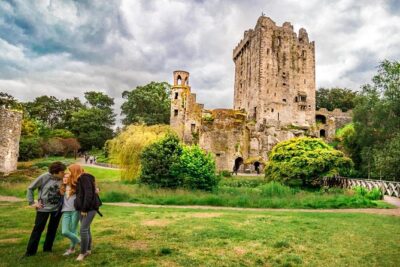
Dublin to Rock of Cashel, Cork City & Blarney Castle Guided Tour
Read our review →
City Sightseeing Dublin Hop-On Hop-Off Bus Tour
Read our review →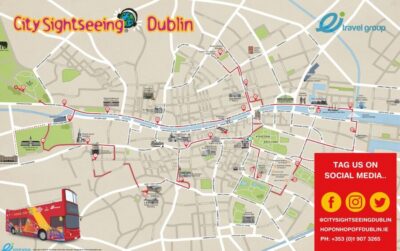

Go City: Dublin Pass | Save up to 50% – Includes 35+ Things To Do
Read our review →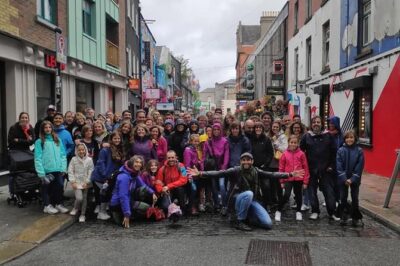

Aran Islands and Cliffs of Moher Day Cruise sailing from Galway City Docks
Read our review →Browse the lists this tour appears in