
Reviewed · HISTORICAL TOURS
Dublin: LGBT Pride Walking Tour with Queer History
Queer history feels personal when it’s on street level. This 2-hour Dublin Pride walking tour links the city’s LGBTQ milestones to real places, from Liberty Hall to Trinity College, with stories featuring Dr Lydia Foy and Panti Bliss. I especially like the people-first way the guide explains how rights changed over time, and how the route includes iconic queer Dublin spots like the Diceman’s Corner and the George. The main drawback to plan for is simple, a city walk for 2 hours means comfortable shoes matter, and you should be ready for a few heavier historical moments mixed in with Pride wins.
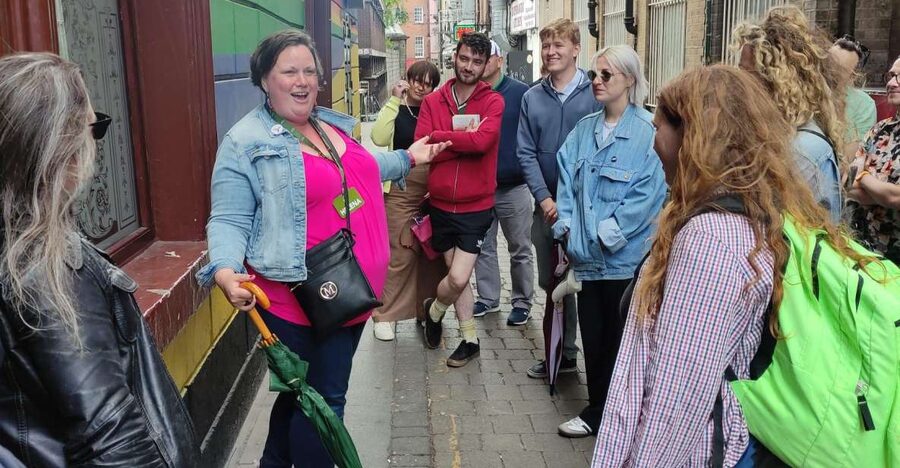
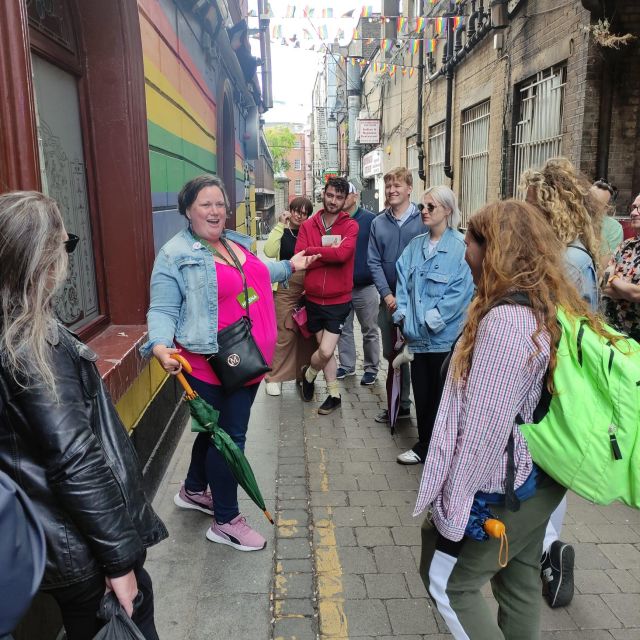
One of the strongest signals here is the guide experience. In past tours, Helena has been described as witty, funny, and warm, with enough personal anecdotes to keep the stories human, not textbook. You also get a chance to ask questions and talk through what modern equality in Ireland means, not just what happened in the past.
You’ll start outside the Old Storehouse Bar & Restaurant. Look for the guide with a green umbrella, then follow along on an English-speaking tour that ends back at the same meeting point.
In This Review
- Key highlights you will actually feel during the walk
- Why Dublin’s Pride stories are best heard on foot
- Meeting point at the Old Storehouse Bar, follow the green umbrella
- Liberty Hall: the first Pride protest and the push for equality
- The General Post Office: revolutionary queer figures like Panti Bliss
- Trinity College and the Sexual Liberation Movement
- Hirschfield Centre, the Diceman’s Corner, and queer Dublin landmarks you will remember
- The Diceman’s Corner
- Hirschfield Centre
- The George: why this LGBTQ venue belongs on your route
- Dr Lydia Foy, the Gender Recognition Act, and why legal change mattered
- How the tour keeps it engaging, funny, and not just heavy
- Practical tips for your 2-hour Pride walk
- Price and value: what $27 for 2 hours really buys you
- Who should book this Dublin LGBT Pride walking tour
- Should you book it? My straight take
- FAQ
- How long is the Dublin LGBT Pride walking tour?
- Where does the tour start?
- Where does the tour end?
- What landmarks and places will we pass?
- Are the tour stories in English?
- Is the tour wheelchair accessible?
- What should I bring?
- Is there a guide, or is it self-guided?
- Can I cancel for a full refund?
- Is there a reserve now, pay later option?
Key highlights you will actually feel during the walk
- A tight 2-hour route that keeps moving while still covering major chapters of queer history
- Liberty Hall to the General Post Office with Pride and revolutionary stories stitched into the landmarks
- Named figures, not vague dates like Dr Lydia Foy, Panti Bliss, and the Gender Recognition Act
- Major Dublin queer waypoints including Trinity College, the Hirschfield Centre, the Diceman’s Corner, and the George
- A Pride lens plus present-day context showing how Ireland went from exclusion and abuse toward marriage equality
- A guide style built for questions Helena is consistently praised as engaging, down to earth, and generous with knowledge
Why Dublin’s Pride stories are best heard on foot
Walking tours work differently than museum tours. You don’t just learn facts, you watch the city put those facts into context. On this one, the streets around you become the timeline, with each stop pointing to a specific part of Irish queer life, politics, and culture.
I like that the tour doesn’t treat Pride as a single parade moment. You get the long arc, from early exclusion and abuse, to civil rights agitation, to Pride protest pioneers, and to later legal recognition. That makes the stories feel connected, not like a list of names.
Also, Dublin has a way of making history feel close. Even when you’re standing in a plain-looking street corner, the guide can explain why that spot mattered to queer people, artists, activists, and lawmakers.
Meeting point at the Old Storehouse Bar, follow the green umbrella
Meet your guide directly outside the Old Storehouse Bar & Restaurant, and look for someone carrying a green umbrella. It’s an easy start point to find once you’re in the right area, and it helps the group form quickly so you’re not wasting time hunting.
This tour is built around a 2-hour schedule, so arriving a bit early is smart. You’ll want enough time to settle shoes, grab water if you need it, and get comfortable with the pace before you start hearing stories.
End point is the same as the meeting point, so you’re not left wondering where you’ll finish.
More Guided Walking Tours in Dublin


Liberty Hall: the first Pride protest and the push for equality
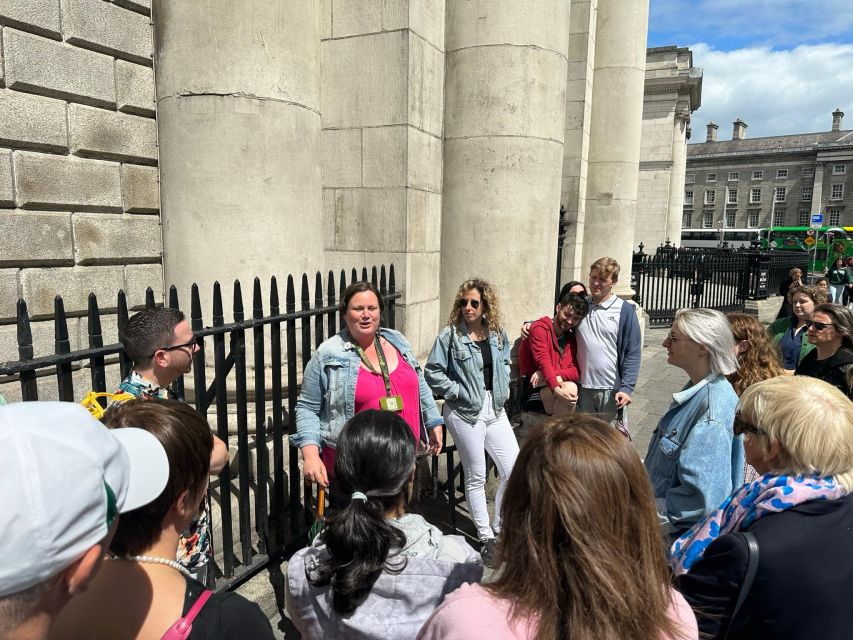
Liberty Hall is where the tour turns from background history into a clear equality story. The guide specifically connects the site to the first Pride protest at Liberty Hall, a powerful way to show that Pride in Ireland has deep roots, not just modern tradition.
What I find valuable here is the balance. Yes, you get the Pride moment, but you also hear the why behind it, how exclusion and abuse drove people into public action. The tour frames this as part of a wider shift in social attitudes, not as a random event that happened somewhere in Dublin.
If you care about how activism works, Liberty Hall is the stop that makes the rest click. You see how a community used public visibility to force recognition, then you carry that lens through the later stops.
The General Post Office: revolutionary queer figures like Panti Bliss
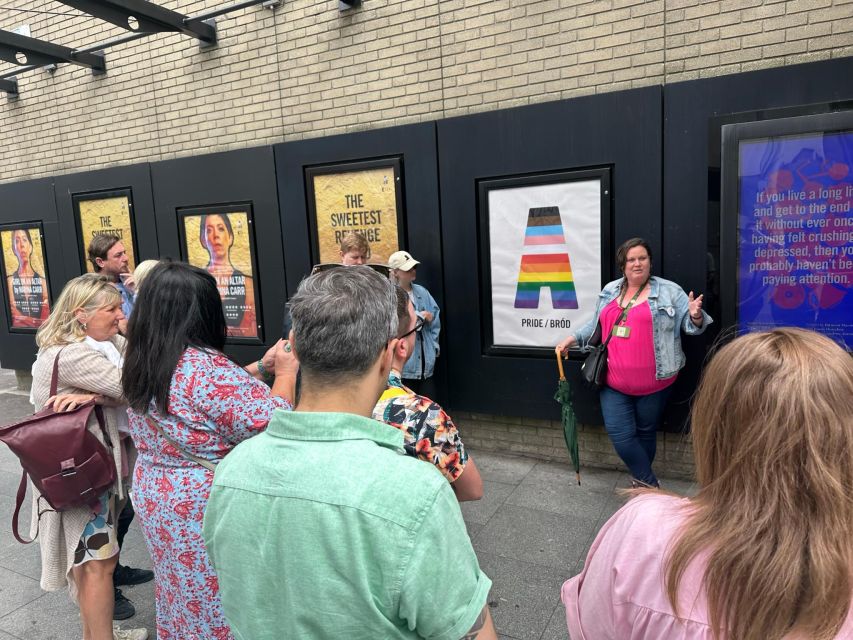
The General Post Office stop is more than a scenic landmark. It’s part of the tour’s focus on revolutionary and public-facing queer figures, including stories connected to Panti Bliss.
This is the kind of stop that works well if you like history that’s also emotional. You’re not just learning who someone was, you’re learning what kind of courage and visibility they represented, especially in a time when being queer could be dangerous.
The guide’s job here is to connect a famous name to the lived reality around them. That connection matters because it turns big headlines into something you can picture, even if you’ve never studied Irish LGBTQ history before.
More Irish streets taken slow:
- 90 Minute Dublin Walking tour and Sightseeing tips
★ 5.0 · 916 reviews - 2-Hour Historical Walking Tour from Dublin
★ 5.0 · 875 reviews - Historical 2-Hour Guided Walking Tour of Dublin
★ 4.7 · 865 reviews - Dublin Traditional Irish 3 Course Meal Walking Tour with Local
★ 5.0 · 755 reviews
Trinity College and the Sexual Liberation Movement
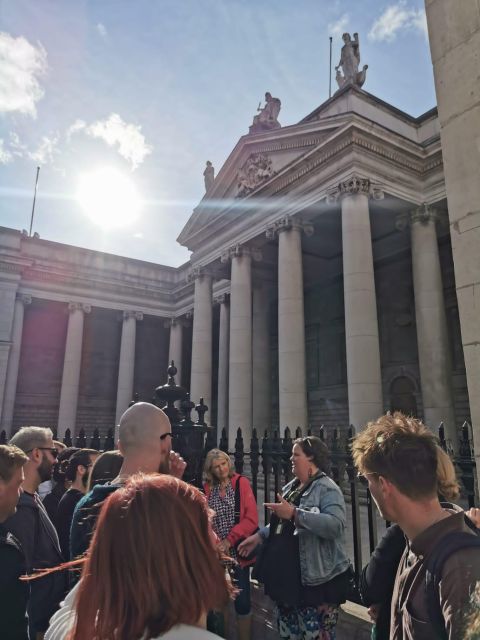
Trinity College shows up on the route as you discuss the Sexual Liberation Movement. This is a good moment on the walk because it expands the tour beyond activism alone.
Freedom movements rarely live in only one place. They spread through ideas, culture, and institutions. With Trinity College in view, the guide can explain how social change also depended on shifting attitudes among younger people, in public debate, and through cultural momentum.
Practical note, Trinity is a busy area in general. Since your tour is a group experience, just be ready to listen while still moving through a lively part of central Dublin. The guide keeps the pacing tight, so you’re not stuck waiting around.
Hirschfield Centre, the Diceman’s Corner, and queer Dublin landmarks you will remember
This tour includes a run of real, recognizable queer Dublin stops. You pass the Hirschfield Centre, the Diceman’s Corner, and other key locations tied to LGBTQ life and community organizing.
Here’s what makes these stops feel different from generic sightseeing. The guide treats them like chapters in the same story. You’re not only collecting trivia, you’re learning where queer community energy gathered, how visibility grew, and why some corners of Dublin became meaningful for people seeking connection or solidarity.
The Diceman’s Corner
The Diceman’s Corner is included as a landmark, and it helps you understand Pride history as something grounded in everyday places. It’s a reminder that queer history is not only made in parliaments or press rooms. It’s also shaped in streets, meeting points, and spaces where community forms.
Hirschfield Centre
The Hirschfield Centre stop adds modern continuity. It’s one way the tour shows that LGBTQ community life evolved over time, building institutions, support networks, and public presence.
The George: why this LGBTQ venue belongs on your route
The tour also includes the George, described as Ireland’s most iconic LGBTQ venue. That matters because the George isn’t just a nightlife stop. It’s part of the cultural and social story of queer Dublin.
When a tour includes a place like this, it’s usually doing two jobs at once. First, it points you to a real-world queer landmark you can revisit later. Second, it frames queer nightlife as community space, not only entertainment.
Even if you’re not planning a night out, the George stop helps you see the city’s Pride identity in a tangible way.
Dr Lydia Foy, the Gender Recognition Act, and why legal change mattered
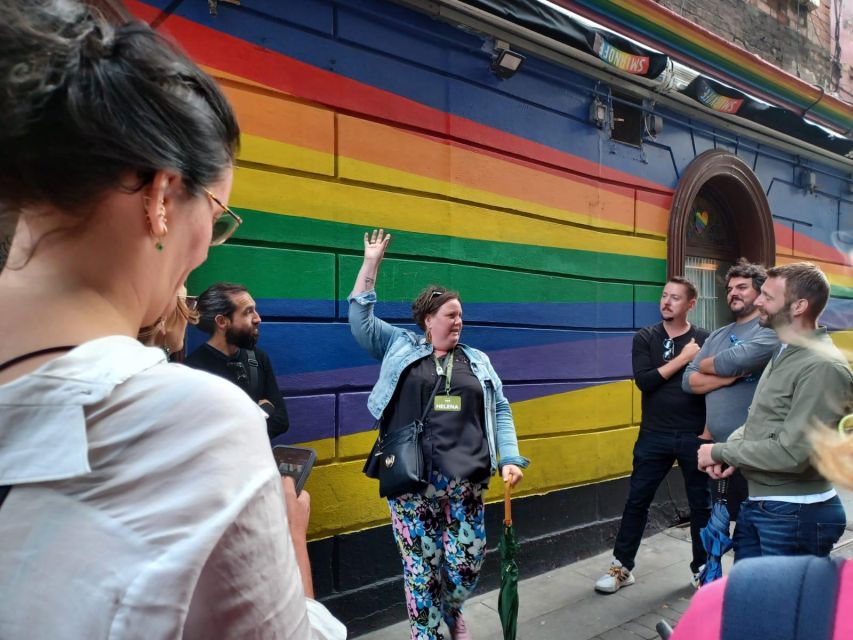
One of the most specific, memorable parts of the walk is how the tour brings up Dr Lydia Foy and ties the story to the Gender Recognition Act. Including this gives the tour real substance beyond Pride events and political speeches.
Legal change can sound abstract until someone explains what it meant for daily life. In this tour, the guide’s focus is on recognition, safety, and dignity, and how shifting laws reflected changes in attitudes.
If you’re the type of traveler who likes to understand outcomes, not just activism, this is a strong section. You leave with a clearer sense of what recognition laws aimed to fix and why that matters to trans and gender-diverse people.
How the tour keeps it engaging, funny, and not just heavy
From the guide style to the pacing, the tone is a big part of the experience. Helena has been praised for being witty and humorous without losing respect for the subject. That sounds like a small detail, but it changes how you remember the tour.
I also like that the tour is described as uplifting as well as honest. It doesn’t pretend things were easy. It also doesn’t flatten progress into misery only. You hear the challenges and the wins, and the walk keeps moving so the whole thing feels like a story you can follow.
The guide is also known for being welcoming and genuinely down to earth. In other words, this isn’t a lecture where you stay quiet. It’s built for back-and-forth questions.
Practical tips for your 2-hour Pride walk
A few practical things make this kind of tour more enjoyable.
- Wear comfortable shoes. It’s a walking tour through central Dublin for 2 hours.
- Plan for an English-speaking guide. The tour is in English, so if that’s your comfort zone, you’ll follow everything easily.
- Expect a real walking pace. The tour is designed around seeing multiple landmarks in a short window.
- Bring questions. The guide is used to answering questions, and you’ll get more out of the stories if you ask what you’re curious about.
Wheelchair accessibility is listed for the activity, so the experience is designed with access needs in mind. If you’re using a wheelchair, it’s worth going prepared with your usual day-of details like route navigation comfort and how you prefer breaks, since the tour is still a city walk.
Price and value: what $27 for 2 hours really buys you
At about $27 per person for a 2-hour guided walking tour, this is priced like a solid, focused sightseeing experience. The real value is that you’re paying for a guide who connects multiple major sites to specific LGBTQ history, with named figures and clear context about how Ireland’s rights evolved.
You’re not just paying for walking. You’re paying for interpretation, story order, and the ability to ask questions. That matters because queer history can be easy to miss when you’re sightseeing on your own. In two hours, the guide helps you see Dublin as a lived record of activism, community, and change.
If you are short on time in Dublin but want something more meaningful than generic landmarks, this is one of the best time-to-value options. It’s also a decent choice for mixed ages. A past review noted that even a teenage son enjoyed it, which tells me the guide can keep the energy up while still covering serious material.
Who should book this Dublin LGBT Pride walking tour
This tour is a great fit if you want:
- Queer history that connects names to real places, not just dates
- A Pride-focused route through Dublin’s most recognized LGBTQ landmarks
- A guide who is fun to listen to, not stiff or overly formal
- A clear view of how Ireland moved toward later equality, including marriage equality, through organized activism and legal change
It’s also a strong choice if you enjoy city walking as your main way to see a destination. Central Dublin is walkable, and a guided route keeps you from wandering aimlessly.
Should you book it? My straight take
Yes, book it if Dublin is on your list and you want a Pride tour that takes you beyond parade day. The strongest reason to go is the combination of specific landmark stops and named queer figures, presented with a guide style that keeps the stories lively and approachable.
Skip it only if you dislike walking for 2 hours or you prefer lighter sightseeing with zero political or social history. This tour includes serious topics as part of the story, and it’s meant to help you understand both the struggle and the progress.
If you want to leave Dublin with a more human, connected understanding of LGBTQ history in Ireland, this walk is an efficient and rewarding way to do it.
FAQ
How long is the Dublin LGBT Pride walking tour?
The tour is listed as 2 hours.
Where does the tour start?
You meet your guide directly outside the Old Storehouse Bar & Restaurant, and you should look for someone carrying a green umbrella.
Where does the tour end?
The activity ends back at the meeting point.
What landmarks and places will we pass?
The tour includes stops or passing points such as Liberty Hall, Trinity College, the General Post Office, the Hirschfield Centre, the Diceman’s Corner, and the George.
Are the tour stories in English?
Yes, the live tour guide is listed as English.
Is the tour wheelchair accessible?
Wheelchair accessibility is listed for this activity.
What should I bring?
Comfortable shoes are recommended.
Is there a guide, or is it self-guided?
This is a guided walking tour, and the listed inclusion includes a guide.
Can I cancel for a full refund?
Free cancellation is listed up to 24 hours in advance for a full refund.
Is there a reserve now, pay later option?
Yes, it is listed as Reserve now & pay later, so you can book your spot and pay nothing today.
Rebellions Retold
- Dublin Historical Centre Food Tour with 8 Food Tastings & Drinks
★ 5.0 · 1,718 reviews - Dublin to Cork, Blarney Castle & Cóbh Heritage Centre by train
★ 4.5 · 510 reviews - Dublin: Jeanie Johnston Tall Ship Irish Famine History Tour
★ 4.8 · 431 reviews - Dublin’s Haunted History Walking Tour
★ 4.3 · 345 reviews
Latest to join the session in Dublin




Historical Tours, compared.

Dublin Historical Centre Food Tour with 8 Food Tastings & Drinks
Read our review →
Historical 2-Hour Guided Walking Tour of Dublin
Read our review →
Dublin to Cork, Blarney Castle & Cóbh Heritage Centre by train
Read our review →
Jeanie Johnston Tall Ship Irish Famine History Tour
Read our review →

Deliciously Dublin: The Artisan Donut Walking & History Tour
Read our review →Browse the lists this tour appears in