

Reviewed · HISTORICAL TOURS
Dublin: Macabre History Walking Tour
In This Review
- A dark walk that feels personal
- Key things I’d plan around before you go
- Finding Your Group by the Spire and Getting Into the Mood
- The 2-Hour Loop Through Old Dublin Streets
- Cuchulainn’s Death: The Warrior Story Behind the Streets
- Quarantines and Public Executions: When Fear Runs the City
- The Mortuary Connection and 19th-Century Grave Robbing
- Legless Serial Killer and Man-Eating Rats: The Legends Portion
- Dublin’s Brothel Keeper Finale Near the Cathedral
- Price and Value: $19 for a Guided Dark Walk
- Who This Tour Fits Best (and Who Should Skip It)
- Practical Tips So You Enjoy It More
- Should You Book This Dublin Macabre History Tour?
A dark walk that feels personal
Dublin’s macabre side comes to life fast, right under the Spire with that yellow umbrella. I like how the tour strings together street-level stories from different eras, with plenty of dark humor and sharp detail from guides such as Rob and Peter. I also like that you are not stuck in one place, you get a proper old city stroll that works both sides of the river and ends near a major landmark. One possible drawback: if you want nonstop gore, you may find it more story-driven than blood-soaked, even though the subject matter is definitely grim.
In about 2 hours, you will cover enough ground to feel like you saw parts of Dublin most people skip. It is a live, English-speaking walking tour with no hotel pickup, so you will meet, walk, and return to the same spot. Just note it is not meant for kids under 18, so come ready for adult themes.
At $19 per person, the value is the mix of price, pace, and a guide who can turn a few corners and back alleys into something memorable. If you have limited time in Dublin and you enjoy history with attitude, this format can be a strong use of your day.
Key things I’d plan around before you go
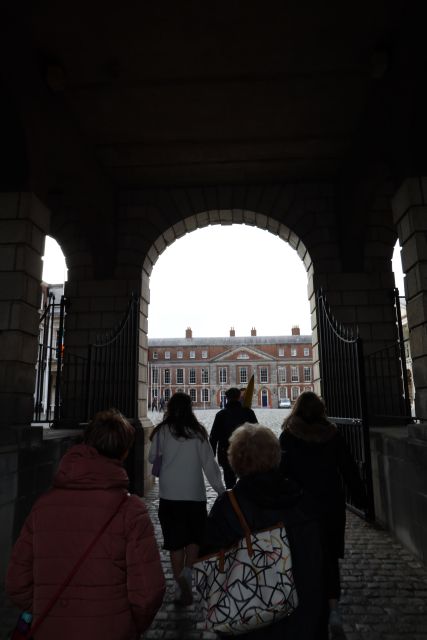
- Meet by the Spire on O’Connell Street and follow the yellow umbrella for the group start
- Death stories across both sides of the river, not just one neat loop
- Cuchulainn’s Death plus other famous macabre legends like the legless serial killer and man-eating rats
- Grave robbing lore linked to the city mortuary, including the 19th-century details
- A cathedral-area ending with the tale of Dublin’s brothel keeper and her death by fire at the stake
Finding Your Group by the Spire and Getting Into the Mood

The tour meets in the middle of O’Connell Street, beside the Spire, Dublin’s big needle-shaped landmark. You are looking for a yellow umbrella, and yes, it can be worth scanning carefully because there may be more than one umbrella nearby. Once you spot the group, you are set up for an easy start, since you are not hunting through a maze of lanes with nobody to guide you.
This matters more than it sounds. With a walking tour, your stress level at the beginning becomes your energy level for the whole experience. Meeting at a central, unmistakable place helps you get your bearings fast, then the guide can take over with stories as you walk.
The vibe here is adult history with a wink. Even when the tales are brutal, the approach is not cold or clinical. That blend is part of what makes this tour fun for the right kind of traveler. If you like your history told through characters, rumors, and real social fear, you will likely enjoy the tone.
You should also plan your expectations on the “macabre” label. This is not a theme-park ride where everything is shock for shock’s sake. It is a guided walk where the guide keeps the momentum while covering grim topics like executions, quarantines, and death-related urban legends.
More Guided Walking Tours in Dublin



The 2-Hour Loop Through Old Dublin Streets
The total time is 2 hours, and the activity ends back at the meeting point. That means you are getting a compact route, built for people who want atmosphere without committing to half a day.
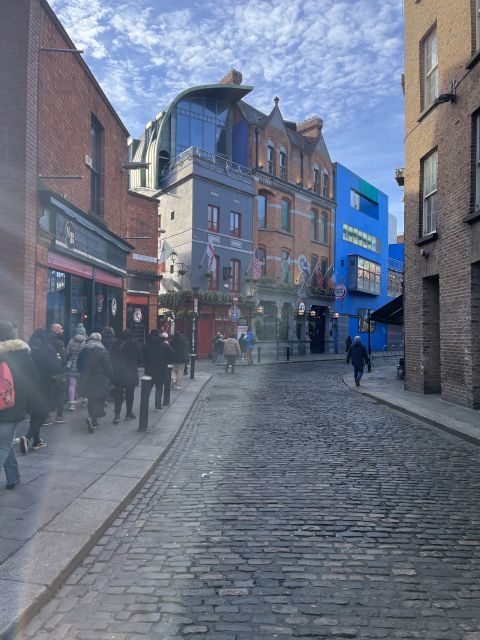
Here is what that typically feels like on the ground: you start in central Dublin, then the guide leads you into lesser-known corners and older streets. The walk includes parts of the old city center and takes in the riverside side of Dublin, so you are not only hearing stories while standing still. You get to experience how Dublin’s layout changes as you move, wide streets giving way to narrower spaces that naturally suit ghostly or grim storytelling.
Because there is no hotel pickup, you will want to leave yourself a little extra time to reach O’Connell Street. Dublin is walkable, but it is also easy to lose track of time if you add shops, coffee stops, or quick photo breaks.
Group size can make a difference on tours like this. The standout reviews point to an experience that often feels intimate, including small groups. That is a plus when the guide is telling detailed stories. More questions, more interaction, and less waiting around.
Cuchulainn’s Death: The Warrior Story Behind the Streets
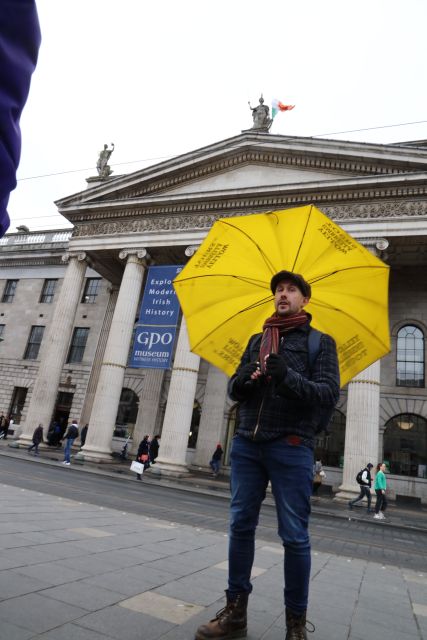
One of the highlights is the Statue of Cuchulainn’s Death. This is a perfect example of why this tour works: it uses a real, visible landmark and then connects it to a bigger web of story.
Even if you only vaguely know the name Cuchulainn, the guide is likely to bring you up to speed as you approach the statue. The story tied to him is dark in the vivid, myth-meets-mood way: Cuchulainn as the mighty warrior who suffers an especially cruel fate. The details include the idea of his eyes being pecked out by a raven on his shoulder. Whether you treat it as myth, legend, or cultural storytelling, it gives the tour a strong narrative anchor.
Why this matters for your experience: when a guide starts with a landmark you can see, you get oriented fast. Then later, when you hear about things like executions, quarantines, and grave-robbing rumors, your brain is already in story mode. You start to connect “Dublin the city” to “Dublin the story,” which is exactly what you want on a macabre-themed walk.
Also, Cuchulainn’s name and legend have an Irish identity weight. So you are not only learning about death. You are learning about how Dublin reflects its own myths and fears in stone and street-level memory.
More Irish streets taken slow:
- 90 Minute Dublin Walking tour and Sightseeing tips
★ 5.0 · 916 reviews - 2-Hour Historical Walking Tour from Dublin
★ 5.0 · 875 reviews - Historical 2-Hour Guided Walking Tour of Dublin
★ 4.7 · 865 reviews - Dublin Traditional Irish 3 Course Meal Walking Tour with Local
★ 5.0 · 755 reviews
Quarantines and Public Executions: When Fear Runs the City
Another set of highlights covers medieval quarantines and public executions. These are heavy topics, but a good guided walk keeps them understandable and grounded in how people lived.
Quarantines tell you something about daily life: when sickness threatened, cities responded with rules, separation, and fear management. Even if the historical specifics are complicated, the core idea is simple. People in older Dublin had to deal with disease and outbreaks in a way that did not look like modern medicine. You will likely hear the human side too, how the fear created its own social behavior.
Public executions add a different layer. Instead of disease, you get punishment as a public event. That means crowds, visible authority, and spectacle as warning. You can learn a lot about a city by watching how it handled justice in open view. It reveals values, power structures, and what communities believed they needed to feel safe.
On this tour, these topics are not presented as random “scary facts.” They connect to the rest of the narrative. Quarantines and executions share one theme: death and danger were not hidden. They shaped public behavior, and stories grew around that reality.
If you are the type of traveler who likes history that explains why people behaved the way they did, this part should land well. If you are squeamish, it is still manageable as a walking tour, but you should be ready for grim scenes in story form.
The Mortuary Connection and 19th-Century Grave Robbing
You will also hear about grave robbing linked to the city mortuary, including the “thriving 19th-century business” angle. That is one of the most intriguing parts of the whole experience because it blends desperation, commerce, and science in a way that feels unsettlingly modern.
Here is the core idea you are being guided toward: when medical knowledge depended on bodies, and legal supply was limited, people exploited that gap. The story adds grit to what could otherwise feel like abstract history. Instead of reading about death in books, you hear how it intersected with work, money, and organized risk.
Why this is valuable to you: it changes the way you look at a city’s institutions. When a guide ties a grim rumor to a specific place near the mortuary, you stop thinking of “history” as just dates and start thinking of it as a system with incentives and consequences.
Also, the tour includes references to mummified corpses in the context of these darker alleys of Dublin’s past. Even without getting overly graphic, those details create a “how did this happen here” mental image. You will probably notice how the guide balances shock with clarity, so it stays a story you can follow.
Legless Serial Killer and Man-Eating Rats: The Legends Portion
This tour is not only about documented institutions. It also leans into notorious legends, and the highlights include the Legless Serial Killer and man-eating rats.
The legless serial killer story plays like a street-level nightmare: something monstrous, human, and weirdly memorable. The “legless” detail makes it stick, which is exactly why these kinds of stories spread. They fit into the urban imagination because they are specific and unsettling.
The rat story works similarly. Rats connect to poverty, sanitation, and the everyday fear people felt in crowded cities. Even when the details are folkloric, they point you back to the real conditions that make such fears plausible. That is the strength of a good macabre history tour: it uses legend to reflect atmosphere, not just shock.
You may also hear about other figures and places close to the old city walls. The guide’s job is to keep the route coherent while switching between eras. That is where the best reviews give you a clue about what to expect: clear delivery, humor, and the guide answering questions without rushing you out the door.
If you like stories that feel like they belong to Dublin specifically, this legend segment is likely a highlight.
Dublin’s Brothel Keeper Finale Near the Cathedral
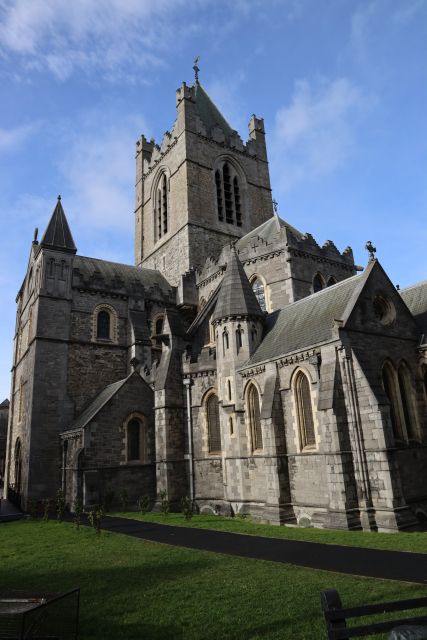
To finish, you will hear the tale of Dublin’s most famous brothel keeper and her untimely death by fire at the stake. The tour ends beside the cathedral, back at the meeting point.
This is a smart ending choice. It shifts from the “city in fear” theme to a character-driven story that is easier to remember. You also end near a major landmark, so after the walk you have that satisfying sense of closure, like the city has finished the chapter and pointed you back to where you started.
The brothel keeper story also ties into the tour’s broader themes. Public behavior, morality, punishment, and power all show up here. Even if your interest is purely in the macabre, this ending gives you context for how certain reputations and livelihoods could end violently.
And yes, it is dark. But it is not random darkness. It connects to what you learned earlier about public spectacle and how authority dealt with threats.
Price and Value: $19 for a Guided Dark Walk

At $19 per person, you are paying for a live guide plus a route through central Dublin that would be harder to piece together on your own. The tour is only two hours, which means you get a concentrated dose without needing a big time block.
Value is not just cost. It is what you get for it:
- A live English-speaking guide, not a self-guided audio path
- A curated route that takes you into quieter lanes and less obvious spots
- Story clarity, including humor, so you do not feel lost in grim details
There is no hotel pickup, so you are doing a bit of your own legwork to get to O’Connell Street. But that is usually a fair trade for keeping the price down and keeping the group moving.
One more value point: this tour is wheelchair accessible. You should still consider that it is a walking tour. If you need mobility support, you will likely appreciate knowing the route includes some older, potentially uneven city streets, but the operator explicitly states wheelchair accessibility.
Who This Tour Fits Best (and Who Should Skip It)
This is not for kids. It is not suitable for children under 18, and it deals with death, executions, grave robbing, and other grim themes. If you are traveling with teens who can handle adult content calmly, you might still want to check whether everyone in your group is comfortable with that tone.
This tour fits best if you:
- Enjoy history told through stories and characters
- Like walking through a city with a guide who keeps things moving
- Want something different from the standard Dublin highlights
It is less ideal if you:
- Want purely light, upbeat sightseeing
- Are seeking a gore-heavy show
- Prefer very academic, dry historical framing only
The balance matters. The guides listed in the standout accounts, Rob and Peter, come across as strong storytellers who can make the material understandable and entertaining. Even where the tour is not as graphic as some want, the overall experience is still described as fun, off the beaten path, and worth the money.
Practical Tips So You Enjoy It More
A few practical things will help your experience land well.
First, wear comfortable shoes. This is a city-center walking tour with enough movement that you will feel the time in your legs.
Second, come with curiosity, not a challenge. The tour style is built on listening and following the route. If you try to “test” every story detail, you can miss the point. Instead, ask questions when you want clarification. The guides are described as happy to answer, and that is the best way to turn story into learning.
Third, arrive a few minutes early at the Spire. The meeting point is straightforward, but the yellow umbrella marker can be shared by multiple groups. Give yourself time to find the right one calmly.
Finally, set your mental mood. This is adult macabre history. If you treat it like a dark theater performance, you are likely to enjoy it more than if you treat it like a normal facts tour.
Should You Book This Dublin Macabre History Tour?
Yes, you should book it if you want Dublin stories you will not get on the usual routes, and you enjoy history with a darker edge and humor. With a 2-hour walk starting by the Spire, ending near the cathedral, and priced at $19, it is a strong value for a guided experience that mixes landmark stops with street-level tales.
Skip it if you are traveling with under-18s, if you want non-stop horror or gore, or if you prefer strictly academic history over storytelling.
If you want a walking tour where the guide can turn Dublin’s grimmer corners into something you remember long after you leave, this one is an excellent bet. It is also a great pairing with other Dublin stops, because it adds a very different tone without eating your whole day.
Rebellions Retold
- Dublin Historical Centre Food Tour with 8 Food Tastings & Drinks
★ 5.0 · 1,718 reviews - Dublin to Cork, Blarney Castle & Cóbh Heritage Centre by train
★ 4.5 · 510 reviews - Dublin: Jeanie Johnston Tall Ship Irish Famine History Tour
★ 4.8 · 431 reviews - Dublin’s Haunted History Walking Tour
★ 4.3 · 345 reviews
Latest to join the session in Dublin






Historical Tours, compared.

Dublin Historical Centre Food Tour with 8 Food Tastings & Drinks
Read our review →

Historical 2-Hour Guided Walking Tour of Dublin
Read our review →
Dublin to Cork, Blarney Castle & Cóbh Heritage Centre by train
Read our review →
Jeanie Johnston Tall Ship Irish Famine History Tour
Read our review →

Deliciously Dublin: The Artisan Donut Walking & History Tour
Read our review →Browse the lists this tour appears in