
Reviewed · WALKING TOURS
Dublin: Sightseeing Walking Tour in German
Walking Dublin with a German guide changes how you notice the city. This 2.5-hour small-group route connects Dublin Castle, O’Connell Street, Temple Bar streets, and ends near Trinity College with the Book of Kells. You get your bearings fast, and you hear the human stories that sit behind the big stones.
I like that the guide’s delivery is friendly and easy to follow in German, even when the topics switch from Vikings to 1916 to independence-era symbols. I also like the mix of major landmarks and offbeat corners, so the walk feels like an orientation plus a scavenger hunt of odd facts. The one drawback to plan for is that visits are external, so you’re mostly looking and learning from the outside, not touring interiors during the walk.
If you’re the kind of visitor who prefers to understand what you’re seeing instead of just collecting photos, this tour makes that happen. If you want long museum-style time inside big sites, you’ll need to add that on your own later.
In This Review
- Why this Dublin German walking tour is worth your time
- Getting started at Dame Street and the Tree of Gold
- The Viking and Medieval Quarter: Dublin Castle grounds and Christ Church
- City Hall, Henry & Moore Streets, and the feel of official Dublin
- Temple Bar and Fishamble Street: when Dublin gets quirky
- Crossing the River Liffey: Millennium Bridge and the walk’s big visual payoff
- O’Connell Street and the GPO: big history with street-level context
- Former Parliament House near Bank of Ireland: the 18th century anchor
- Finish outside Trinity College and the Book of Kells
- The German guide experience: friendly, clear, and built for listening
- Price and value: why $34 feels fair for 2.5 hours
- Who this Dublin walking tour suits best
- Should you book this German Dublin walking tour?
- FAQ
- What language is the tour guide?
- How long is the Dublin sightseeing walking tour?
- Where does the tour start?
- Where does the tour end?
- Are you going inside the landmarks during the tour?
- What major sights does the tour cover?
- Is the tour wheelchair accessible?
- Is cancellation free?
- Is there a cost per person?
Why this Dublin German walking tour is worth your time
- Small-group pacing that keeps it easy to stay with the guide and ask follow-up questions.
- German language format that’s built for listening, not just reading plaques.
- Dublin Castle to Trinity route that covers both sides of the River Liffey and keeps the center connected.
- Story-driven stops at places like the General Post Office and O’Connell Street, where history is personal.
- Unexpected side curiosities, including bridges, odd symbols, and buildings that have changed roles over time.
Getting started at Dame Street and the Tree of Gold
You meet at the Tree of Gold Statue (Crann an Óir), at Central Plaza on Dame Street, right by the corner of Dame Street and Fownes Street Upper. I like this start because it puts you in the thick of the city center from minute one, and you can easily plug the tour into the rest of your day.
From there, you begin a walk that moves through the old core of Dublin and then expands outward. It’s a straightforward, easy-going route, so you’re not constantly stopping to figure out where to go next. The guide sets the tone early, too, which is a big deal when you’re learning in German.
The only “watch-out” here is practical: arrive a few minutes early so you’re not trying to orient yourself right as the group begins. That matters even more when everyone is listening in one language.
The Viking and Medieval Quarter: Dublin Castle grounds and Christ Church
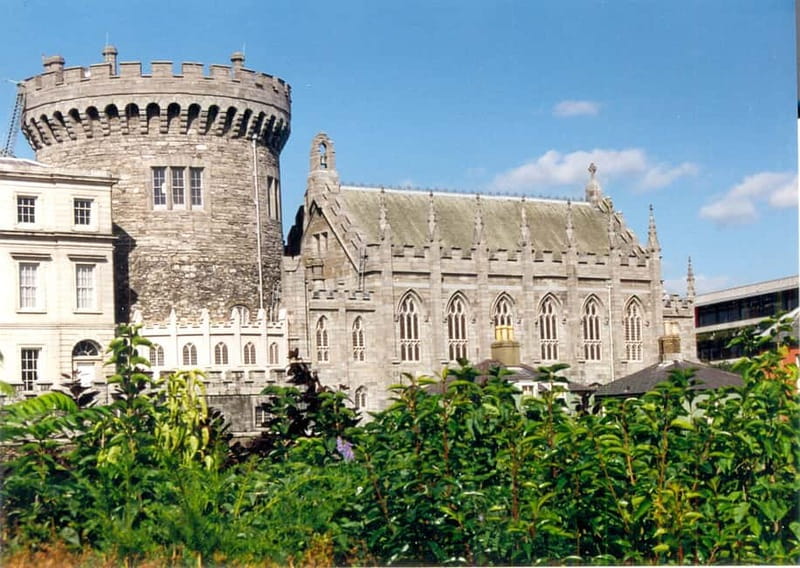
One of the tour’s strongest stretches is the Viking and Medieval Quarter feel you get near Dublin Castle and Christ Church Cathedral. You’ll pass Dublin Castle and also move into the area of the castle grounds and gardens, which helps you understand how the site functions as both landmark and boundary marker in the city.
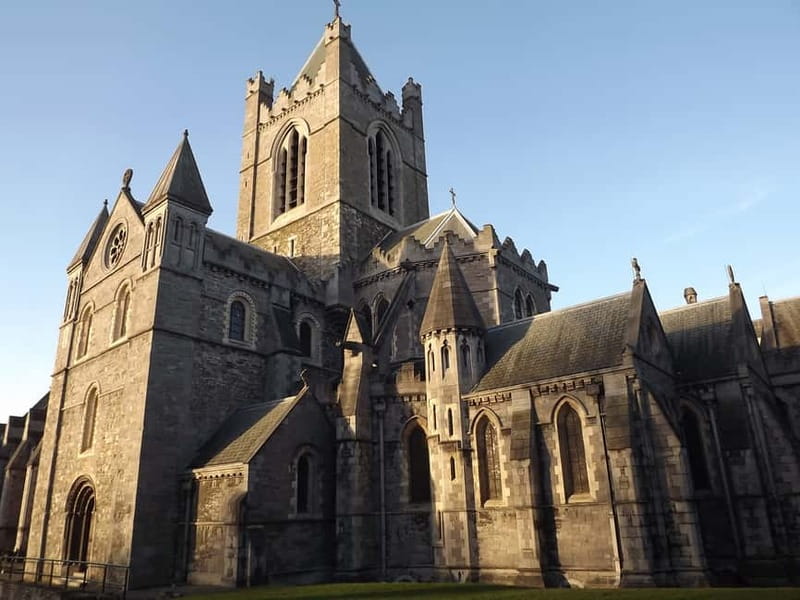
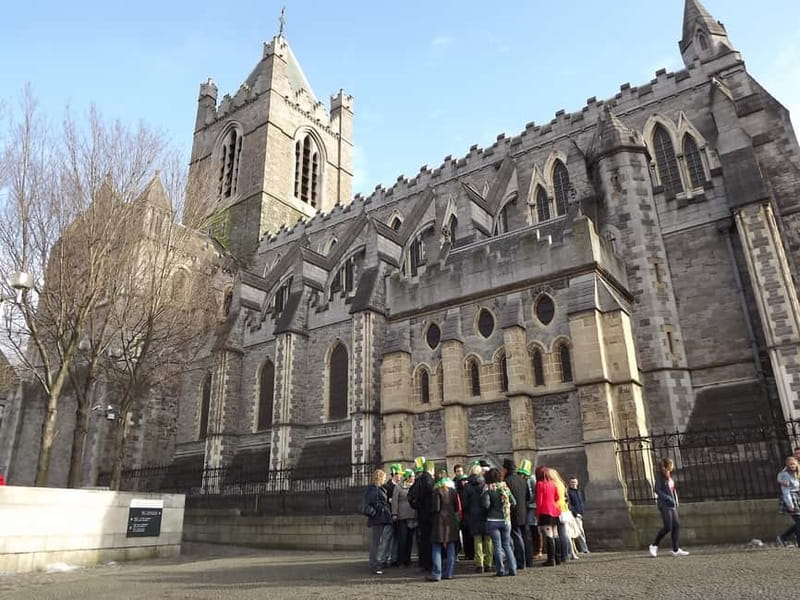
Then you hit Christ Church Cathedral from the outside. Even without going inside on this walk, you get the context you need to read it properly, because the guide connects what you’re seeing with how power and belief shaped Dublin over centuries.
This is a good spot for you if you like your photos to come with meaning. It’s also a good spot for the language side of the experience, because the guide can point, compare, and explain while you’re standing in place, not just hearing facts while moving too fast.
More Guided Walking Tours in Dublin



City Hall, Henry & Moore Streets, and the feel of official Dublin
As you continue, you’ll pick up a sense of what “official Dublin” looks like day to day. City Hall and the nearby streets act like the bridge between grand institutions and the street-level city rhythm around them.
You’ll also pass Henry & Moore Streets on the way through this part of the center. This matters because it’s where the walk stops feeling like a string of monuments and starts feeling like real urban geography. When you later return on your own, you’ll remember these street lines as your mental map.
If you’re visiting for the first time, this portion is helpful because it gives you orientation beyond the headline buildings. The only consideration is that, like most central walks, you’ll see plenty of façades rather than “enter and explore” moments.
Temple Bar and Fishamble Street: when Dublin gets quirky
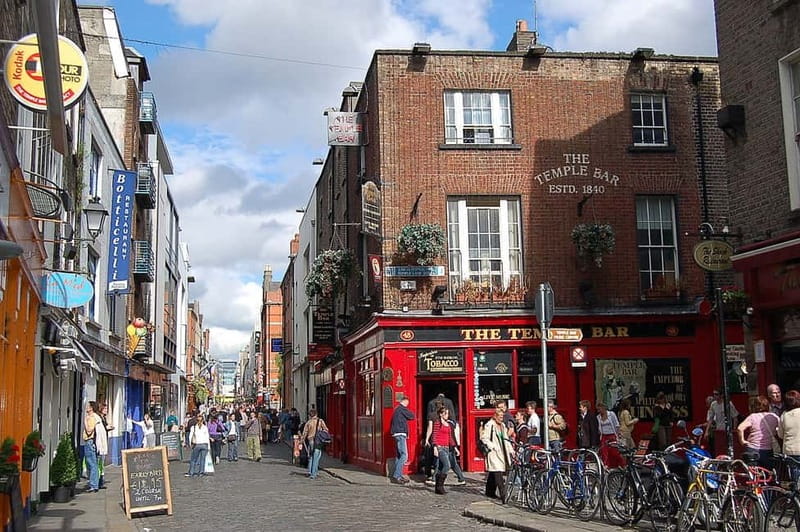
Temple Bar isn’t just a nightlife name here. The tour routes you through meeting points in the area such as Meeting House Square and moves along streets like Fishamble Street and Smock Alley. I like this section because it shows how Dublin mixes the famous with the strange, and it does it on foot where the stories actually fit the surroundings.
You also go past the Italian Quarter area and you’ll hear about St Mary’s Church, now known as a famous café or bar. That church-to-social-space transformation is the kind of detail that makes a city feel lived-in rather than staged for tourists.
This is also where the tour’s “surprise” style really starts to land. You’ll hear tales tied to odd landmarks and surprising representations, including a humorous da Vinci-related reference and even a very blunt, naked depiction connected to an 18th century composer. You won’t get bored because the guide keeps turning the corner into a new kind of curiosity.
The practical upside: this part of Dublin is dense, so you’ll get lots of visual variety in a short time. The practical downside: it can feel crowded with pedestrians depending on when you go, so keep an eye on your footing and pace with the group.
More Irish streets taken slow:
- 90 Minute Dublin Walking tour and Sightseeing tips
★ 5.0 · 916 reviews - 2-Hour Historical Walking Tour from Dublin
★ 5.0 · 875 reviews - Historical 2-Hour Guided Walking Tour of Dublin
★ 4.7 · 865 reviews - Dublin Traditional Irish 3 Course Meal Walking Tour with Local
★ 5.0 · 755 reviews
Crossing the River Liffey: Millennium Bridge and the walk’s big visual payoff
At some point you’ll reach the Millennium Bridge and cross into the northside flow of the center. For me, this is one of those “you’re actually in Dublin” moments because the river becomes a natural divider and a natural direction marker.
Crossing the Liffey like this helps you understand the city layout. You stop thinking in terms of isolated sights and start thinking in routes and neighborhoods, which makes exploring later much easier.
You’ll also hear the guide talk about a wobbly bridge effect, tied to the kind of playful story that Dublin does well. Even if you’re not photographing, you’re learning how locals interpret landmarks.
Because this segment is so visible and so central, it’s worth staying present even if you’ve already seen the river in photos. You’ll understand the geography more than you’ll remember the exact viewpoint.
O’Connell Street and the GPO: big history with street-level context
Then the tour turns into one of Dublin’s most story-loaded corridors: O’Connell Street. Along the way, you pass major references including the General Post Office, the O’Connell Monument, and the broader stretch of the historic main street.
The General Post Office is a key moment on this walk. You’ll learn that it housed the rebels of the 1916 Rising and that the building, and much of the surrounding street area, suffered severe destruction during those events. I like how the guide frames it, because the history is not just a date list. It’s connected to a place you can still locate instantly on foot.
This is also where the tour’s symbolism details come in. You’ll hear a tale about a post-box that represents Ireland’s transition to independence. It’s the kind of small, street-level object story that sticks, because it feels directly relevant to what you’re seeing right now.
One consideration: this part can be emotionally heavy, so pace yourself. If you prefer history told as light and playful, this stretch may feel more serious than the Temple Bar surprises.
Former Parliament House near Bank of Ireland: the 18th century anchor
On the way toward the finish area, you’ll pass the former Parliament House, now associated with Bank of Ireland. This stop gives the walk a formal endpoint in a way that O’Connell Street alone can’t.
What I take from this stretch is that Dublin’s power centers shifted across time, and the city kept using similar locations for new purposes. When you later look at a building and wonder what it used to be, this tour plants the idea that reuse and repurposing are part of Dublin’s identity.
The walk keeps this portion easy. You’re not stuck in one place too long, but you still get a sense of where the historical focus sits.
Finish outside Trinity College and the Book of Kells
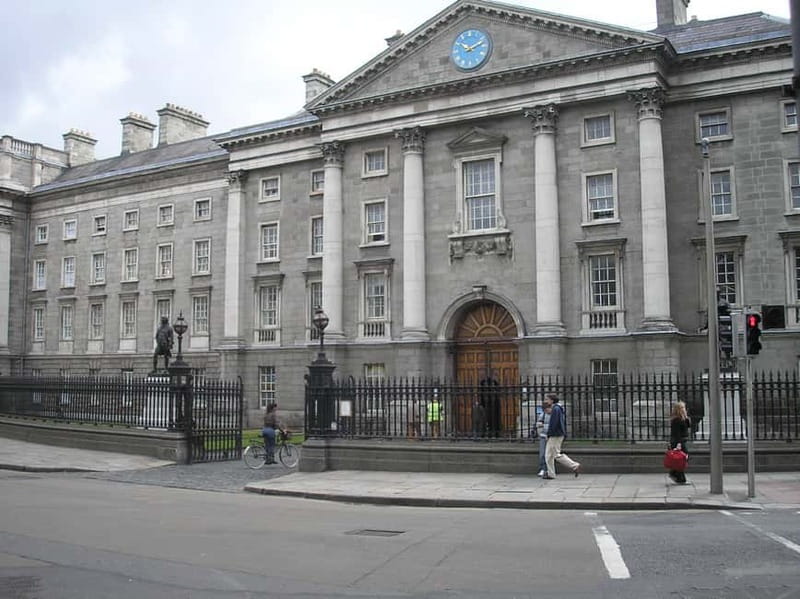
The walk ends around Trinity College with its famed Book of Kells, and you’ll finish outside the site rather than inside. I like the ending structure because it works like a launch pad. You leave with the next obvious step if you want to go deeper.
If you’re planning the Book of Kells visit, you’ll be in the right mental mode. You know what you’re aiming at and why the museum-style experience matters in the first place, instead of treating it like a random ticket purchase.
Remember: during this tour, visits are external, but opportunities for internal visits can happen after the tour. So treat this as the orientation version. You can turn it into a full “inside” day afterward if you want.
The only practical consideration is timing. If you booked the tour early and want to immediately go into Trinity, keep a little buffer for queues and ticketed entry patterns.
The German guide experience: friendly, clear, and built for listening
The biggest “value multiplier” here is the guide. This is a German live guided walk with a professional, friendly approach, and the small group format helps a lot. I’m especially glad the tour doesn’t rely on you reading your way through explanations. You get guided listening while the guide points and connects stories to what’s in front of you.
That makes the experience feel more personal, not just educational. You’re not just hearing about a place, you’re learning how a Dublin guide sees it, which is what turns sightseeing into understanding.
Also, the tour mentions additional guides provided where required. So if your group needs extra help, the operator has thought about support rather than forcing everyone into one-size-fits-all delivery.
If you’re not fluent in German, you can still benefit. Street-level landmarks and story beats tend to be visual, and the guide’s pacing makes it easier to follow. Still, you’ll get the strongest results if you’re comfortable with spoken German basics.
Price and value: why $34 feels fair for 2.5 hours
At $34 per person for about 2.5 hours, this sits in the reasonable range for a guided walking introduction in central Dublin. The value comes from what you’re buying, not just the time: a professional guide, a route that covers both sides of the River Liffey, and an explanation style that mixes landmark context with surprise stops.
You’re also getting a tight, city-center route. That matters in a place like Dublin where transit is easy but time is not infinite. Walking helps you avoid decision fatigue later, because you leave with a mental map anchored around Dublin Castle, O’Connell Street, Temple Bar streets, and Trinity College.
The main reason it stays good value is the “small group” approach. When a guide has a smaller group, you’re more likely to stay engaged and hear the details clearly. If you’ve ever been on a big-group tour where you can barely hear, you’ll appreciate this format.
The only reason you might feel it is less worth it is if you strongly prefer indoor access during the tour. Since visits are external on this walk, you won’t get museum time included.
Who this Dublin walking tour suits best
I’d book this if you want a first real orientation to Dublin’s center and you like history told through places, not timelines. It’s ideal if you enjoy a guided walk that mixes major sights with playful, lesser-known details like odd symbols, repurposed buildings, and story objects along the way.
You’ll also like it if German is your preferred language for learning while traveling. The tour is built as a German live experience, and the guide’s approach is friendly and easy to follow.
Skip or supplement it if you want a deep dive into interiors during the same 2.5 hours. This tour is your “see it and understand it from the street” step. Then you can add indoor visits where you care most.
One more fit note: it’s wheelchair accessible. If mobility is part of your planning, this is a good sign, and you can still enjoy the route without having to miss the core landmarks.
Should you book this German Dublin walking tour?
Book it if you want to get oriented fast and you enjoy stories that connect Dublin’s buildings to real moments, especially around the 1916 Rising era and the independence-era symbolism you’ll hear about. The consistent strength here is how easy the German narration is to follow, and how the guide keeps the walk entertaining with surprises rather than lectures.
I’d also book it if you plan to visit Trinity College afterward. Ending outside Trinity with the Book of Kells gives you a natural next step.
If you only want indoor attractions, then budget time for your own museum or site entries after the walk. Otherwise, this is a smart, efficient way to experience Dublin’s center with a German guide and come away with a real sense of direction.
FAQ
What language is the tour guide?
The tour is guided live in German.
How long is the Dublin sightseeing walking tour?
The duration is listed as 2.5 hours.
Where does the tour start?
It starts at the Tree of Gold Statue (Crann an Óir), Central Plaza, Dame Street Dublin 2, at the corner of Dame Street and Fownes Street Upper.
Where does the tour end?
It ends back at the meeting point, and the tour finishes around Trinity College with its famed Book of Kells (from outside).
Are you going inside the landmarks during the tour?
All visits are external during the tour. You may have opportunities for internal visits after the tour.
What major sights does the tour cover?
You’ll see Dublin Castle, City Hall, O’Connell Street, Trinity College area, Christ Church Cathedral, the General Post Office, and more, plus multiple streets and squares in the city center.
Is the tour wheelchair accessible?
Yes, the activity is listed as wheelchair accessible.
Is cancellation free?
Free cancellation is available up to 24 hours in advance for a full refund.
Is there a cost per person?
Yes, the price is listed as $34 per person.
Latest to join the session in Dublin





Walking Tours, compared.
Dublin Highlights and Hidden Gems Guided Walking Tour
Read our review →
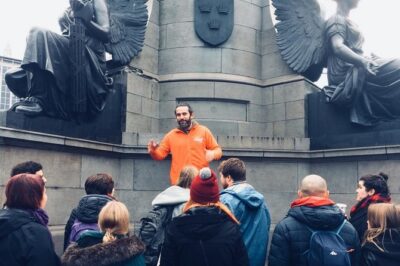
90 Minute Dublin Walking tour and Sightseeing tips
Read our review →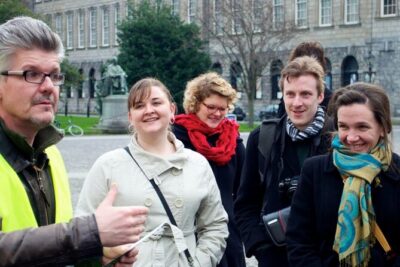

Historical 2-Hour Guided Walking Tour of Dublin
Read our review →
Dublin Traditional Irish 3 Course Meal Walking Tour with Local
Read our review →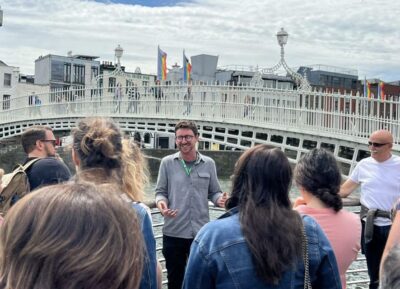
Browse the lists this tour appears in