
Reviewed · IRISH MUSIC & TRAD NIGHTS
Dublin Traditional Irish Music Walking Tour with Live Performance
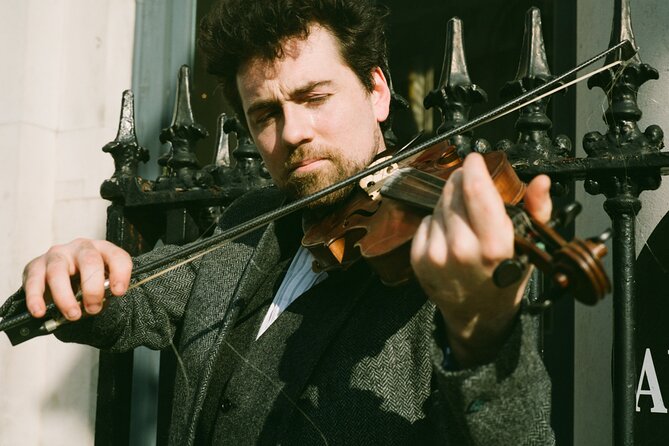
Street songs and centuries, all on foot. This Dublin traditional Irish music walking tour turns common landmarks into a living soundtrack, with your guide performing folk ballads and songs that have lingered in Irish culture for decades. I love how music is used as the guidebook, not just background, and I also love the small-group feel that keeps things friendly even in a busy city center.
You cover classic sights like Temple Bar backstreets, Christ Church Cathedral, Dublin Castle, and the walk ending at St Patrick’s Cathedral, but you do it at a pace that feels made for listening. If there’s a drawback to plan around, it’s that Temple Bar can be crowded and street noise is real, so you’ll want to position yourself well (and arrive on time) to catch everything your guide sings and plays.
In This Review
- Key highlights you should care about
- Temple Bar start point and what happens in the first 10 minutes
- Smock Alley Theatre 1662 to Grattan Bridge: Dublin at performance volume
- Fishamble Street and the Handel connection you can actually remember
- Christ Church Cathedral: medieval Dublin and a song-driven darker side
- Dublin Castle near Ship Street Gate, then the finish at St Patrick’s
- What makes this different from a standard walking tour
- Timing, group size, and why 2 hours works
- Price value: $27.81 for music, landmarks, and free stop access
- Tips to get the most from the live performance
- Should you book this Dublin traditional Irish music walking tour?
- FAQ
- Where does the tour start and end?
- What time does the tour begin?
- How long is the Dublin Traditional Irish Music Walking Tour?
- How much does the tour cost?
- Is there a mobile ticket?
- Do I need to pay admission at the stops?
- How big is the group?
- Is there free cancellation?
- Is service animal access allowed?
Key highlights you should care about
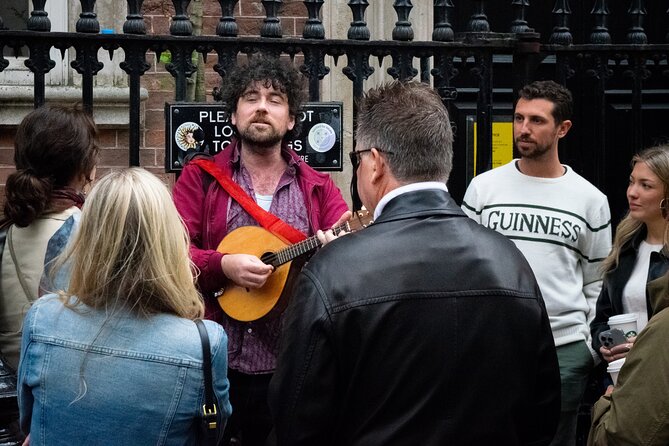
- Live performance built into every stop: songs connect directly to the place you’re standing in front of.
- Temple Bar is the launch pad: you meet right where Dublin’s pub and performance energy starts.
- Free admission at key venues on the route: Smock Alley Theatre and the rest of the listed stops are handled without extra entry fees.
- Medieval Dublin with a darker angle: Christ Church Cathedral is treated as a story zone, not just a photo-op.
- A mix of big names and small lanes: you get cathedrals and castles, plus older street corners and bridges.
Temple Bar start point and what happens in the first 10 minutes
The tour kicks off at 1:00 pm at 3 Crown Alley, Temple Bar (D02 CX67). That matters because Temple Bar is lively and full of movement. Show up a few minutes early and orient yourself to the exact meeting spot so you’re not caught scanning the street while the group is forming.
The group is capped at 20 travelers, which is a sweet spot for this kind of walking music tour. With fewer people, you can actually hear the guide and stay close enough to follow the stories as they change locations mile by mile through the center.
Expect short transitions between stops, about 10 minutes each for the main locations. That pacing helps if you want to see a lot without spending your whole day “touring on rails.” It also keeps you in listening mode, which is the point.
Smock Alley Theatre 1662 to Grattan Bridge: Dublin at performance volume
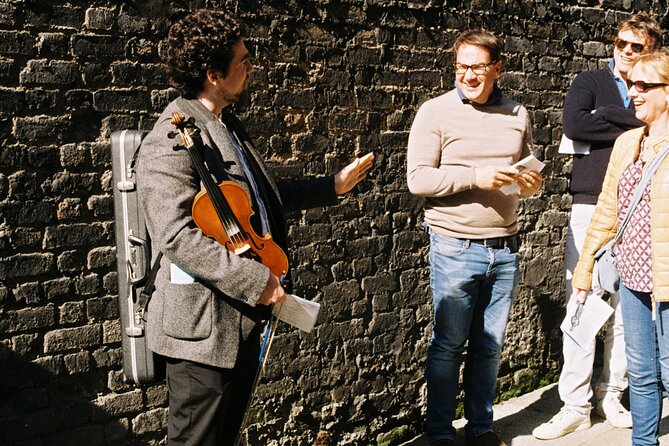
Your first stop is Smock Alley Theatre (1662), described as Ireland’s oldest theatre. Even if you only see part of the building area during the quick stop, it’s an easy place to understand Dublin’s long stage tradition. You’re in the heart of Temple Bar, so the vibe is part theatre, part pub street, part local foot traffic.
Then you walk toward Grattan Bridge, a beloved River Liffey crossing decorated with seahorse lanterns. This is one of those stops where you’ll want your camera ready, but it’s also more useful than a pretty bridge. The guide uses the river and the streets feeding it to set up Dublin’s story, so the bridge becomes a hinge between different eras and neighborhoods.
Practical tip: keep your phone on silent until the guide finishes a lyric line. The tour is short enough that interruptions add up fast, and the best moment is usually right after a song starts, not when you’re fumbling with a screen.
More Guided Walking Tours in Dublin



Fishamble Street and the Handel connection you can actually remember
Next is Fishamble Street, often cited as Dublin’s oldest street. This is where the tour gets especially satisfying if you like old-world details that are more than dates on plaques.
You’ll hear two key layers tied to this stretch:
- Fishamble Street’s Viking-era history, including a major Viking settlement reported as the largest found outside Scandinavia.
- The claim that it was the site of the first ever performance of Handel’s Messiah.
That’s a fun pairing because it reframes Dublin as a city that has never been stuck in one identity. You’re not just hearing “Irish music.” You’re hearing the wider performance culture that shaped how songs traveled and landed in public life.
And since the tour format links a musical moment to the story you just heard, you’ll likely remember Fishamble Street less as a line on a map and more as a specific scene: a street with layers, followed by a song that helps the timeline click.
Christ Church Cathedral: medieval Dublin and a song-driven darker side
The highlight stop for many people is Christ Church Cathedral, where the medieval and Victorian eras collide. You also get the tour’s theatrical approach in full.
Instead of treating the cathedral like a quiet museum stop, the guide explores some of the surrounding darker side through song. That doesn’t mean it turns gloomy for its own sake. It means the guide picks lyrics and stories that match the atmosphere of the area and connects that mood to how people lived, believed, and performed.
If you’re the type who loves walking tours but gets tired of the same generic “here’s a landmark” routine, this stop is where this tour starts to feel like it has a spine. You’re not only looking at stones. You’re hearing how music can carry memory and meaning.
One listening tip: if you can, stand where your guide’s face and hands are visible. Even when sound bounces around the street, watching the performance cues helps you catch the rhythm of the story and the start of each musical phrase.
More reels started without asking:
- Dublin Irish House Party Live Show, Dinner Option Available
★ 4.5 · 1,246 reviews - The Irish Dance Party in Dublin
★ 5.0 · 918 reviews - Dublin: Music and Dance Show at The Irish House Party
★ 4.8 · 744 reviews - Dublin: Irish Music and Dance Show with Dance Lesson
★ 4.7 · 567 reviews
Dublin Castle near Ship Street Gate, then the finish at St Patrick’s
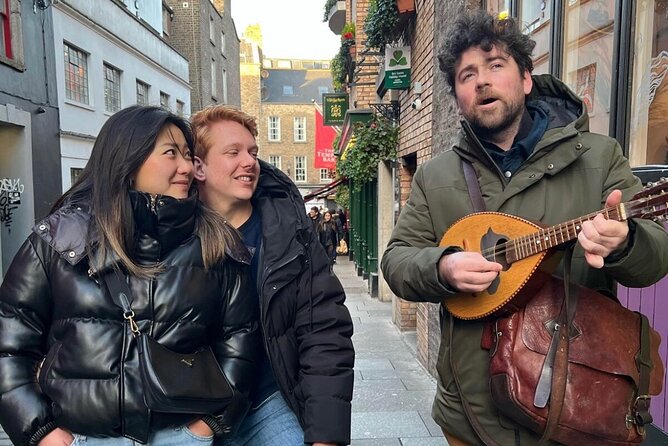
You’ll then swing by Dublin Castle, focusing on the Ship Street Gate area and some of the famous steps nearby. Even in a quick stop, this is a strong “big Dublin” moment. Dublin Castle always feels like it’s been shaping the city for centuries, and the guide uses the architecture and entry points to point out how power and ceremony show up in ordinary city movement.
The tour finishes at St Patrick’s Cathedral, specifically at St Patrick’s Close. The route ends in the area adjoining Saint Patrick’s Park, so the final feel is less “tour rush” and more “take a breath.” It’s a good place to do your last photos, then decide where to go next.
Because the tour ends at a major cathedral site, you’ll find yourself near plenty of options for food and a post-tour pint. It’s the kind of finish that makes the walk feel complete, not like you got dropped somewhere inconvenient.
What makes this different from a standard walking tour
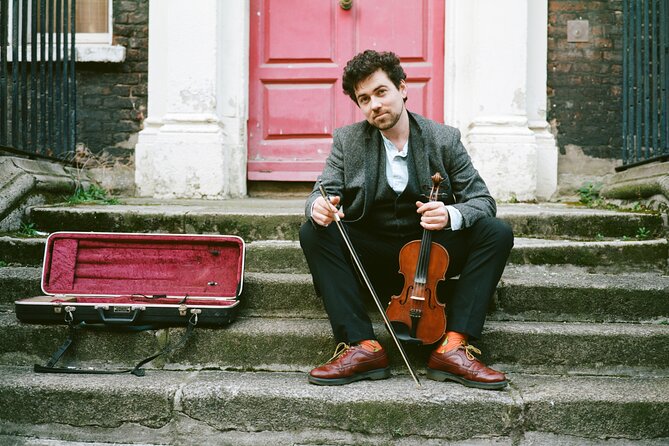
A typical walking tour gives you sights first and story second. This one does the reverse. The guide uses traditional ballads and songs to act like a bridge between the location in front of you and the Dublin you’re meant to picture in your head.
That approach seems to connect with people for a few reasons:
- You hear history in human language, not just explanations. Even when a story has tough edges, the musical framing makes it easier to hold onto.
- It’s flexible and performer-led. Names that have led the tour include Ciarán, Sean, Dylan, and Shaun, and the delivery style can vary. Some guides lean more into humor and banter, others into lyrics in Gaelic or a more narrative feel, but the goal stays the same: make you feel the place.
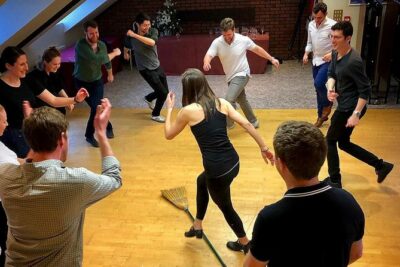
- There can be interactive moments. Some performances include opportunities to sing along or even join in with simple dance motions, depending on the group energy and the guide’s style.
That last point is worth mentioning as a consideration. One shortcoming you might want to be mindful of is that the experience can involve participation, and not everyone is equally comfortable with that. If you’re not in the mood for interaction, you can still enjoy the music, but you’ll want to set your expectations for a more participatory street performance rather than a silent “walk and listen” lecture.
Timing, group size, and why 2 hours works
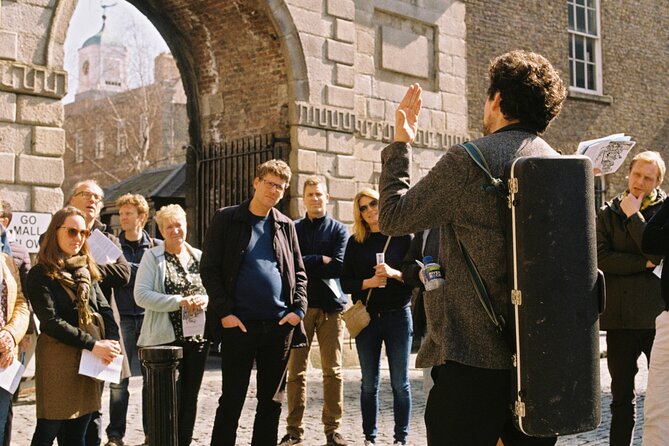
The tour runs for about 2 hours. That length is just right for a format that depends on performance. Too short and the songs feel rushed. Too long and you lose the thread between the story and the place.
With stop durations around 10 minutes, you’re constantly moving between points of interest without long gaps. It also helps if you want to stack this with other plans the same day. A 1:00 pm start gives you time to tour, then still have daylight for extra wandering, shopping, or a pub stop.
Group size maxing at 20 travelers is another practical win. You’re close enough to hear the music without spending the whole time trying to see over shoulders. It also makes it easier for the guide to keep the energy up.
Price value: $27.81 for music, landmarks, and free stop access
At $27.81 per person, this tour is priced like a mid-range walking experience, but the value comes from what’s included.
You’re not paying separate admission for the key stops listed. Smock Alley Theatre’s admission is noted as free for this stop, and the other listed stops are presented as free too. That means the money you spend is mostly going to the guide performance and the storytelling flow, not to building entry fees.
For me, the best value logic is this: you’re paying for a guide who can hold attention with both music and history. If you’d otherwise pay for live music separately, then add a standard tour on top, this gives you both in one package.
If you’re on a tight schedule, it’s also a cost-efficient way to cover multiple iconic Dublin points in one outing, without needing to plan a route and then find a separate guide for each area.
Tips to get the most from the live performance
Here are a few practical ways to make sure the music lands well for you:
- Arrive early at Temple Bar. Crowds and street noise can make it harder to regroup if you’re late.
- Use your spot, not your screen. Put your phone away during songs so you can actually hear the lyrics and phrasing.
- Plan for street acoustics. Narrow laneways can help some frequencies while masking others. Stand where you can see the guide.
- Be open to participation if you’re comfortable. If you like sing-alongs or a light dance moment, this tour can feel playful, not stiff.
Also, bring comfy shoes. The experience is short on paper, but Dublin walking always adds up because you’re moving around curbs, uneven pavement, and tight street corners.
Should you book this Dublin traditional Irish music walking tour?
I think you should book it if you want Dublin through songs, stories, and performance, not just plaques and photos. It’s especially good for your first time in the city center, because it layers Temple Bar, the medieval core, and the cathedral area into one smooth two-hour arc.
I’d skip or at least approach with caution if:
- You need quiet, no-interaction sightseeing. The tour can include sing-along or dance-style moments depending on the guide and group energy.
- You’re very sensitive to sound overlap from crowds and street traffic. Temple Bar is lively, and you will hear some city noise.
If you like folk music, enjoy local storytelling, and want a guided walk that actually feels like something you’ll remember days later, this one is a strong choice.
FAQ
Where does the tour start and end?
The tour starts at 3 Crown Alley, Temple Bar, Dublin. It finishes at St Patrick’s Cathedral, at St Patrick’s Close.
What time does the tour begin?
The start time is 1:00 pm.
How long is the Dublin Traditional Irish Music Walking Tour?
It runs for about 2 hours.
How much does the tour cost?
The price is listed as $27.81 per person.
Is there a mobile ticket?
Yes, the tour uses a mobile ticket.
Do I need to pay admission at the stops?
The listed stops include free admission, including Smock Alley Theatre 1662.
How big is the group?
The maximum group size is 20 travelers.
Is there free cancellation?
Yes. You can cancel up to 24 hours in advance for a full refund.
Is service animal access allowed?
Service animals are allowed.
Streets Taken Slow
- 90 Minute Dublin Walking tour and Sightseeing tips
★ 5.0 · 916 reviews - 2-Hour Historical Walking Tour from Dublin
★ 5.0 · 875 reviews - Historical 2-Hour Guided Walking Tour of Dublin
★ 4.7 · 865 reviews - Dublin Traditional Irish 3 Course Meal Walking Tour with Local
★ 5.0 · 755 reviews
Latest to join the session in Dublin





Irish Music & Trad Nights, compared.
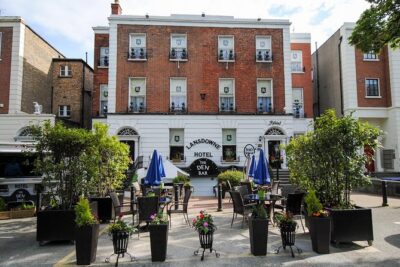
Dublin Irish House Party Live Show, Dinner Option Available
Read our review →
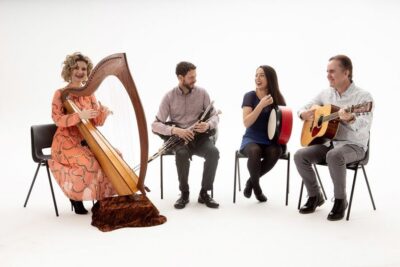

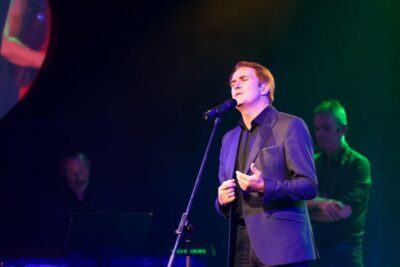
Trad on the Prom Ticket with Irish Music and Dancing
Read our review →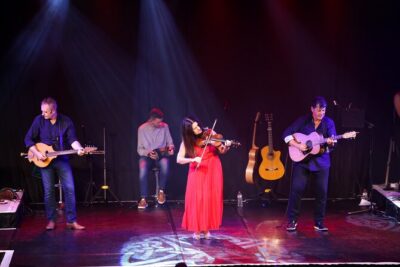
Trad on the Prom – Ireland’s #1 Music, Song & Dance Experience
Read our review →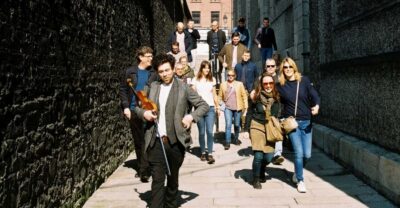
Browse the lists this tour appears in