
Reviewed · WALKING TOURS
Dublin Walking Hibernoceltic Tours
Dublin history, minus the usual tourist swirl. This 2-hour 40-minute small-group walk focuses on the stories behind key spots like Dublin Castle and the Georgian center, guided by Barry OBrien in clear, easy-to-follow layers. I especially like how the route mixes time periods instead of repeating the same five headlines, and I also like that you can ask questions and actually get answers, not just facts dumped on you.
I love the tour’s emphasis on the spots people often skip, like St. Audoen’s Church, and then it balances that with big-name stops such as Merrion Square and the Oscar Wilde memorial. You’ll also get a thoughtful pathway through the famine and revolutionary themes, which makes the city feel connected rather than like separate postcard stops. One consideration: it ends in a different location, so plan your next stop with that in mind.
In This Review
- Key things to know before you go
- A walk that connects Dublin Castle, Georgian Dublin, and 1916
- Price and timing: what $30.23 buys you
- Your guide: Barry OBrien sets the tone
- Dublin Castle: where the day starts, and why it sets the mood
- St. Audoen’s Church: the medieval church still doing its job
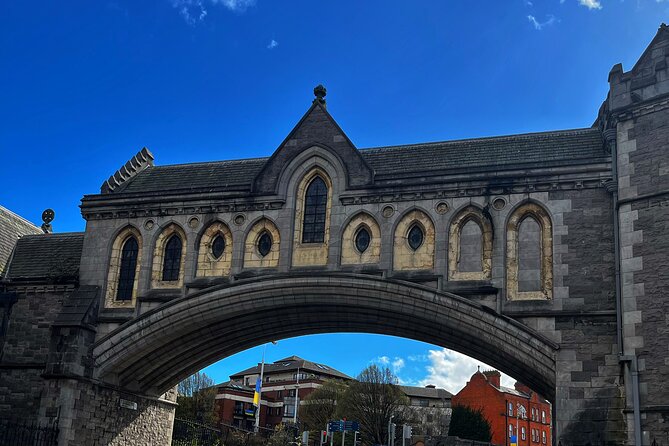
- The Old Dublin City Wall and the gate dating to 1240 AD
- Dame Street and the civic story: Grattan’s Parliament
- Passing the Custom House: Georgian Dublin by the River Liffey
- Trinity College grounds: 430-plus years of a living institution
- Leinster House and Ireland’s Parliament: why the building matters
- Merrion Square and Oscar Wilde: a Georgian square with a human face
- O’Connell Street, the GPO, and the 1916 Rebellion HQ
- Garden of Remembrance and Hugh Lane Art Gallery moments
- North Great Georges Street: tenements and daily life
- How to get the most from this walking tour
- Who this Dublin walk is best for
- Final verdict: should you book?
- FAQ
- What is the tour duration?
- What time does the tour start?
- How many people are in the group?
- Is the tour in English?
- Do I get a mobile ticket?
- Is admission included anywhere?
- Where does the tour end?
- Is coffee or tea included?
- Can most travelers participate?
- Is free cancellation available?
- What if the minimum number of travelers is not met?
Key things to know before you go
- Small group size (max 15 travelers) makes it easier to hear your guide and ask questions.
- Mobile ticket included, so you can travel light.
- Dublin Castle and the City Wall gate include admission, so you are not standing around waiting to sort tickets.
- Merrion Square (Oscar Wilde memorial) is a highlight without feeling rushed.
- The tour bundles themes, so you get medieval, Georgian, famine, and revolutionary context in one outing.
A walk that connects Dublin Castle, Georgian Dublin, and 1916
If you picture Dublin as a single “Old City” area, this tour gently proves you wrong. You move through medieval lines like the last stretch of the City Wall, then glide into Georgian Dublin with buildings, parliaments, and squares that shape how the city looks today. The best part is the way the guide links each stop to the next one, so it feels like one story with chapters rather than a checklist.
This also explains why the tour works so well for many people. First-timers get orientation fast. History lovers get context without needing to be experts before they arrive. And if you’ve already done a bus tour, walking these streets gives you more texture, especially around the older gates, churches, and civic buildings.
Price and timing: what $30.23 buys you
At $30.23 per person, you are paying for a guided walk that includes some admission and a guided interpretation of multiple major areas. The total time is about 2 hours 40 minutes, but the actual walking time is around 1 hour 10 minutes. That matters, because you are not spending the whole session trudging from stop to stop.
It also helps you plan the rest of your day. With a 10:00 am start, you can usually treat this as your morning anchor, then do lunch and a second self-guided walk afterward. If you are sensitive to crowds, the small group size is another value point, since it keeps the pacing human.
More Guided Walking Tours in Dublin



Your guide: Barry OBrien sets the tone
The standout from the guide side is Barry OBrien (Finbarr, who goes by Barry). The common thread in the praise is how warm and welcoming he is, plus how generous he is with his time for questions. That is not a small detail. In a walking tour, the quality of the guidance often shows up most when you ask something that is slightly off-script.
Barry’s approach also sounds built around showing you what is there, not what a script tells you should matter. You end up learning why these places matter, including how different eras of Dublin overlap in the same streets. When you feel comfortable asking questions, you get more out of each stop, even the shorter ones.
Dublin Castle: where the day starts, and why it sets the mood
Your first major stop is Dublin Castle, with about 20 minutes there and admission included. Dublin Castle is one of those places where the architecture alone can do half the explaining, but a good guide makes it click.
You’ll walk through the grounds and get a sense of how the site functioned over time, how power was displayed through design, and how the castle connects to Dublin’s wider political and cultural identity. Even if you are not a “castle person,” this start helps you understand the rest of the route, because it anchors you in civic authority before you move into streets shaped by later events.
Practical note: plan for some standing and slow walking in the castle grounds. Wear shoes that handle uneven spots and be ready for quick photo stops.
More Irish streets taken slow:
- 90 Minute Dublin Walking tour and Sightseeing tips
★ 5.0 · 916 reviews - 2-Hour Historical Walking Tour from Dublin
★ 5.0 · 875 reviews - Historical 2-Hour Guided Walking Tour of Dublin
★ 4.7 · 865 reviews - Dublin Traditional Irish 3 Course Meal Walking Tour with Local
★ 5.0 · 755 reviews
St. Audoen’s Church: the medieval church still doing its job

Next is St. Audoen’s Church, about 10 minutes, with admission free. This stop is short, but it is the kind of detour that makes the tour feel special in a good way. It is dedicated to St. Audeon and is described as the only remaining medieval church still operating in Dublin.
This is the kind of stop that changes how you see the city. When you look at modern streets after a quick look at a working medieval church, Dublin stops feeling like a stage set. You start noticing continuity, not just change.
Because the time here is brief, don’t expect a deep, museum-style experience. Instead, aim to absorb what you can in the moment: the feeling of an old religious space and the idea that it still matters to people.
The Old Dublin City Wall and the gate dating to 1240 AD
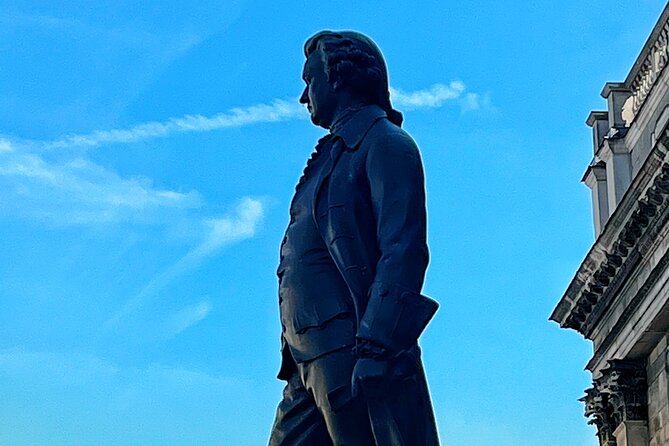
After that, you head to the Old Dublin City Wall area, stopping at the last remaining gate dating to 1240 AD. You get about 5 minutes, and admission is included for this segment.
The tour calls this the passageway into the Old Medieval City, nicknamed the Stairway to Heaven. Even if you only get a brief look, the payoff is in understanding what a city wall represented. It was protection, yes, but it also shaped movement, control, and how neighborhoods developed.
If you like learning how cities grew physically, this is a fast but memorable moment. If you are more into big buildings, it may feel tiny compared to Dublin Castle. Still, it’s exactly the sort of anchor that makes the walking route feel grounded.
Dame Street and the civic story: Grattan’s Parliament
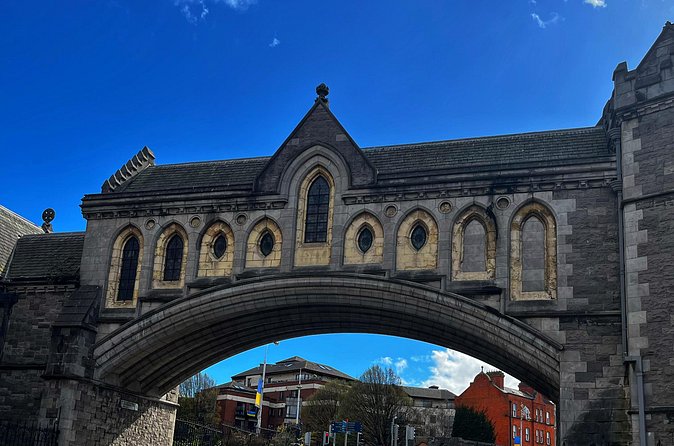
From there, you move toward Dame Street, stopping for about 5 minutes at what is locally known as Grattan’s Parliament, connected to the Old Irish Parliament built in the early 1700s. Admission is free here.
This is where the tour’s theme shift shows up: the story widens beyond medieval structures into the political currents that later influenced suffering. The route ties this to the start of the nineteenth century and how it formed part of the background to the Great Famine’s worst impacts.
You won’t have time for a long lecture on this spot, but you get a clear framework for why Irish political history can matter to everyday life and population changes, even centuries later.
Passing the Custom House: Georgian Dublin by the River Liffey

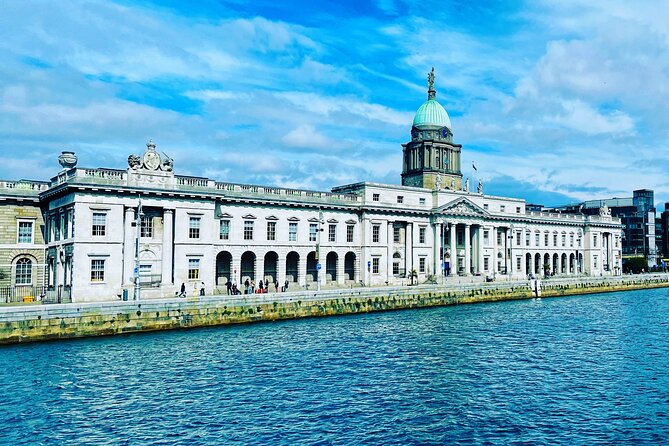
As you continue, the walk includes time where you pass the Custom House along the River Liffey. It is highlighted as one of the most striking examples of Georgian architecture in Dublin.
Even as a pass-by, it’s worth mentally filing it under “Dublin’s visual language.” Georgian Dublin is often identified by proportions, facades, and a kind of orderly civic look. Seeing the Custom House in its river setting helps the Georgian theme feel real, not theoretical.
If the weather is clear, you can usually get a nice view from the riverside area. If it’s gray and windy, don’t let that steal the moment. Georgian stone still looks dramatic when the light changes.
Trinity College grounds: 430-plus years of a living institution
Next, your guide takes you through the grounds of Trinity College, with a walk-focused visit centered on the school’s history as Ireland’s oldest university, dating back more than four hundred and thirty years.
This stop is valuable even if you do not plan to do a full campus tour. University campuses shape cities. They attract people, ideas, and long-term energy. And Trinity is central to Dublin’s identity, so using it as a stop keeps the day from feeling like only politics and monuments.
Because this is described as walking the grounds, you should expect outdoor time and viewpoints rather than a heavy indoor program.
Leinster House and Ireland’s Parliament: why the building matters
You then visit Leinster House, tied to the 1740s and known as the location of Ireland’s National Parliament, the Dáil. The tour includes history and architecture, plus how the building influenced the later development of Dublin’s Georgian Southside.
This is one of the most useful stops on the whole walk, especially for travelers who want a “why does it look like this?” explanation. A lot of visitors can point at Georgian buildings. Fewer can explain the ripple effect between one important civic structure and the broader look of an entire district.
You also get context for how political life is housed in physical spaces. That makes later discussion about Irish history feel more grounded.
Merrion Square and Oscar Wilde: a Georgian square with a human face
Your next highlight is Merrion Square, about 20 minutes, admission free. You get to walk through what is described as the finest example of a Georgian square in Dublin, including the Jardin Anglaise style garden.
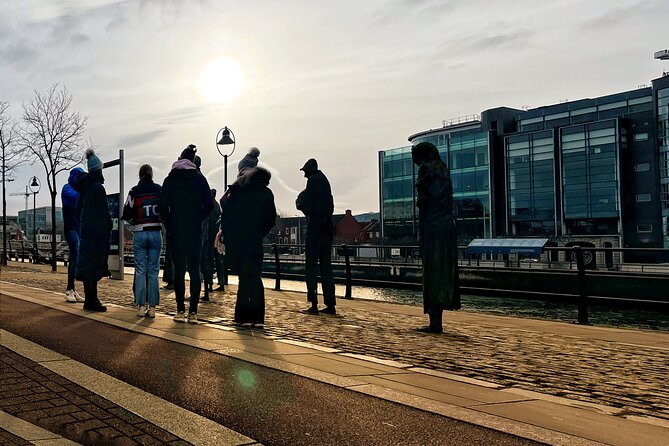
Then the tour adds a literary anchor: the Monument of Oscar Wilde, described as the greatest satirist of the English language in the nineteenth century. Even if you have not read Wilde cover to cover, this kind of stop helps you connect cultural history with physical Dublin.
The trick here is pacing. A guided stop is long enough to read the mood of the place, but short enough that you do not lose the thread of the day. If you want a calm photo break that still feels educational, this is it.
O’Connell Street, the GPO, and the 1916 Rebellion HQ
On the revolutionary side, you walk along O’Connell Street, including the General Post Office (GPO) and the headquarters area tied to the 1916 rebellion. The route frames it as a key stop along Dublin’s main thoroughfare, with the GPO described as the last of the great Georgian buildings of Dublin.
This section works because it connects street-level walking to national turning points. Even if you only know the basic date, being in the actual setting helps you understand why these places become symbols.
O’Connell Street can be lively, so keep your focus on the guide’s specific directions. The value here is not just seeing the building, but grasping what role it played and why Dublin remembers it.
Garden of Remembrance and Hugh Lane Art Gallery moments
Next comes the Garden of Remembrance, about 10 minutes, admission free. You also learn that Irish Volunteers held overnight there after surrendering to British forces.
This is an emotional stop in a quiet way. It is not about dramatic theatrics. It is about human consequences and where history paused long enough for people to hold on.
Near there, you pass the Hugh Lane Art Gallery on Parnell Square, noted for impressionist and early twentieth-century art. The tour framing is practical: you will get a marker for where to go later if you want to expand your day beyond the walking route.
North Great Georges Street: tenements and daily life
Another guided walk along North Great Georges Street follows. The focus here is living conditions in the late nineteenth and early twentieth centuries, described as known then as the tenements.
This is where the tour gets real in the best way. Historical events can feel distant. But tenements bring it back to daily life: crowded housing, stress, and the kind of hardship that does not fit neatly into textbook timelines.
You also pass the James Joyce Centre, dedicated to James Joyce and his novel Ulysses, described as covering a day in Dublin and as the reputed birth of the modern novel.
Even if you are not a Joyce expert, the stop gives you a cultural “map marker.” It’s useful because you can spot the connection later as you explore on your own.
How to get the most from this walking tour
This tour gives you the best results if you treat it like a guided orientation walk, not a sprint between must-sees. Here are a few things that help, based on how this route is structured:
- Bring water and dress for walking. The total time is long enough that weather matters.
- Expect shorter stops at some sites, so listen for what the guide points out, not just for general background.
- Use your time to ask questions, because the guide’s style is described as open to them.
- Since the tour ends in a different location, save your next appointment for later and plan a nearby lunch or café.
And one small but important practical point: coffee or tea is not included, so if you need caffeine, plan it before you start or right after you finish.
Who this Dublin walk is best for
I’d recommend this tour if you want a Dublin overview that does not feel watered down. It’s especially good for:
- First-time visitors who want connections between medieval Dublin, Georgian Dublin, and the 1916 story.
- History-minded travelers who like walking routes and hate standing in lines too long.
- People who enjoy a guide who is friendly and willing to answer questions, because it changes how the stops land.
It may be less ideal if you prefer deep museum time. This is a walking tour with compact stops, so the value is in interpretation plus pacing, not in long indoor exhibits.
Final verdict: should you book?
Yes, if you like your Dublin history with street-level context and a guide who brings the story to life with real warmth. The route packs in several major areas and themes for a modest price, and the admission pieces at Dublin Castle and the City Wall help keep it from feeling like you only “look from the outside.”
I’d book it if you want off-the-main-road feeling moments, like St. Audoen’s Church, while still getting major landmarks such as Merrion Square and the GPO. The small group size and the guide style are the biggest reasons to choose this over larger, faster tours.
If you do book it, just plan for a different end location, and make sure you have time afterward to decompress with a coffee and a slower second walk.
FAQ
What is the tour duration?
The tour is approximately 2 hours 40 minutes in total time, with about 1 hour 10 minutes for travel and walking.
What time does the tour start?
The start time is 10:00 am.
How many people are in the group?
The maximum group size is 15 travelers.
Is the tour in English?
Yes, the tour is offered in English.
Do I get a mobile ticket?
Yes. A mobile ticket is included.
Is admission included anywhere?
Yes. Admission is included for Dublin Castle and the Old Dublin City Wall segment. St. Audoen’s Church and Merrion Square are listed as admission ticket free.
Where does the tour end?
The tour ends in a different location. The exact end location is provided in the tour details.
Is coffee or tea included?
No. Coffee and/or tea is not included.
Can most travelers participate?
The information says most travelers can participate.
Is free cancellation available?
Yes. Free cancellation is available up to 24 hours in advance for a full refund.
What if the minimum number of travelers is not met?
If the tour is canceled due to not meeting the minimum traveler requirement, you will be offered a different date or a full refund.
Latest to join the session in Dublin







Walking Tours, compared.
Dublin Highlights and Hidden Gems Guided Walking Tour
Read our review →
90 Minute Dublin Walking tour and Sightseeing tips
Read our review →

Historical 2-Hour Guided Walking Tour of Dublin
Read our review →
Dublin Traditional Irish 3 Course Meal Walking Tour with Local
Read our review →
Browse the lists this tour appears in