
Reviewed · WALKING TOURS
Small Group Bucket List Sights Walking Tour with a Local Guide
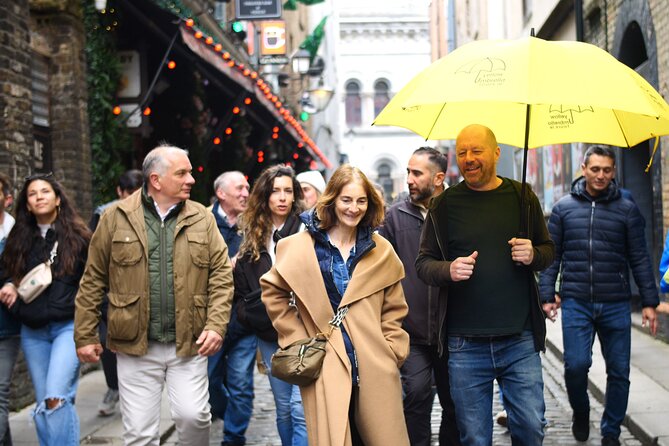
Dublin clicks into place fast. This 2-hour small group walk takes you past Dublin’s bucket list sights, guided by a local who turns stone, statues, and river crossings into clear stories you can remember.
I love two things most: the small group size keeps the pace human, and the guide uses each stop to explain the why behind Dublin’s layout. One possible drawback, though, is that each stop is short, roughly 10 minutes, and some major sights do not include admission, so you may mostly enjoy exteriors unless you buy tickets on your own.
In This Review
- Key highlights you’ll feel on the walk
- The route that gets you oriented quickly (Wood Quay to Trinity Green)
- How the 2-hour pace works, and what you can realistically see
- Stop 1: Christ Church Cathedral, from Viking wood to whiskey money
- Stop 2: St Patrick’s Cathedral and the Guinness-era renovation
- Stop 3: Dubh Linn Gardens, and what a garden can teach you
- Stop 4: Dublin Castle, where power stacks up in different styles
- Stop 5: City Hall and the national flag story
- Stop 6: Temple Bar, Tudor-era layout turned into pub life
- Stop 7: Millennium Bridge, Celts to Silicon Docks in one view
- Stop 8: Ha’penny Bridge, and why it used to shake
- Stop 9: Merchant’s Arch and Dublin’s contrast problem
- Stop 10: College Green, where government and money used to talk
- Stop 11: Molly Malone statue, a quick hello to Dublin’s favorite
- Stop 12: Trinity College Dublin, ending where Book of Kells lives
- Price and value: why $20.52 can be a smart move
- Who this tour fits best
- Should you book this Dublin highlights walking tour?
- FAQ
- What is the duration of the Small Group Bucket List Sights Walking Tour in Dublin?
- How much does the tour cost?
- What is the maximum group size?
- Is the tour offered in English?
- Are admission tickets included for the main stops?
- Where do I meet the guide, and where does the tour end?
- Is free cancellation available?
Key highlights you’ll feel on the walk
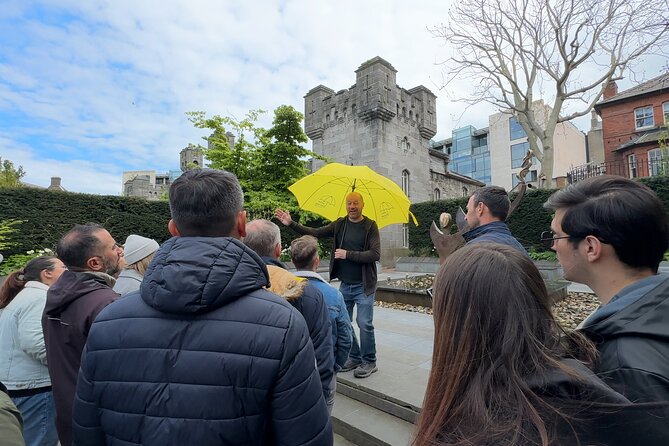
- Small group up to 25 means more questions, less rushing, and better conversations
- A smart loop of landmarks from Christ Church Cathedral all the way to Trinity College Green
- Bridge views that connect eras including Celts, modern tech, and the practical fix for a shaky bridge
- Churches and castles explained simply with stories tied to the Vikings, Normans, and Irish power shifts
- A well-timed end point near Trinity, so you can roll right into whatever you do next
The route that gets you oriented quickly (Wood Quay to Trinity Green)
This tour is built for orientation. You start in the morning at 121 R137, Wood Quay, and you finish at Fox House, 37 College Green, outside the front gate of Trinity College. That matters because Dublin’s center is compact, but it still feels maze-like if you arrive cold.
You’ll walk a loop through the most central neighborhoods and then end at a major landmark that’s easy to use as your “home base” later. If you’re here for only a day or two, it’s a nice way to get your bearings fast, then branch out on your own with less guesswork.
Also, because the tour runs in English and uses a mobile ticket, it’s one of the easier ways to start your trip without extra hassle.
How the 2-hour pace works, and what you can realistically see
The tour is about 2 hours and includes about 10 minutes per stop. That’s not enough time to do a deep museum visit, but it is enough to understand what you’re looking at and why it matters.
With a maximum of 25 people, you can usually hear answers clearly and ask quick follow-ups when something clicks. The best part is that the guide doesn’t just point, they connect. You’ll likely come away with a mental map of Dublin’s layers, from medieval power to modern city life.
The trade-off is simple: short stops mean you’ll choose what to return to later. If you love going inside, plan to add those sites after the tour with your own tickets.
More Guided Walking Tours in Dublin



Stop 1: Christ Church Cathedral, from Viking wood to whiskey money
Christ Church Cathedral is where your tour starts, and it sets the tone. You’ll hear how it began in wood during the Viking era, then was recast in stone by the Normans, and later renovated in the 19th century through money tied to the whiskey business.
That mix is the key. This isn’t just a pretty church facade. It’s Dublin’s story in layers: different rulers, different building methods, and different sources of money shaping the same sacred space.
Admission is not included, so you’ll decide on the spot whether you want to enter. Even if you do not, the exterior and the architectural details are worth your attention. Look for the way different parts seem to belong to different eras, because that’s exactly what the guide is explaining.
Stop 2: St Patrick’s Cathedral and the Guinness-era renovation
Next up is St Patrick’s Cathedral, named for the patron saint who, in the local legend, drove the snakes off the island. The cathedral also has a modern famous benefactor in its story: the Guinness family, specifically Sir Benjamin Lee Guinness, funded a major renovation in the 1860s.
I like this stop because it makes the religious story feel tied to everyday Dublin business history. It’s easy to think of cathedrals as “old and separate.” Here, the message is that Dublin’s economy and influence helped shape these monuments.
Again, admission is not included. But even a quick look outside can help you appreciate why this cathedral is such a symbol in the city.
More Irish streets taken slow:
- 90 Minute Dublin Walking tour and Sightseeing tips
★ 5.0 · 916 reviews - 2-Hour Historical Walking Tour from Dublin
★ 5.0 · 875 reviews - Historical 2-Hour Guided Walking Tour of Dublin
★ 4.7 · 865 reviews - Dublin Traditional Irish 3 Course Meal Walking Tour with Local
★ 5.0 · 755 reviews
Stop 3: Dubh Linn Gardens, and what a garden can teach you
Dubh Linn Gardens might be the most calm moment of the walk. You’ll also hear about the Chester Beatty Library nearby, and you’ll get the Viking connection to this spot.
The standout detail here is that the Vikings moored their longboats in the area when they arrived in Dublin in the 9th century. That is a great reminder that Dublin was once built around water access and trading routes, not just around churches and castles.
This stop has free admission, and the garden setting helps the stories land. It’s a small pause from street life, and it gives you a better sense of how the waterfront shaped the city.
Stop 4: Dublin Castle, where power stacks up in different styles
Dublin Castle is the “serious authority” stop. You’ll learn it was the center of British government in Ireland for 700 years, and you’ll notice how the architecture reflects shifting eras.
The building mix includes medieval, Georgian, Gothic, and modern elements. That’s the useful part for your brain: you’re not just looking at a landmark, you’re seeing centuries of design decisions piled together.
Admission is not included, and the tour timing is short. So focus on absorbing the big picture outside and let the guide’s explanations connect the dots for you. If you later decide you want to go inside, the tour acts like a primer so you’ll understand what you’re seeing.
Stop 5: City Hall and the national flag story
Right beside the castle is City Hall, and the guide explains the meaning of the national flag, described here as representing peace between Catholic and Protestant communities, North and South.
This is one of those stops that doesn’t require a ticket or a long visit. It gives context, and context is what makes the rest of the city easier to interpret.
If you’re the type who likes to understand why a symbol looks the way it does and why people care about it, this brief moment is worth your attention. It’s also a good chance to ask a question about modern Irish identity, because it’s grounded in something you can see.
This stop is free.
Stop 6: Temple Bar, Tudor-era layout turned into pub life
Temple Bar is one of Dublin’s most famous nightlife areas, but the tour doesn’t treat it like a costume. You’ll learn how the area was laid out during the Tudor conquest of Ireland.
Then, the guide connects that older structure to what it became later, when the streets turned into a magnet for pubs and evening energy. You’ll also get a sense of the area’s age and how the street grid shapes modern behavior.
The tour doesn’t focus on buying drinks. It’s more about helping you see why Temple Bar feels the way it does today. If you decide to come back after your walk, you’ll know where you are and what you’re looking at.
This stop has free entry and is largely about the area itself.
Stop 7: Millennium Bridge, Celts to Silicon Docks in one view
Crossing the river Liffey is a highlight because it changes your perspective. At the Millennium Bridge, you’ll be able to take in views toward the east where the Celts built their settlement around 2,100 years ago, and toward the west tied to the Silicon Docks idea inspired by Americans in the last couple of decades.
That’s a clever way to compress time. You’re not just walking over water, you’re literally switching viewpoints from one historical layer to another.
Admission is not included, but you don’t need it for this kind of stop. Bring your phone, yes, but also take a few moments to look without filming, because the guide’s explanation helps you spot what you would otherwise miss.
Stop 8: Ha’penny Bridge, and why it used to shake
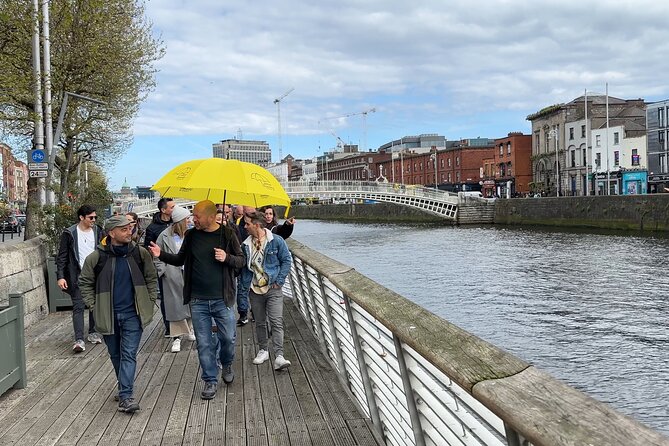
Next is the Ha’penny Bridge, an iconic crossing back to the south. You’ll hear that it was originally named after the Duke of Wellington, and you’ll also get the practical story behind the bridge’s stability.
Harland & Wolff are credited here with making sure the bridge no longer shakes when you walk over it. That’s a fun reminder that engineering details sit under the tourist postcard.
You’ll likely get some time to look down at the river and plan your next steps on the south bank. This is also a good spot to ask the guide about what parts of the area you should prioritize later.
Admission is not included and, again, that’s normal for a bridge stop.
Stop 9: Merchant’s Arch and Dublin’s contrast problem
Merchant’s Arch is a quick stop, but the “contrast” theme is the point. You’ll hear how one end of an area called Crown Alley and Merchant’s Arch link to the refined side, while the other end is associated with a brutalist tower, Stephenson Tower, part of the larger Stephenson building complex.
That contrast is very Dublin. Old structures and newer statements exist side by side, and the city often chooses not to hide either one.
This stop is a short pause that can change how you photograph the whole center. Once you see the contrast theme, you’ll notice it everywhere.
Admission is not included.
Stop 10: College Green, where government and money used to talk
College Green is the next big theme stop: government and finance. You’ll see some of the city’s most notable buildings, including banks and parliament-related architecture, and you’ll hear it described as the center of government and finance in Dublin when the city considered itself the second city of the empire.
This stop is free, and it’s also a practical photo spot. You get a chance to connect the earlier power story at Dublin Castle to a later power story here at College Green.
Because it’s free and the time window is short, it’s a smart place to soak up details. You’ll be able to point out the “important” buildings later without needing a guide.
Stop 11: Molly Malone statue, a quick hello to Dublin’s favorite
You’ll stop for the Molly Malone Statue, with the guide encouraging a friendly hello. It’s a small pause, but it works as a break between the heavier history stops.
This also helps you remember the tour’s tone. It’s not all grim power and renovation stories. Dublin keeps its humor, and Molly Malone is one of the obvious ways it does.
Admission is not included, but it’s a quick, fun moment with minimal walking strain.
Stop 12: Trinity College Dublin, ending where Book of Kells lives
The tour ends outside Trinity College at Fox House, 37 College Green, right by the front gate. You’ll hear that Trinity is home to the famous Book of Kells exhibition.
The key is that this tour wraps up at a logical location for your next step. If you want to go inside Trinity afterward, you’ll be starting from the correct place, not trying to locate it after you’ve already wandered.
Admission for this final highlight is not included, and the tour timing usually means you won’t go in as part of the walk. Still, ending here is a win because Trinity is one of the clearest finishing points for travelers.
Price and value: why $20.52 can be a smart move
At $20.52 per person for about 2 hours, you’re paying for orientation and context more than ticketed attractions. That’s especially useful because some stops do not include admission.
So the question becomes: do you want to wander on your own and read plaques, or do you want someone to connect the stories while you walk? If you value explanations, this tour can save you time and prevent you from missing the “why” behind the sights.
Also, a guide who keeps stops paced at about 10 minutes each is a good match for short trips. You’ll finish with a list of places to revisit, and you’ll already know what to look for when you do.
Finally, this experience is booked about 61 days in advance on average, so it’s not the kind of thing I’d leave to the last minute if your dates are fixed.
Who this tour fits best
This is a great fit if you want a first look at Dublin’s center without planning your entire route. It works well for first-timers, solo travelers, couples, and families with kids who can handle a walking pace for a couple of hours.
It’s also a solid choice if you care about how history shapes street layout. Vikings, Normans, and later political power all show up in the walking logic, not just in separate museum visits.
Because service animals are allowed and it’s near public transportation, it also suits a range of travel styles.
Should you book this Dublin highlights walking tour?
I’d book it if you want fast orientation plus story-driven stops from Christ Church to Trinity, especially if you like getting local explanations instead of reading everything on your own. The small group size and strong guide energy, including guides like Peter, Martin, and Rob mentioned across the experience, are a big part of why this works.
Skip it or adjust your expectations if your goal is deep entry tickets and long indoor time. This is mainly a walk-and-learn format. You can still enjoy it a lot, but you’ll likely want to add separate visits later if you want to go inside every major site.
If you’re choosing just one morning activity to set up the rest of your trip, this is a strong option.
FAQ
What is the duration of the Small Group Bucket List Sights Walking Tour in Dublin?
The tour lasts about 2 hours.
How much does the tour cost?
The price is $20.52 per person.
What is the maximum group size?
The tour has a maximum of 25 travelers.
Is the tour offered in English?
Yes, the tour is offered in English.
Are admission tickets included for the main stops?
Admission tickets are not included for some sites. Other stops like Dubh Linn Gardens and City Hall are listed as free.
Where do I meet the guide, and where does the tour end?
You start at 121 R137, Wood Quay, Dublin, Ireland. The tour ends on College Green at Fox House, 37 College Green, Dublin 2, outside the front gate of Trinity College.
Is free cancellation available?
Yes. You can cancel for a full refund if you cancel at least 24 hours before the experience starts.
Latest to join the session in Dublin




Walking Tours, compared.
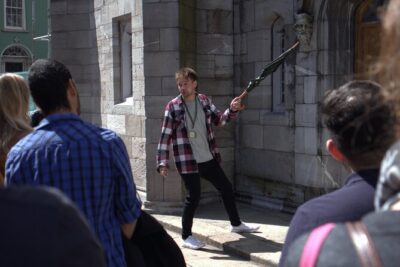
Dublin Highlights and Hidden Gems Guided Walking Tour
Read our review →
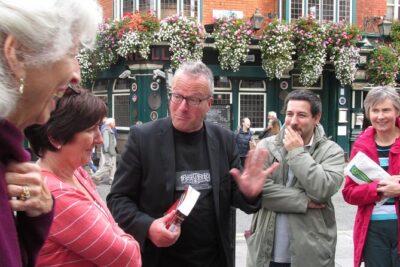
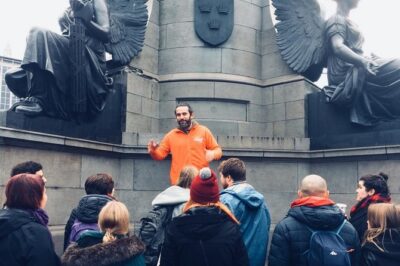
90 Minute Dublin Walking tour and Sightseeing tips
Read our review →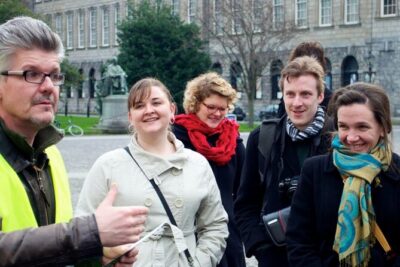

Historical 2-Hour Guided Walking Tour of Dublin
Read our review →
Dublin Traditional Irish 3 Course Meal Walking Tour with Local
Read our review →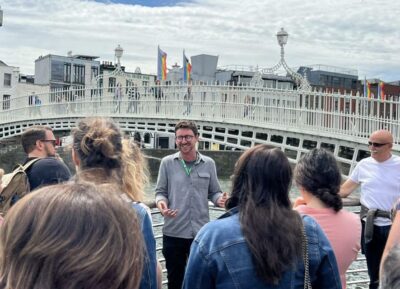
Browse the lists this tour appears in